
A long-lasting non-equilibrium phase coexistence in supercritical fluids has been observed by a Korean research team.
A team of researchers led by Professor Gunsu S. Yun from POSTECH’s Department of Physics and the Division of Advanced Nuclear Engineering and Professor Dong Eon Kim of the Department of Physics and Max Planck POSTECH/Korea Research Initiative (MPK) has observed the non-equilibrium phase coexistence in supercritical fluids[1] lasting several hours. The researchers explained the phenomenon through a mass transport model at the phase coexistence interface, where the transport occurs in chunk of nano-sized clusters instead of single atoms.
It has been accepted as scientific knowledge for about 200 years that when the temperature and pressure of a fluid rise above a certain level called the critical point, the boundary between liquid and gas disappears and a change of state no longer occurs. However, in the 2010s, research findings reported that supercritical fluids may have liquid or gas properties depending on temperature and pressure conditions. Since then, it has been continuously confirmed through various experiments and simulations that multiple states exist in the supercritical fluid region. However, the possibility of a state in which a plurality of phases coexists rather than a single phase at the same temperature and pressure point – that is, a state similar to that in which a general liquid and gas coexist after phase separation – has not been discussed.
Long-Lasting Coexistence of Phases in Argon Fluid
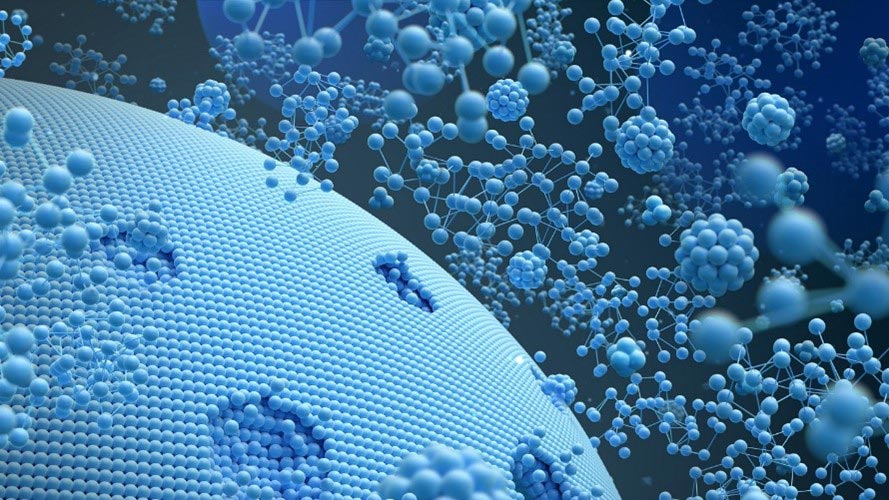
To this, the joint research team, in the process of making a supercritical argon fluid using a high-pressure chamber that operates in successive compression-expansion cycles, demonstrated a state where a large amount of argon droplets (formed by adiabatic expansion cooling) coexist with the gas-like supercritical background while maintaining their liquid-like properties. The state where these two phases coexist in isolation persists a surprisingly long time and the researchers presented a new mass transport model mediated by nano-clusters – an improvement on the conventional evaporation model – to explain the phenomenon.
Supercritical fluids are being used in various industries such as heat exchange systems in power plants, pharmaceutical processes, semiconductor cleaning, and food processing thanks to their beneficial properties such as low viscosity and high solubility. The non-equilibrium phase coexistence in supercritical fluids discovered in this study has a significant impact on the physical and chemical properties such as heat capacity, thermal conductivity, and viscosity, which may prove important for supercritical fluid processing in industrial applications.
Academic Significance and Natural Phenomena Connections
In addition, this achievement is of significant academic value in that it laid the foundation for related research by identifying for the first time the nonequilibrium phase coexistence of supercritical fluids, which is an unexplored area.
“Research on nonequilibrium of supercritical fluids is not only helpful in industrial processes, but also helpful in understanding various supercritical fluids that exist in the natural world, as in the atmospheres of planets such as Venus and Jupiter, volcanic eruptions, and fluids in the Earth’s crust,” remarked Professor Gunsu S. Yun who participated as a co-corresponding author in the study. “Our findings will contribute to understanding the transport properties of supercritical fluids.” He added, “We are conducting research to theoretically interpret nonequilibrium phase coexistence in supercritical fluids beyond experimental results.”
Notes
1. Supercritical fluid – A fluid that has reached a pressure and temperature above the critical point. The critical point varies depending on the type of fluid. In the case of argon used in this study, the critical point is about -120 degrees Celsius and 50 atmospheres. Supercritical fluids are characterized by low viscosity, very high thermal conductivity and chemical activity, and are being applied in various industrial sectors.
Reference: “Quasi-equilibrium phase coexistence in single component supercritical fluids” by Seungtaek Lee, Juho Lee, Yeonguk Kim, Seokyong Jeong, Dong Eon Kim and Gunsu Yun, 30 July 2021, Nature Communications.
DOI: 10.1038/s41467-021-24895-y
The findings from this study were published on July 30, 2021 in Nature Communications. The research was conducted with the support from the National Research Foundation of Korea and the Max Planck Korea/POSTECH Research Initiative.
Never miss a breakthrough: Join the SciTechDaily newsletter.
Follow us on Google and Google News.