
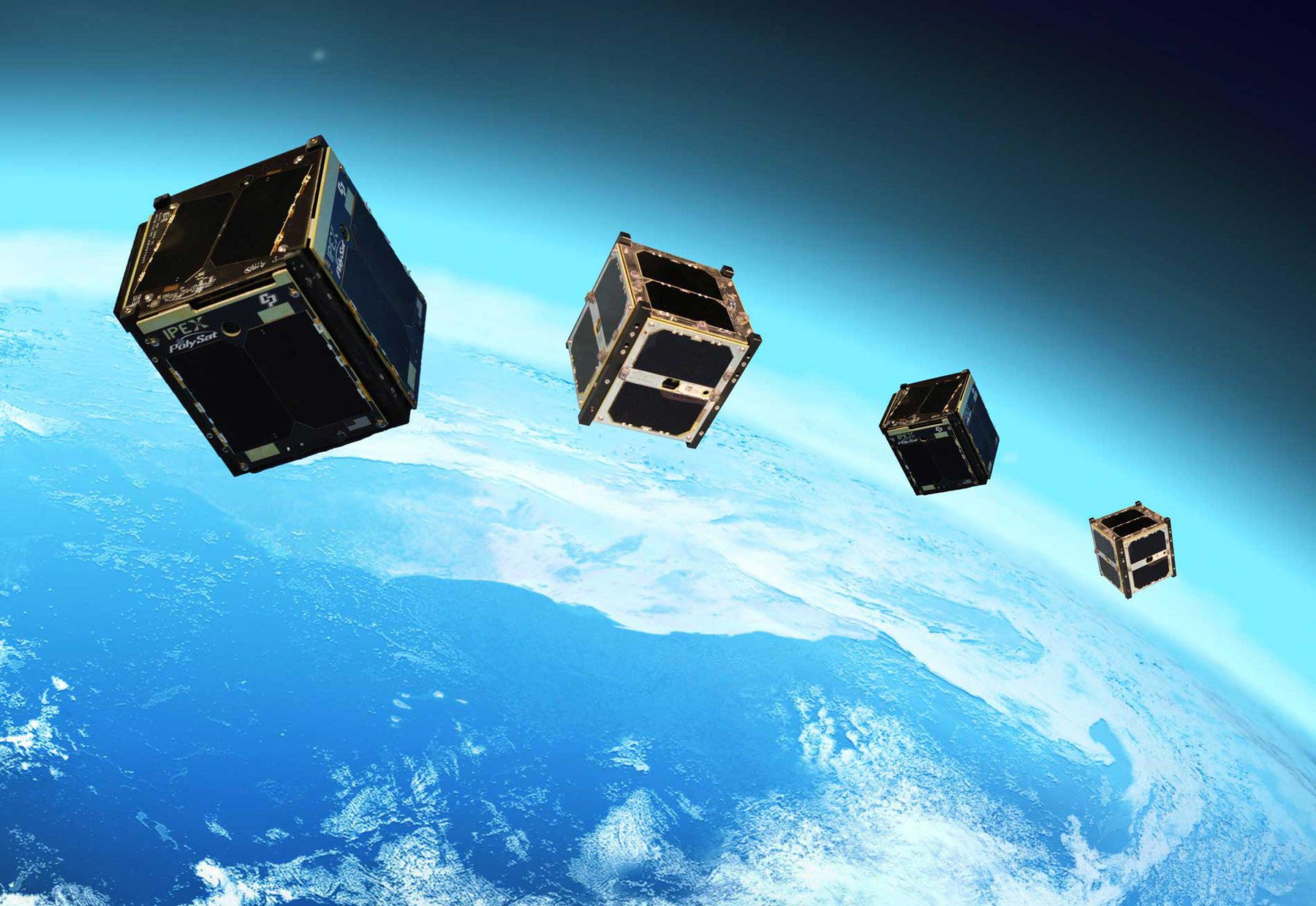
NASA’s CubeSat Launch Initiative (CSLI) is sending four CubeSats to the International Space Station to advance space-based technologies in solar power, gamma-ray burst detection, and water monitoring. Developed in collaboration with universities and NASA, these satellites aim to enhance our understanding of cosmic phenomena and Earth’s environmental dynamics.
NASA’s CubeSat Launch Initiative is sending a group of four small satellites, called CubeSats, to the International Space Station (ISS) as ELaNa 51 (Educational Launch of Nanosatellites). These small payloads have been developed by NASA and universities and will be deployed from low Earth orbit.
Once circling Earth, the satellites will help demonstrate and mature technologies meant to improve solar power generation, detect gamma-ray bursts, determine crop water usage, and measure root-zone soil and snowpack moisture levels.
The suite of satellites will hitch a ride aboard a SpaceX Falcon 9 rocket and Dragon spacecraft set to deliver additional science, crew supplies, and hardware for the company’s 30th commercial resupply services mission for NASA. Liftoff is targeted for 4:55 p.m. EDT on Thursday, March 21, from Space Launch Complex 40 at Cape Canaveral Space Force Station in Florida.
First Cornhusker State CubeSat
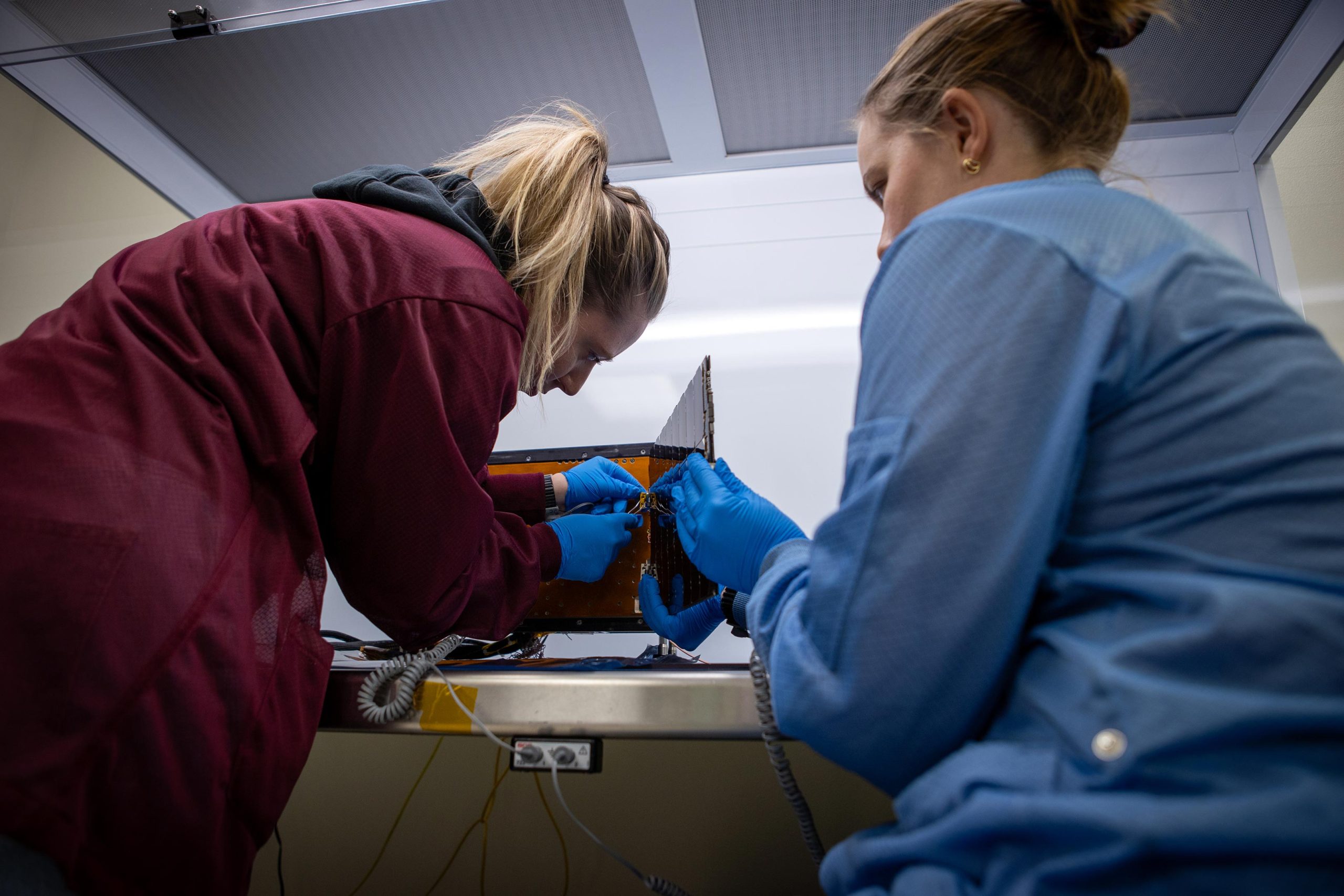
The first CubeSat from Nebraska is the Big Red Sat-1, which aims to investigate and improve the power production ability of solar cells. It is built by a team of middle and high school students mentored by University of Nebraska-Lincoln undergraduate engineering students.
The satellite measuring 1U, or one unit, (about four inches cubed), will test out Perovskite cells, a new type of solar cell designed to enhance power production with and without direct exposure to sunlight. The team will compare the power production to that of typical cells, called gallium arsenide solar cells, also flying on the CubeSat.
Detecting Gamma Ray Bursts
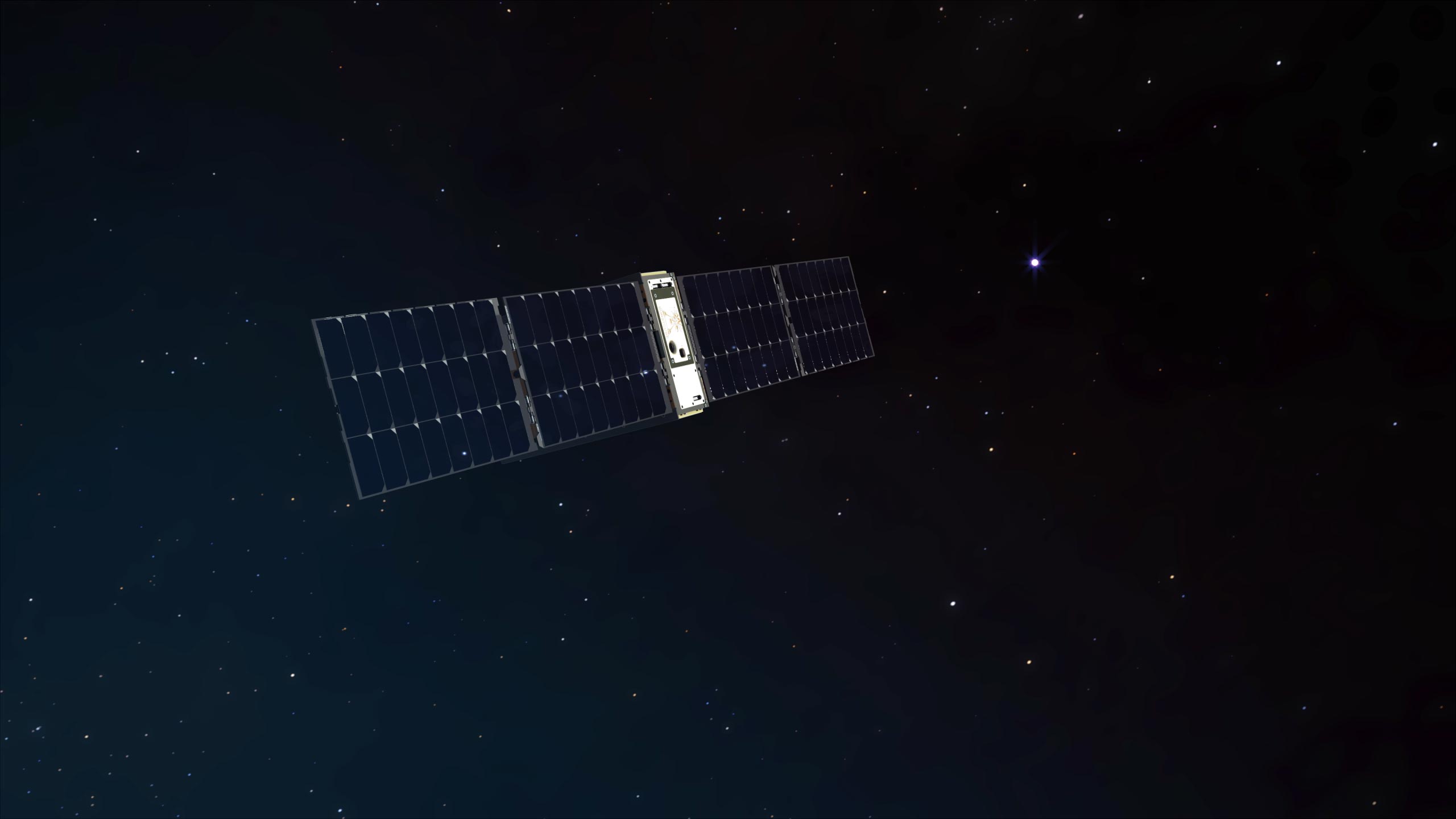
BurstCube is a NASA-developed 6U CubeSat designed to search the sky for brief flashes of high-energy light such as gamma-ray bursts, solar flares, and other hard X-ray transients.
Long and short gamma ray bursts are stellar remnants that can be the result of some of the universe’s most powerful explosions like the collapse or collision of massive stars, or when a neutron star collides with a black hole. BurstCube will use a new kind of compact, low-power silicon photomultiplier array to detect the elusive bursts of light.
With the ability to detect these brief flashes from space, BurstCube can help alert other observatories to witness changes in the universe as they happen. Astronomers can also benefit from the information because these bursts are important sources for gravitational wave discoveries.
Rooting Out Earth Water Sources from Space
The SigNals of Opportunity P-band Investigation, or SNoOPI, is a technology demonstration CubeSat designed to improve the detection of moisture levels on a global scale of underground root-zone and within snowpacks.
Root zone soil moisture and snow water equivalent play critical roles in the hydrologic cycle, impacting agricultural food production, water management, and weather phenomena. When scientists understand the amount of water in the soil, crop growth can be accurately forecasted, and irrigation can become more efficient.
The 6U CubeSat is collaboratively developed by NASA, Purdue University in Indiana, Mississippi State University, and the United States Department of Agriculture.
The fourth in the suite of small satellites, the University of Hawaiʻi at Mānoa’s HyTI (Hyperspectral Thermal Imager) is also a 6U CubeSat designed to study water sources.
Developed in partnership with NASA to map irrigated and rainfed cropland, HyTI is a pathfinder demonstration that packs the Hyperspectral Imager Instrument, temporal resolution thermal infrared imager focal plane technology, and high-performance onboard computing to help better understand crop water use and water productivity of major world crops.
With these tools, HyTI can help develop a more detailed understanding of the movement, distribution, and availability of water and its variability over time and space, an important contribution to global food and water security issues.
These payloads were selected through NASA’s CSLI, which provides U.S. educational institutions, nonprofits with an education/outreach component, informal educational institutions (museums and science centers), and NASA centers with access to space at a low cost.
Once the CubeSat selections are made, NASA’s Launch Services Program works to pair them with a launch that is best suited to carry them as auxiliary payloads.
Never miss a breakthrough: Join the SciTechDaily newsletter.
Follow us on Google and Google News.