
Chip manufacturing, gravitational wave detectors, and quantum computers could all benefit from better ways to measure a vacuum.
A vacuum chamber is never perfectly empty. A small number of atoms or molecules always remain, and measuring the tiny pressures they exert is critical. For instance, semiconductor manufacturers create microchips in vacuum chambers that must be almost entirely devoid of atomic and molecular contaminants, and so they need to monitor the gas pressure in the chamber to ensure that the contaminant levels are acceptably low.
Development of CAVS
Now, scientists at the National Institute of Standards and Technology (NIST) have validated a new approach to measuring extremely low gas pressures called CAVS, for Cold Atom Vacuum Standard. They have established that their technique can serve as a “primary standard” — in other words, it can make intrinsically accurate measurements without first needing to be calibrated to reference pressure readings.
Having developed CAVS over the last seven years, NIST researchers recently put their technique through its most rigorous tests to date. Their new study, published in the journal AVS Quantum Science, shows that CAVS results agreed with the traditional “gold standard” method for measuring low pressures, demonstrating that this new technique can make measurements with the same degree of accuracy and reliability.
CAVS’ Application in Next-Generation Technology
Not only can CAVS make measurements as good as those in traditional pressure gauges, but it can also reliably measure the much lower vacuum pressures — a trillionth of the Earth’s sea-level atmospheric pressure and below — that will be required for future chip manufacturing and next-generation science. And its operation, based on well-understood quantum physics principles, means that it can make accurate readings “right out of the box,” without requiring any adjustments or calibration to other reference pressure sources or techniques.
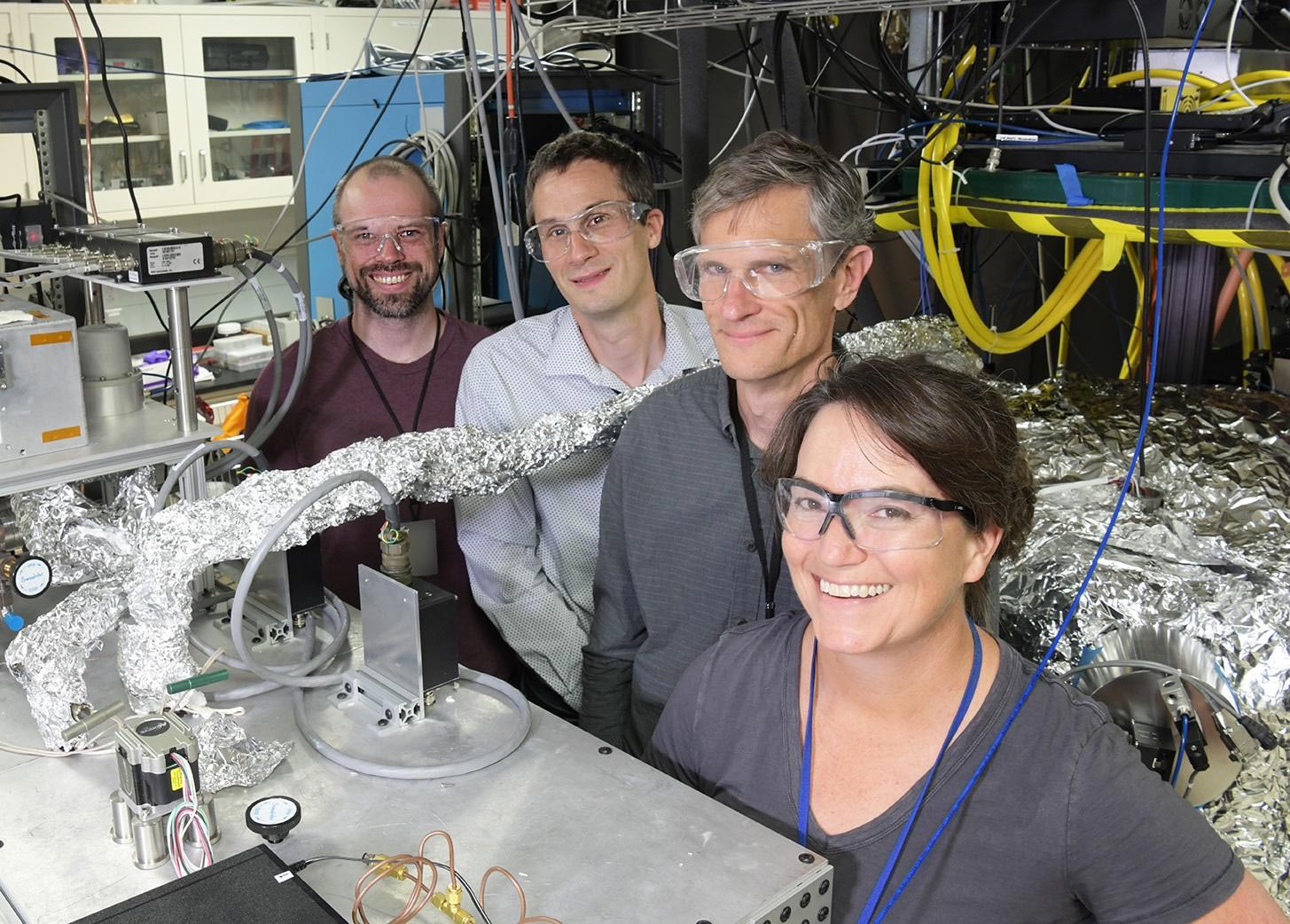
“This is the culminating result,” said NIST physicist Julia Scherschligt. “We have had numerous positive developments before. But this validates the fact that our cold atom standard is truly a standard.”
Expanded Applications
In addition to semiconductor manufacturing, the new method can be useful for other applications that require high-vacuum environments, such as quantum computers, gravitational wave detectors, particle accelerators, and many more.
How CAVS Works
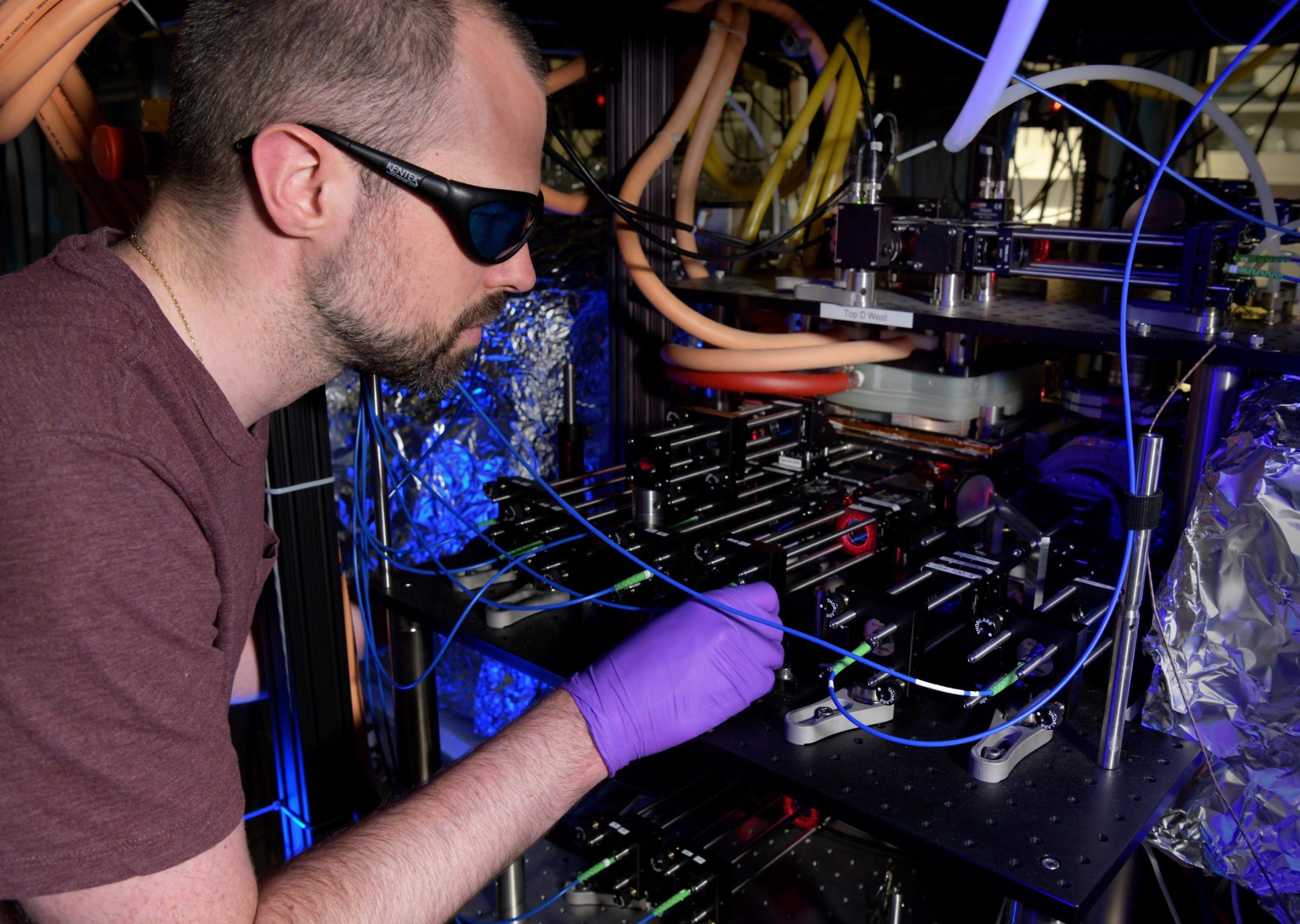
CAVS technology measures vacuum pressures using a cold gas of about a hundred thousand lithium or rubidium atoms trapped in a magnetic field. These atoms fluoresce when illuminated by a laser tuned to just the right frequency. Researchers can count the number of trapped atoms precisely by measuring the intensity of this glow.
When the CAVS sensor is connected to a vacuum chamber, the leftover atoms or molecules in the chamber collide with the trapped atoms. Each collision knocks an atom out of the trap, reducing the number of atoms and the intensity of light emitted. That intensity, easily measured by light sensors, serves as a sensitive measure of pressure. This relationship between the rate of dimming and the number of molecules is predicted exactly by quantum mechanics.
Integration With Classical Methods
In the new work, the NIST researchers attached their CAVS sensors to the classical gold-standard reference standard for gas pressure, known as a dynamic expansion system.
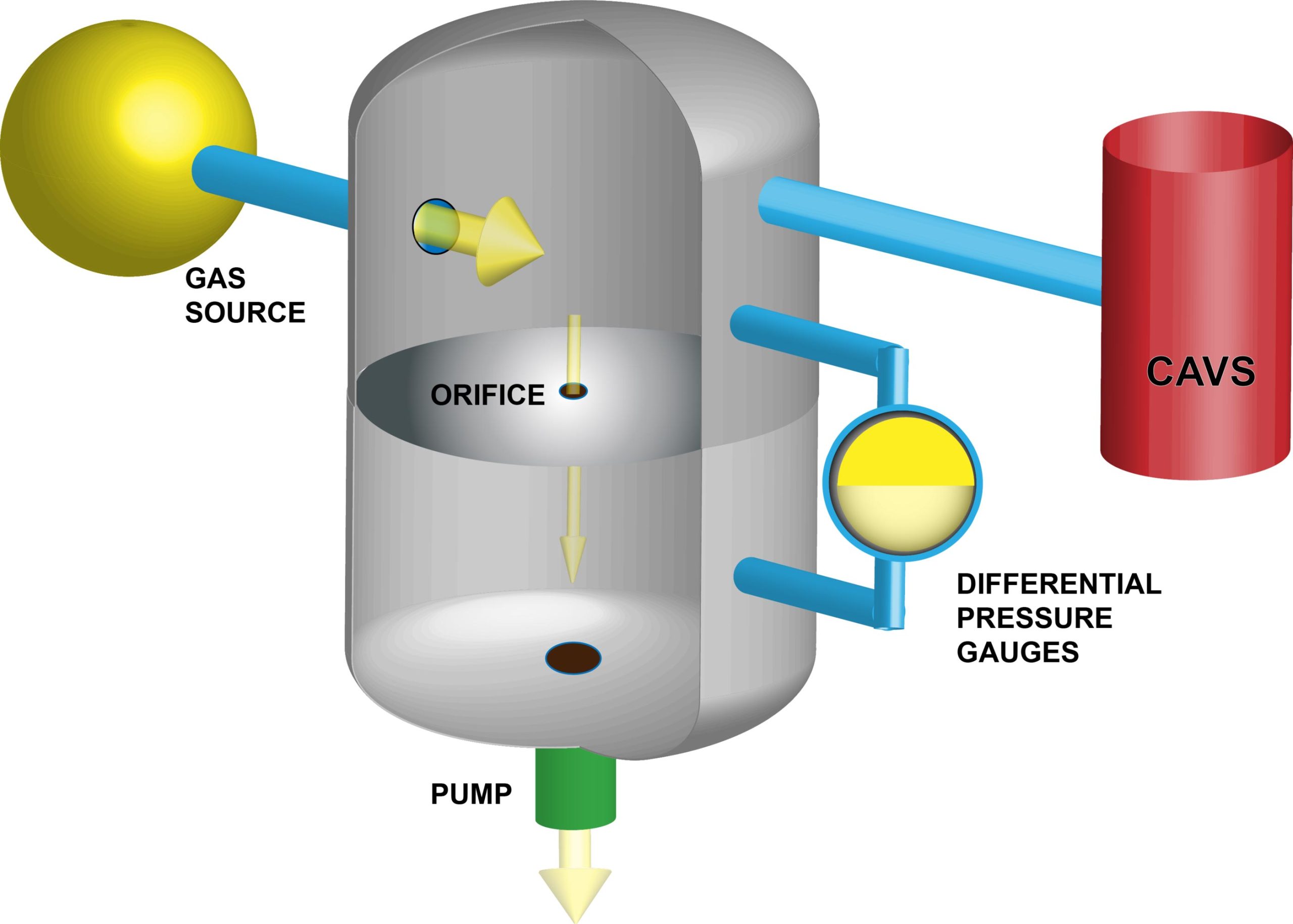
Dynamic expansion systems work by injecting a known amount of gas, measured in molecules per second, into a vacuum chamber, then slowly removing the gas from the other end of the chamber at a known rate. The researchers then calculate the resulting pressure in the chamber.
In this experiment, the researchers built a high-performance dynamic expansion system that allowed for extremely small flows of gas — in the range of 10 billion to 100 billion atoms or molecules per second — and included a custom-built flowmeter to measure flows that low. The hole they built to remove atoms slowly from the chamber was machined to submicrometer precision.
Realizing the Potential of CAVS
“The heavy lifting needed to stand up one of these classical standard devices is monumental,” Scherschligt said. “Going through the effort of doing that really drove home the point of this whole experiment, which is that CAVS provides high accuracy in a much simpler form.”
The NIST researchers tested two types of CAVS sensors in their work. One is a laboratory version; the second is a mobile version that can easily be used in advanced chip manufacturing settings.
“Indeed, the portable version is so simple, we eventually decided to automate it such that we very rarely had to intervene in its operation. In fact, most of the data from the portable CAVS for this study was taken while we were comfortably asleep at home,” said NIST physicist Dan Barker.
“The gases we measured — including nitrogen, helium, argon, and even neon — are all inert semiconductor process gases,” said NIST physicist Steve Eckel. “But in the future, we hope to measure more reactive gases like hydrogen, carbon dioxide, carbon monoxide, and oxygen, which are all both common residual gases found in vacuum chambers and useful gases for semiconductor manufacturing.”
Together, these CAVS systems promise to help researchers working with ultralow pressures reach new highs in both science and technology.
Reference: ” Accurate measurement of the loss rate of cold atoms due to background gas collisions for the quantum-based cold atom vacuum standard” by Daniel S. Barker, James A. Fedchak, Jacek Kłos, Julia Scherschligt, Abrar A. Sheikh, Eite Tiesinga and Stephen P. Eckel, 1 August 2023, AVS Quantum Science.
DOI: 10.1116/5.0147686
Never miss a breakthrough: Join the SciTechDaily newsletter.
Follow us on Google and Google News.