
Close Menu
    Facebook X (Twitter) Instagram
    SciTechDaily
    • Biology
    • Chemistry
    • Earth
    • Health
    • Physics
    • Science
    • Space
    • Technology
    Facebook X (Twitter) Pinterest YouTube RSS
    SciTechDaily
    Home»Technology»Researchers Discover a Material With Brain-Like Learning Capabilities
    Technology

    Researchers Discover a Material With Brain-Like Learning Capabilities

    By Ecole Polytechnique Fédérale de LausanneSeptember 5, 2022No Comments3 Mins Read
    Facebook Twitter Pinterest Telegram LinkedIn WhatsApp Email Reddit
    Share
    Facebook Twitter LinkedIn Pinterest Telegram Email Reddit
    Vanadium Dioxide
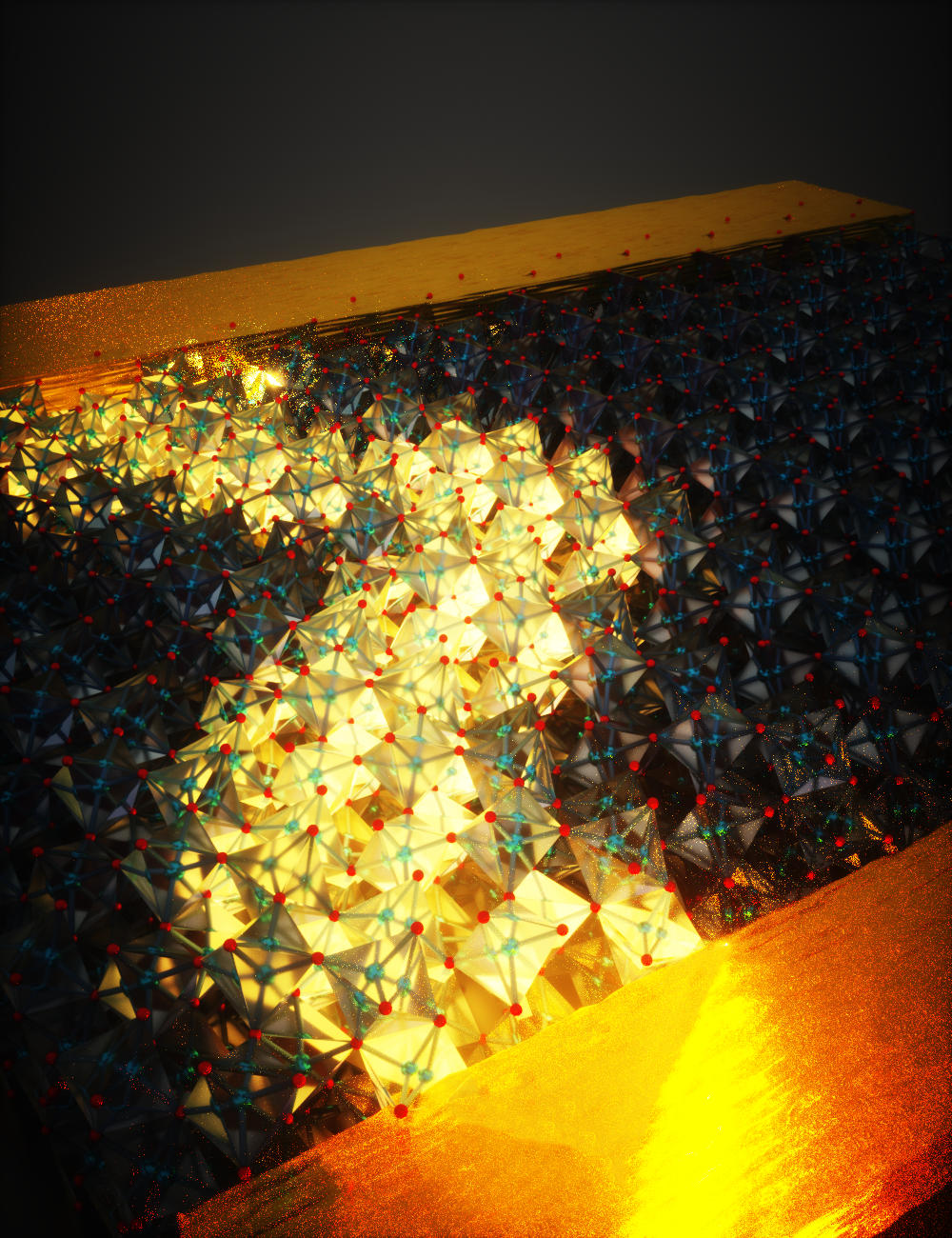
    Vanadium Dioxide (VO2), a compound capable of “remembering” the entire history of previous external stimuli. Credit: POWERlab / 2022 EPFL

    Vanadium Dioxide Has the Ability To “Remember” the Entire History of Past Environmental Stimuli

    During his research on phase transitions in Vanadium Dioxide (VO2), Mohammad Samizadeh Nikoo, a Ph.D. student at Ecole Polytechnique Fédérale de Lausanne’s (EPFL) Power and Wide-band-gap Electronics Research Laboratory (POWERlab), made an unexpected finding. When relaxed at room temperature, VO2 has an insulating phase and experiences a sharp insulator-to-metal transition at 68 °C (154 °F), where its lattice structure changes.

    According to Samizadeh Nikoo, VO2 has a volatile memory: “the material reverts back to the insulating state right after removing the excitation.” He set out to find how long it takes for VO2 to change from one state to another for his thesis. However, his investigation took a different turn: after collecting hundreds of measurements, he discovered a memory effect in the material’s structure.

    An Unexpected Finding

    In his experiments, Samizadeh Nikoo administered an electric current to a VO2 sample. “The current moved across the material, following a path until it exited on the other side,” he explains. The VO2 changed state as the current heated the sample. After the current had gone, the material returned to its original state. Samizadeh Nikoo then delivered a second current pulse to the material and discovered that the time it took to change state was closely related to the material’s history.

    “The VO2 seemed to ‘remember’ the first phase transition and anticipate the next,” explains Professor Elison Matioli, who heads the POWERlab. “We didn’t expect to see this kind of memory effect, and it has nothing to do with electronic states but rather with the physical structure of the material. It’s a novel discovery: no other material behaves in this way.”

    A Memory of up to Three Hours

    The researchers discovered that VO2 may recall its most recent external stimulus for up to three hours. “The memory effect could in fact persist for several days, but we don’t currently have the instruments needed to measure that,” says Matioli.

    The finding made by the study team is significant since the memory effect identified is an innate property of the material itself. Engineers depend on memory to complete various calculations, and materials that may improve the calculation process by increasing capacity, speed, and miniaturization are in high demand. VO2 checks all three of these boxes. Furthermore, its continuous, structural memory distinguishes it from typical materials that store data as binary information depending on the manipulation of electrical states.

    The researchers performed a host of measurements to reach their conclusions. They also confirmed their results by applying the new method to different materials at other laboratories around the world. This discovery replicates well what happens in the brain, as VO2 switches act just like neurons.

    Reference: “Electrical control of glass-like dynamics in vanadium dioxide for data storage and processing” by Mohammad Samizadeh Nikoo, Reza Soleimanzadeh, Anna Krammer, Guilherme Migliato Marega, Yunkyu Park, Junwoo Son, Andreas Schueler, Andras Kis, Philip J. W. Moll and Elison Matioli, 22 August 2022, Nature Electronics.
    DOI: 10.1038/s41928-022-00812-z

    Never miss a breakthrough: Join the SciTechDaily newsletter.
    Follow us on Google and Google News.

    Electronics EPFL Materials Science Popular
    Share. Facebook Twitter Pinterest LinkedIn Email Reddit

    Related Articles

    Beyond Moore’s Law: New Strategy for Developing Highly Versatile Electronics With Outstanding Performance Discovered

    Titanate Nanowire Mask Filter Can Kill Bacteria and Viruses Including SARS-CoV-2/COVID-19

    Controlled Graphene Crumpling Used as Artificial Muscle Actuators

    Nanoscale Coating Repels Virtually Any Liquid

    Liquid Metal Used in Ultra-Stretchable Conducting Wires

    Duke University Creates “Perfect” Microwave Cloak

    Nanosheet-Flower Structure Boosts Energy Storage

    Dissolvable Electronic Components Could Be Used in Medical Implants

    Spray Paint Battery Can be Painted on Virtually Any Surface

    Leave A Reply Cancel Reply

    • Facebook
    • Twitter
    • Pinterest
    • YouTube

    Don't Miss a Discovery

    Subscribe for the Latest in Science & Tech!

    Trending News

    Scientists Say This Natural Hormone Reverses Obesity by Targeting the Brain

    35-Million-Year-Old Mystery: Strange Arachnid Discovered Preserved in Amber

    Is AI Really Just a Tool? It Could Be Altering How You See Reality

    JWST Reveals a “Forbidden” Planet With a Baffling Composition

    The Protein “Sabotaging” Aging Muscle Recovery Could Be Key to Surviving Aging

    This Diet–Gut Interaction Could Transform Fat Into a Calorie-Burning Machine

    Scientists Discover Hidden Virus Linked to Colorectal Cancer

    Scientists Discover 132-Million-Year-Old Dinosaur Tracks on South Africa’s Coast

    Follow SciTechDaily
    • Facebook
    • Twitter
    • YouTube
    • Pinterest
    • Newsletter
    • RSS
    SciTech News
    • Biology News
    • Chemistry News
    • Earth News
    • Health News
    • Physics News
    • Science News
    • Space News
    • Technology News
    Recent Posts
    • Surprise RNA Discovery Challenges Long-Held Beliefs About How Genes Work
    • Your IQ at 23 Could Predict Your Wealth at 27, Study Finds
    • 320 Light-Years Away, a Planet Confirms a Fundamental Cosmic Assumption
    • Astronomers Solve Decades-Long Mystery About Saturn’s Spin – “Something Strange Was Happening”
    • Scientists Uncover Strange New State of Matter Inside Uranus and Neptune
    Copyright © 1998 - 2026 SciTechDaily. All Rights Reserved.
    • Science News
    • About
    • Contact
    • Editorial Board
    • Privacy Policy
    • Terms of Use

    Type above and press Enter to search. Press Esc to cancel.