
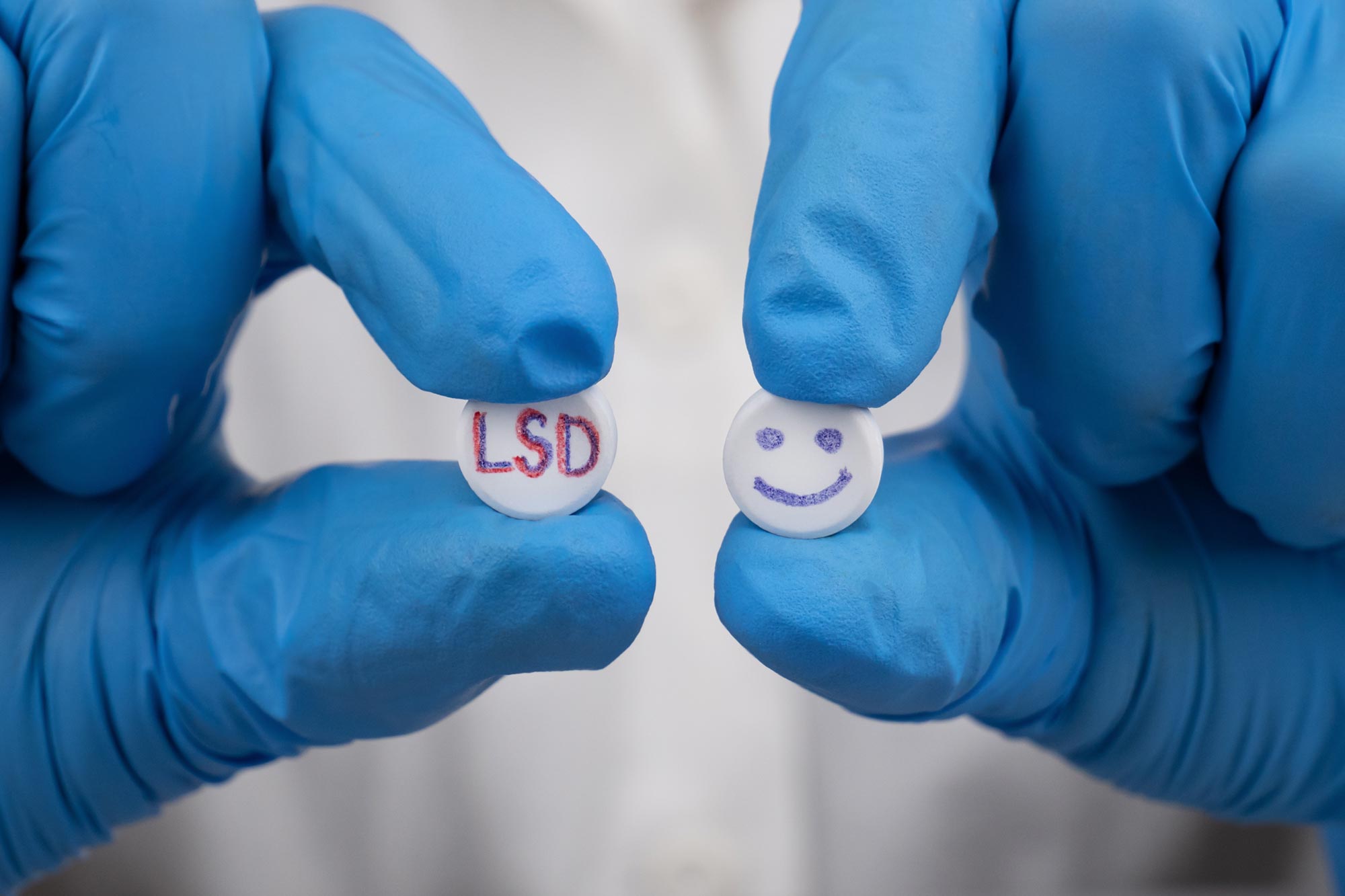
Molecular autopsy reveals features linked to hallucinations and therapeutic benefits.
LSD, a psychedelic drug being studied for its ability to help nerve cells grow and strengthen their connections, has a complicated molecular structure. Researchers at the University of California, Davis have pared that structure down, creating simpler compounds with reduced hallucinogenic and heart-toxic effects. One of those compounds also produced antipsychotic-like effects in mice.
The work addresses a challenge in developing medicines from psychedelics. The growth and strengthening of connections between nerve cells could be useful against neuropsychiatric and neurodegenerative diseases in which those connections deteriorate. But LSD’s molecular structure also produces effects that researchers want to reduce or avoid.
Two compounds with reduced unwanted effects
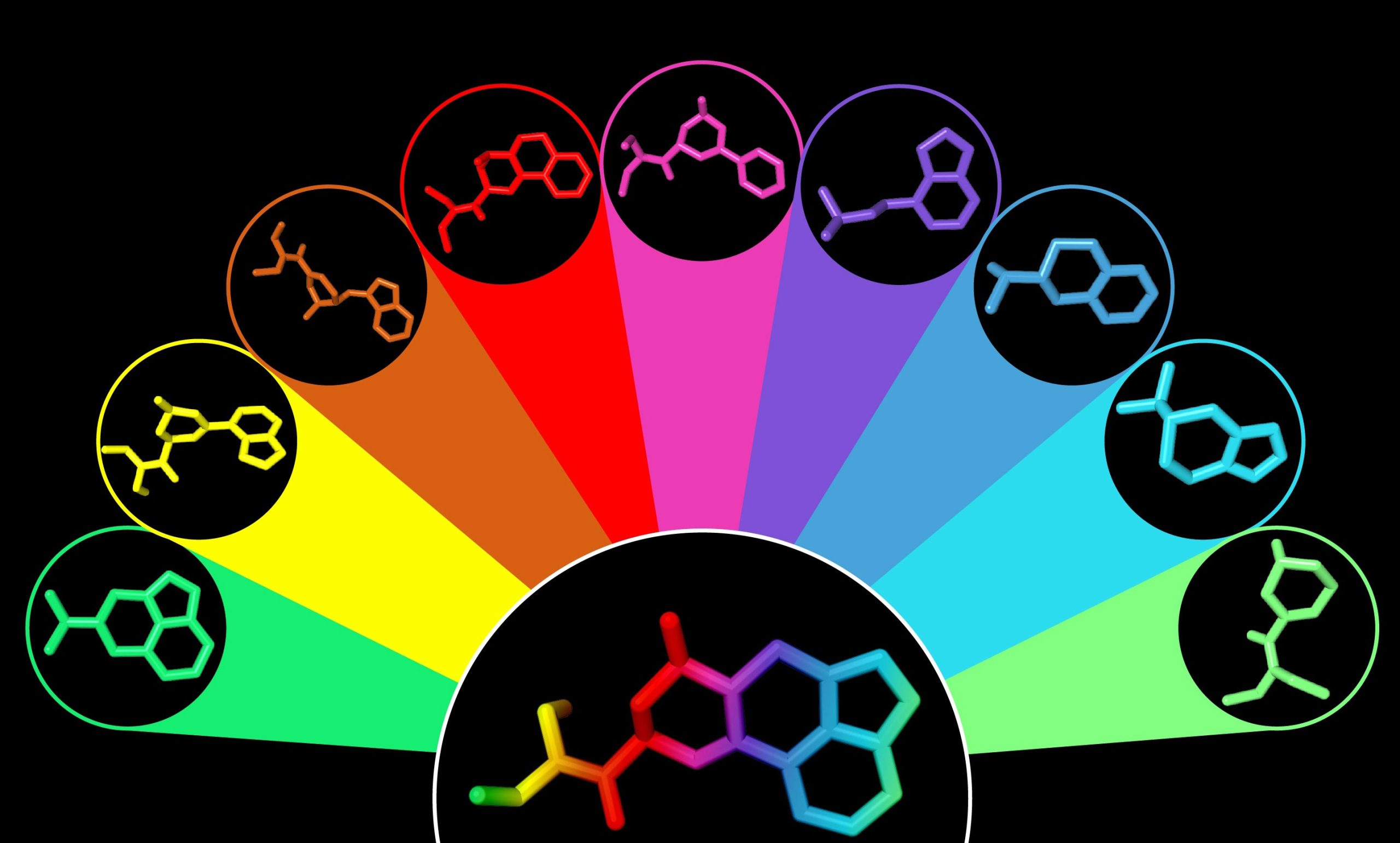
In the study, published in Proceedings of the National Academy of Sciences, the team synthesized nine modified versions of LSD’s central molecular framework. Two compounds, named UCD0094 and UCD0076, showed improved safety profiles, with reduced hallucinogenic and cardiotoxic effects. These findings provide starting points for drug development rather than establishing that the compounds are safe or effective treatments in people.
UCD0076 also showed a strong preference for binding to the serotonin receptor 5-HT2C. Serotonin receptors are proteins that respond to the chemical messenger serotonin, and different receptor types help mediate different drug effects. In behavioral tests in mice, UCD0076 produced antipsychotic-like effects.
“It’s interesting that you could take LSD’s structure, chop off a part of it and you’re left with a molecule that is fundamentally antipsychotic,” said corresponding author David E. Olson, director of the Institute for Psychedelics and Neurotherapeutics and a professor of chemistry, and biochemistry and molecular medicine at UC Davis. Olson noted that compounds that activate 5-HT2C receptors are being explored as treatments for epilepsy and substance use disorders, as well as schizophrenia. “This is a great starting point for those conditions.”
Separating LSD’s effects by removing rings
Making these simpler compounds required dismantling LSD’s ergoline core, a framework of four fused molecular rings. That core interacts with several serotonin receptors, including 5-HT2A, 5-HT2B, and 5-HT2C, contributing to the drug’s beneficial and harmful effects. Its complexity has also made it difficult to modify.
“We’ve known the structure of LSD for a long time, but the complexity of its core has really limited our ability to engineer optimized drugs based on its structure,” said Olson. “If you can only modify a couple of spots, you’re limited in what you can do.”
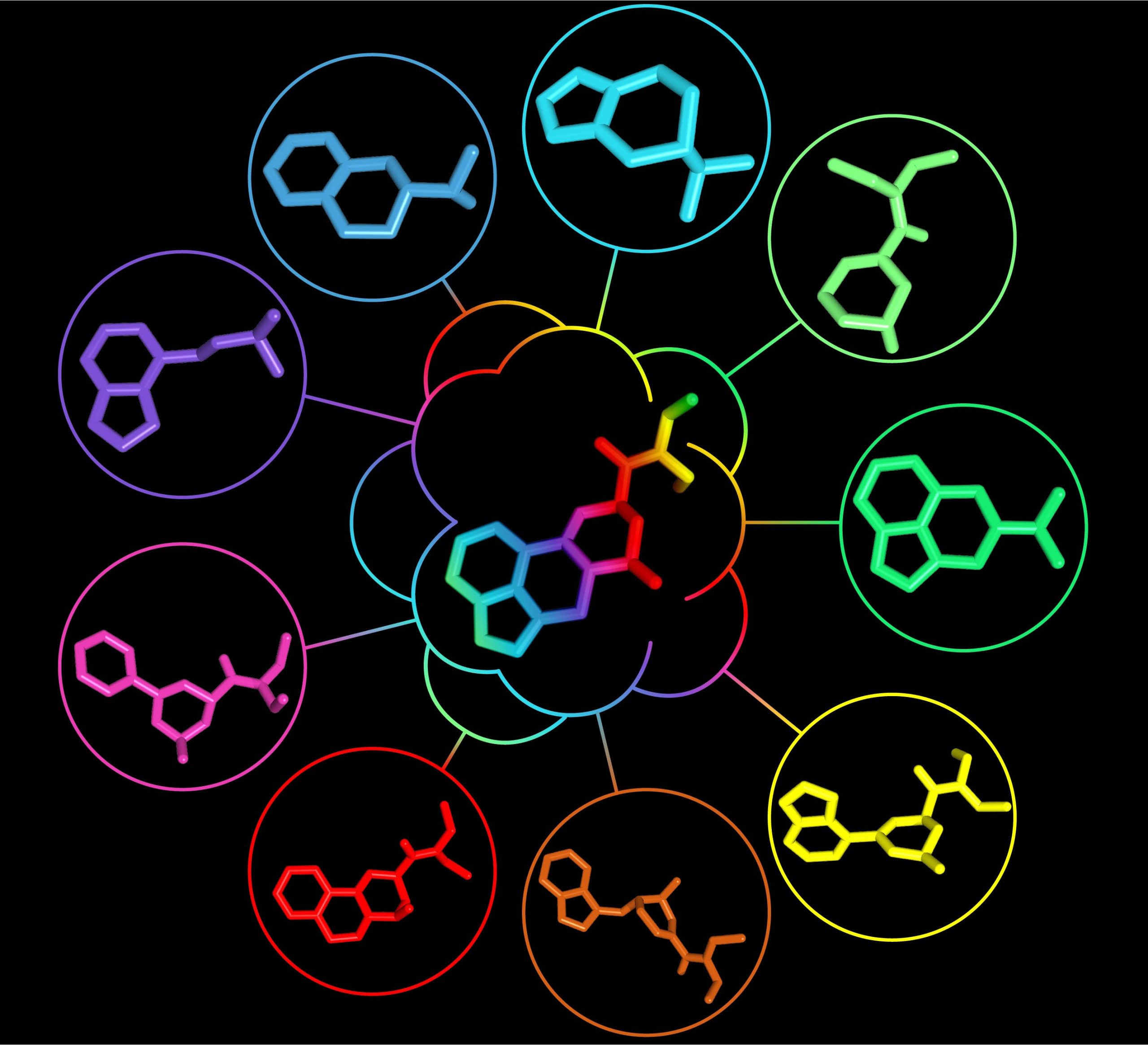
The team took a systematic approach, removing portions of the ring structure and examining how the resulting compounds behaved. This allowed the researchers to connect particular structural features with particular effects.
“We found that when you start deleting portions of LSD’s molecular structure, you can retain some properties and eliminate others,” Olson said. “By systematically deleting these rings, we can figure out what rings are important for what effects.”
“By systematically deconstructing LSD, we have identified simplified cores that are better starting points for medicinal chemistry efforts,” Olson said.
Which features drive LSD’s hallucinogenic effects?
One question concerned LSD’s resemblance to two major families of psychedelic compounds, tryptamines and phenethylamines. Its molecular framework contains structural features of both.
“If you take those structures and overlap them, they basically produce LSD,” Olson said. “The big question is, which one of those is more important for the hallucinogenic effects of LSD?”
The results pointed to the phenethylamine-like features. Removing the tryptamine-like portions left the molecule able to stimulate the 5-HT2A receptor and produce hallucinogenic effects. Removing other portions reduced those effects, along with cardiotoxic effects mediated by the 5-HT2B receptor.
Reference: “Deconstruction of lysergic acid diethylamide” by Andrian G. Basargin, Andras Domokosa, Joseph J. Hennessey, Isak K. Aarrestad, Rohini Sambyal, Yara A. Khatib, Johanna Krüger, Lee E. Dunlap, Samuel J. Carter, Isabella A. Rebek, John L. McKee, Serena S. Schalk, Min Liu, James C. Fettinger, Monica A. Gonzalez, Abhay Potluri, Dean J. Tantillo, Oliver Fiehn, John D. McCorvy and David E. Olson, 8 September 2026, Proceedings of the National Academy of Sciences.
DOI: 10.1073/pnas.2603412123
The research was supported by the National Institutes of Health, the National Science Foundation, the Camille and Henry Dreyfus Foundation, and the Pershing Square Foundation.
Never miss a breakthrough: Join the SciTechDaily newsletter.
Follow us on Google and Google News.
2 Comments
Why not start with ergot instead of the LSD made from it?
First thing is get the negative effects out of marijuana because that is a drug that causes psychosis and schizophrenia as I have seen this in people I know.