

The discovery opens up opportunities to study the therapeutic properties of ibogaine and related compounds.
Ibogaine, a psychoactive plant derivative, has garnered attention for its anti-addictive and antidepressant properties. However, it is a finite resource, extracted from African plants such as the iboga shrub (Tabernanthe iboga) and the small-fruited voacanga tree (Voacanga africana). Additionally, its use can cause irregular heartbeats, posing safety risks and highlighting the need for a deeper understanding of how its molecular structure drives its biological effects.
In a study published in Nature Chemistry, researchers at the University of California, Davis Institute for Psychedelics and Neurotherapeutics (IPN) report the successful total synthesis of ibogaine, along with ibogaine analogs and related compounds, from pyridine—a relatively inexpensive and widely available chemical.
The team’s strategy enabled the synthesis of four naturally occurring ibogaine-related alkaloids as well as several non-natural analogs. Overall yields ranged from 6% to 29% after only six or seven steps, a marked increase in efficiency from previous synthetic efforts to produce similar compounds.
“Ibogaine’s complex chemical structure makes it hard to produce in significant quantities, and this challenging chemistry has historically limited medicinal chemistry efforts to develop improved analogs,” said the study’s corresponding author David E. Olson, director of the IPN and a professor of chemistry and biochemistry and molecular medicine at UC Davis. “Performing total synthesis solves both problems. We can make it without having to harvest tons and tons of plant material and we can also make analogs, several of which are demonstrating really interesting properties.”
Despite the cardiac risk of ibogaine, Olson noted that the compound is gaining popularity as a treatment for substance use disorders, traumatic brain injury, and other conditions.
“Some people want to find ways to administer ibogaine more safely and you might be able to mitigate risk with careful cardiac monitoring and magnesium supplementation,” he said. “But maybe we just need ibogaine 2.0, a better version that still produces these profound anti-addictive and anti-depressant effects but doesn’t have that cardiac risk.”
Analogues of interest
Olson highlighted two ibogaine analogs of interest from the study.
The first analog was the mirror image of ibogaine. In chemistry, this mirror image trait is referred to as chirality. Like your left and right hands, such molecular compounds can’t be superposed on each other.
“Nature only produces one version and if the therapeutic effects of ibogaine are coming from interactions with another chiral entity, like an enzyme or receptor, then you would expect only the natural version to have an effect,” Olson said. “But if it’s non-specific, then both compounds would produce an effect.”
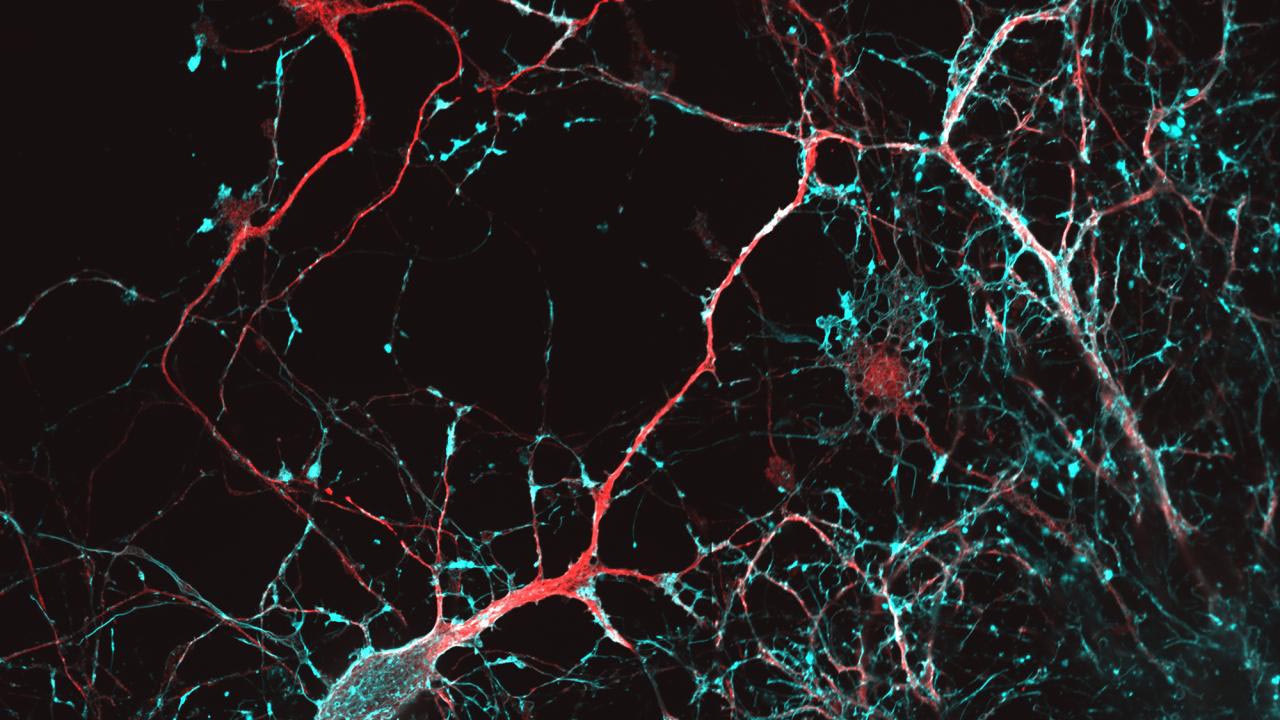
When the researchers tested the effects of ibogaine and its mirror image compound on neurons, they discovered that only the natural one promoted neuronal growth.
“This allowed us to show for the first time that ibogaine’s effects are probably the result of it being bound to a particular receptor,” Olson said. “We don’t have all the details of what receptor that is, but the unnatural compound is a good tool for probing this biology.”
The second analog of interest was (-)-10-fluoroibogamine. During experiments, the compound exhibited exceptional effects on neuronal structure and function, promoting growth and reconnection. Additionally, it showcased powerful effects on serotonin transporters, which are proteins that regulate serotonin levels at synapses.
“The serotonin transporter is the target of many antidepressants and is hypothesized to be relevant to ibogaine’s therapeutic efficacy,” Olson said.
The findings, according to researchers, indicate that (-)-10-fluoroibogamine should be further investigated as a treatment for substance use disorders, depression, and related neuropsychiatric diseases.
Safer and more effective medicines
According to Olson, the research was 10 years in the making with the team exploring multiple synthesis routes, each with varying levels of effectiveness.
“A lot of these iboga alkaloids and ibogaine analogs are not made from cheap, readily available starting materials,” Olson said. “The difference with our strategy is that we rely on very abundant, inexpensive chemicals, and we can assemble the pieces in just a few steps. Overall, our goal was to create a more efficient process.”
The research team hopes that their total synthesis strategy will provide researchers with a roadmap for efficiently accessing ibogaine analogs, ultimately leading to safer and more effective medicines
Reference: “Efficient and modular synthesis of ibogaine and related alkaloids” by Rishab N. Iyer, David Favela, Andras Domokos, Guoliang Zhang, Arabo A. Avanes, Samuel J. Carter, Andrian G. Basargin, Alexis R. Davis, Dean J. Tantillo and David E. Olson, 6 February 2025, Nature Chemistry.
DOI: 10.1038/s41557-024-01714-7
Research reported in this publication was supported by the National Institute of General Medical Sciences and National Institute on Drug Abuse of the National Institutes of Health under award numbers R35GM14182 and R01DA056365. The research was also supported by the Camille Dreyfus Teacher-Scholar Award.
Never miss a breakthrough: Join the SciTechDaily newsletter.
Follow us on Google and Google News.
4 Comments
Why not just use ibogaine?
How do I obtain this
Did you read the article?
With all the positive results from psychedelics treating ptsd, depression, etc our government still classifies these as non medicinal and illegal. I can only believe big pharma controls this while they find a way to profit heavily from a new drug. preventing people from seeking a way to treat themselves naturally.