
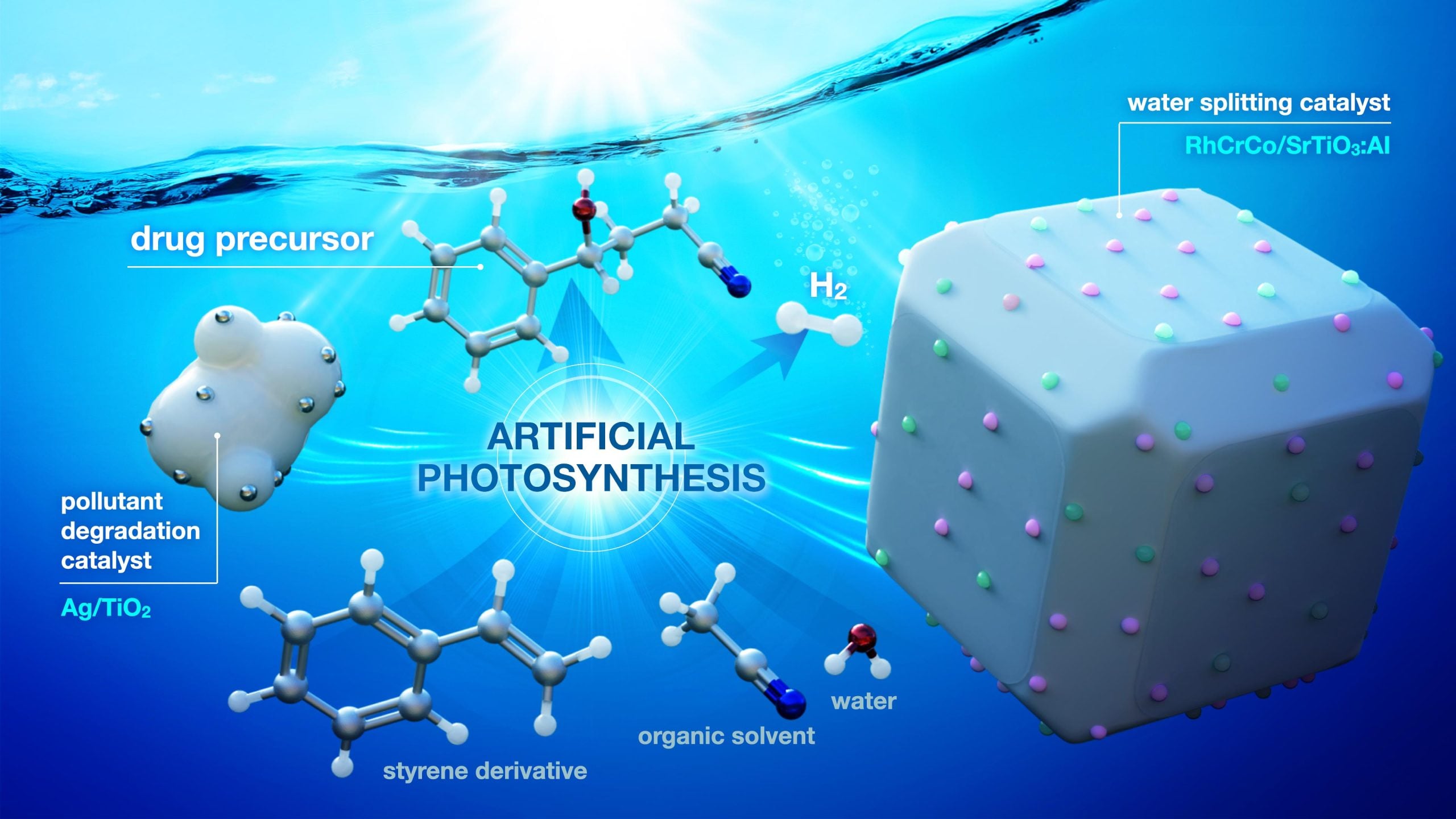
Scientists have developed an advanced artificial photosynthesis technique that doesn’t just mimic plants—it revolutionizes chemical production.
Using sunlight and water, their process, called APOS, transforms waste organic compounds into valuable chemicals and energy. Unlike traditional methods, it eliminates unwanted byproducts, making it a game-changer for sustainability.
A New Breakthrough in Artificial Photosynthesis
A research team led by Assistant Professor Shogo Mori and Professor Susumu Saito at Nagoya University has developed an innovative artificial photosynthesis technique that uses sunlight and water to generate energy and valuable organic compounds, including pharmaceutical materials, from waste. This breakthrough marks a major step toward more sustainable energy and chemical production. Their findings were published today (February 27) in Nature Communications.
“Artificial photosynthesis involves chemical reactions that mimic the way plants convert sunlight, water, and carbon dioxide into energy-rich glucose,” Saito explained. “Waste products, which are often produced by other processes, were not formed; instead, only energy and useful chemicals were created.”
Introducing APOS – A Game-Changer
The team’s technique, called artificial photosynthesis directed toward organic synthesis (APOS), meets all the key criteria for artificial photosynthesis. What sets APOS apart is its ability to use organic matter and water as raw materials, representing a fundamental shift in how artificial photosynthesis can be applied.
“The key to APOS’s success is the cooperative effects of two types of inorganic semiconductor photocatalysts,” Saito said. “The catalysts, respectively, promote the decomposition of the waste organic matter and water through water splitting, leading this time to the synthesis of useful organic compounds and ‘green’ hydrogen.”
Transforming Waste into Valuable Compounds
The researchers describe an array of practical applications for their discovery. In the experiment, they utilized different organic raw materials to synthesize more than 25 distinct alcohol and ether products containing a wide range of functional groups, including an analog of an antidepressant and a hay fever drug. The technique also allows the modification of organic materials, which they showed by modifying a drug used for treating elevated lipid levels in the blood.
“Our state-of-the-art technique could potentially produce useful carbon materials without forming carbon dioxide and waste,” Saito said. “An example is acetonitrile which we used in this experiment as a starting material. Acetonitrile is a byproduct generated during the industrial mass production of polymer and carbon nanofibers. Using it in APOS enabled it to become a useful product, potentially reducing waste.”
A Bright Future for Green Chemistry
This research marks the beginning of a new field of artificial photosynthesis for organic synthesis, and the results are expected to contribute to sustainable medical and agricultural chemical production that utilizes renewable energy and resources such as sunlight and water.
Reference: “Artificial photosynthesis directed toward organic synthesis” by Shogo Mori, Riku Hashimoto, Takashi Hisatomi, Kazunari Domen and Susumu Saito, 27 February 2025, Nature Communications.
DOI: 10.1038/s41467-025-56374-z
Never miss a breakthrough: Join the SciTechDaily newsletter.
Follow us on Google and Google News.
1 Comment
Amazing discovery which we have been looking forward for breakthrough in this area of research for humanity.