
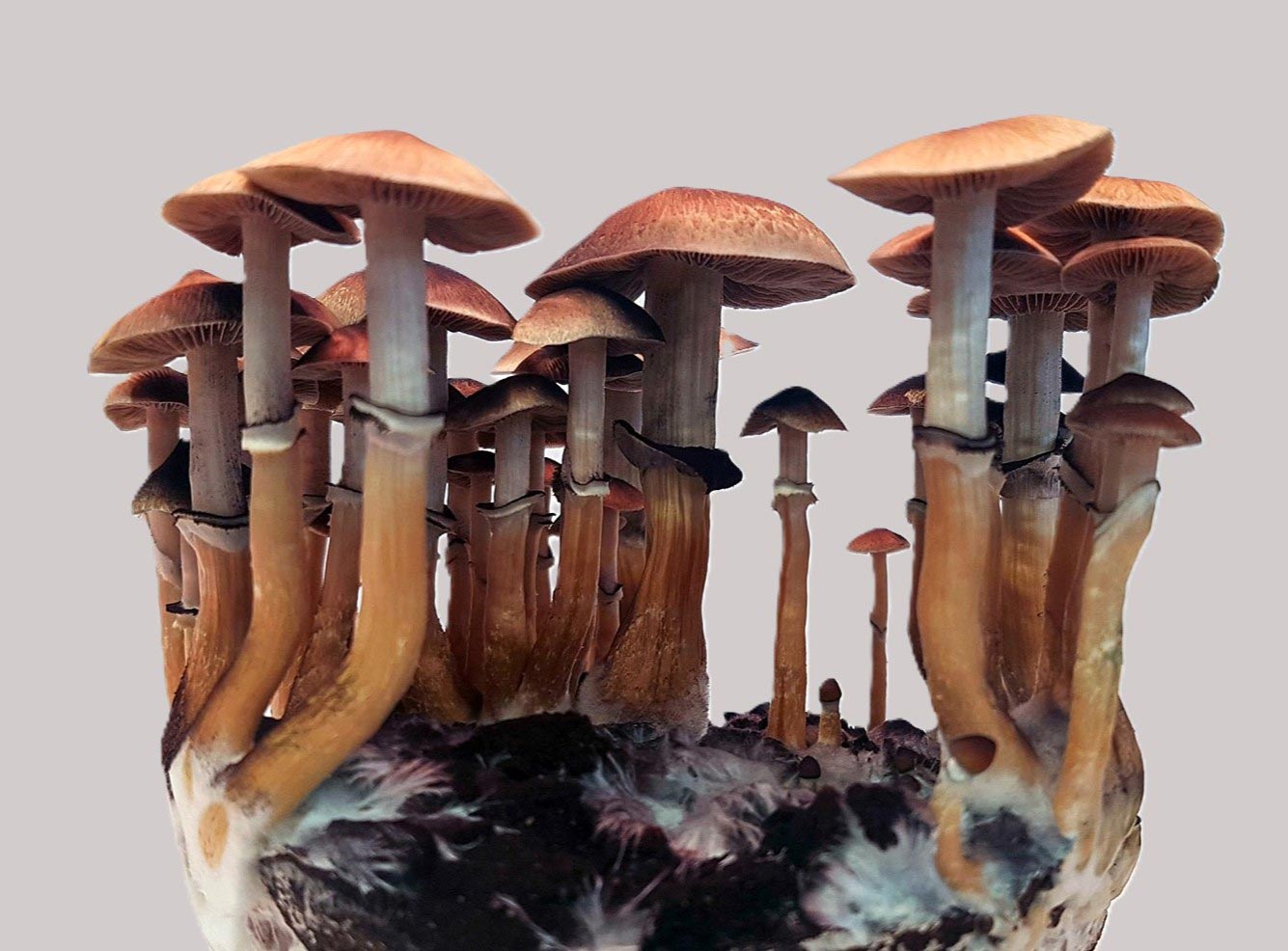
Scientists have uncovered that mushrooms evolved the ability to make psilocybin not once but twice, using completely different biochemical toolkits.
This rare case of convergent evolution shows nature arriving at the same mind-altering molecule by two separate paths. The true reason fungi produce psilocybin remains unsolved, but theories range from predator defense to chemical communication. Beyond evolutionary intrigue, the discovery also offers new enzyme tools that could help produce psilocybin more efficiently for future medicines.
Ancient Molecule With a Modern Role
“This concerns the biosynthesis of a molecule that has a very long history with humans,” explains Prof. Dirk Hoffmeister, head of the research group Pharmaceutical Microbiology at Friedrich Schiller University Jena and the Leibniz Institute for Natural Product Research and Infection Biology (Leibniz-HKI).
“We are referring to psilocybin, a substance found in so-called ‘magic mushrooms’, which our body converts into psilocin – a compound that can profoundly alter consciousness. However, psilocybin not only triggers psychedelic experiences, but is also considered a promising active compound in the treatment of therapy-resistant depression,” says Hoffmeister.
Two Evolutionary Paths to Psilocybin
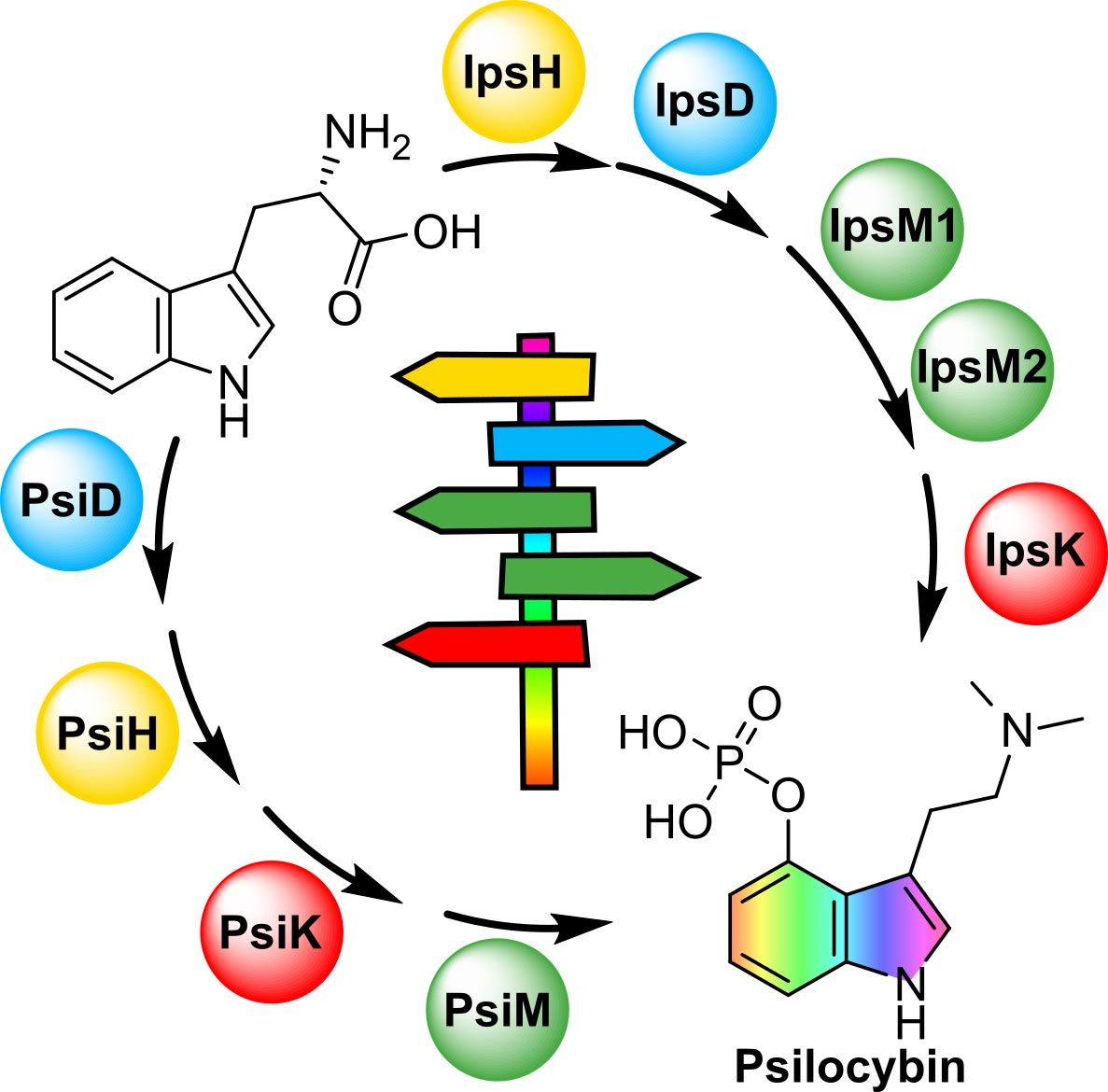
The study, carried out within the Cluster of Excellence ‘Balance of the Microverse’, reveals that fungi developed the ability to produce psilocybin on at least two separate occasions in evolutionary history. Psilocybe mushrooms rely on a familiar set of enzymes to make the molecule, while fiber cap mushrooms use an entirely different biochemical toolkit. Despite these very different methods, both groups arrive at the same compound. Scientists call this convergent evolution, when unrelated species independently evolve the same trait.
Hidden Clues in Fungal Genomes
Lead author Tim Schäfer, a doctoral researcher in Hoffmeister’s lab, explains: “It was like looking at two different workshops, but both ultimately delivering the same product. In the fiber caps, we found a unique set of enzymes that have nothing to do with those found in Psilocybe mushrooms. Nevertheless, they all catalyze the steps necessary to form psilocybin.”
The team then studied these enzymes in the lab. Using protein models built by Innsbruck chemist Bernhard Rupp, they confirmed that the reaction sequence in fiber caps differs greatly from what is known in Psilocybe. “Here, nature has actually invented the same active compound twice,” notes Schäfer.
Mysteries Behind the Molecule’s Purpose
However, why two such different groups of fungi produce the same active compound remains unclear. “The real answer is: we don’t know,” emphasizes Hoffmeister. “Nature does nothing without reason. So there must be an advantage to both fiber cap mushrooms in the forest and Psilocybe species on manure or wood mulch producing this molecule – we just don’t know what it is yet.”
“One possible reason could be that psilocybin is intended to deter predators. Even the smallest injuries cause Psilocybe mushrooms to turn blue through a chemical chain reaction, revealing the breakdown products of psilocybin. Perhaps the molecule is a type of chemical defense mechanism,” says Hoffmeister.
Biotech Opportunities From Fungal Chemistry
Although it is still unclear why different fungi ultimately produce the same molecule, the discovery nevertheless has practical implications: “Now that we know about additional enzymes, we have more tools in our toolbox for the biotechnological production of psilocybin,” explains Hoffmeister.
Schäfer is also looking ahead: “We hope that our results will contribute to the future production of psilocybin for pharmaceuticals in bioreactors without the need for complex chemical syntheses.” At the Leibniz-HKI in Jena, Hoffmeister’s team is working closely with the Bio Pilot Plant, which is developing processes for producing natural products, such as psilocybin, on an industrial scale.
Unlocking Nature’s Hidden Strategies
At the same time, the study provides exciting insights into the diversity of chemical strategies used by fungi and their interactions with their environment. It thus addresses central questions of the Collaborative Research Center ChemBioSys and the Cluster of Excellence ׅ‘Balance of the Microverse’ at Friedrich Schiller University Jena, within the framework of which the work was carried out and funded by the German Research Foundation (DFG), among others. While the CRC ChemBioSys investigates how natural compounds shape biological communities, the Cluster of Excellence focuses on the complex dynamics of microorganisms and their environment.
Reference: “Dissimilar Reactions and Enzymes for Psilocybin Biosynthesis in Inocybe and Psilocybe Mushrooms” by Tim Schäfer, Fabian Haun, Bernhard Rupp and Dirk Hoffmeister, 21 September 2025, Angewandte Chemie International Edition.
DOI: 10.1002/anie.202512017
Never miss a breakthrough: Join the SciTechDaily newsletter.
Follow us on Google and Google News.
6 Comments
Psilocybin is an intelligence and you can communicate with it when you consume it. Microdosing and macrodosing Psilocybin will allow you to understand it way more than any other test you can do in a lab.
Yes!
I like to believe it opens your mind to abstract concepts that are not making connections through the neurons in your brain ordinarily. But with the help of Psilocybin it just makes those connections somehow. I’m no doctor, psychiatrists or anything… just what I have experienced throughout the years of partaking in eating of the miraculous molecule.
I was intending to try these things but was going overseas and put a handful of these little goldy mushrooms behind the woodstove where they would dry for when I got back and my wife wouldn’t know.
On our return the house sitter told of a strange event that occurred while he sat by the fire of an evening. A mouse came out from behind the stove, made a large circle in the middle of the floor and fell over dead. So the evolutionary value of psilocybin was thereby revealed. Neither the mouse nor I will eat or interfere with these things ever again.
Never heard of anything dieing from ingesting psilocybin before. I would be willing to wager one of two things more than likely happened to the mouse. Most likely the mouse encountered something else prior that was indeed toxic, or you had some other toxic mushrooms.
Facts Tom!