
Close Menu
    Facebook X (Twitter) Instagram
    SciTechDaily
    • Biology
    • Chemistry
    • Earth
    • Health
    • Physics
    • Science
    • Space
    • Technology
    Facebook X (Twitter) Pinterest YouTube RSS
    SciTechDaily
    Home»Chemistry»Millipede Molecules Scramble Ants – And Might Help Heal the Human Brain
    Chemistry

    Millipede Molecules Scramble Ants – And Might Help Heal the Human Brain

    By Virginia TechJuly 27, 2025No Comments3 Mins Read
    Facebook Twitter Pinterest Telegram LinkedIn WhatsApp Email Reddit
    Share
    Facebook Twitter LinkedIn Pinterest Telegram Email Reddit
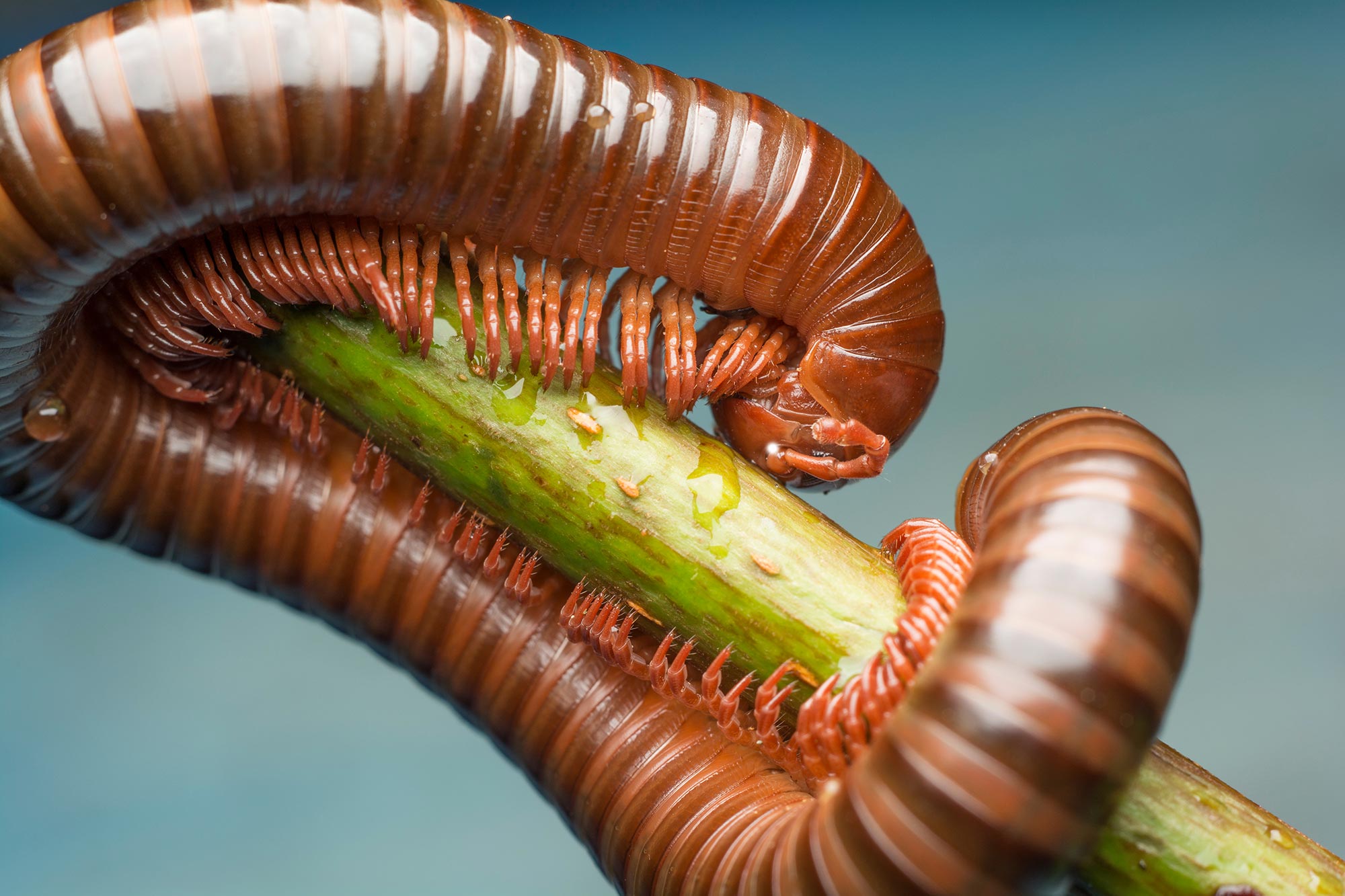
    Millipede Close Up
    Millipedes release chemicals that disorient ants — and those same compounds may also modulate brain receptors in humans. This unexpected discovery could point toward future pain treatments. Credit: Shutterstock

    Hidden beneath the forest floor, the humble millipede may hold the key to treating pain and neurological diseases.

    Scientists at Virginia Tech have uncovered a new family of complex molecules in the secretions of a native millipede species. These compounds, potent enough to confuse ants, also interact with human brain receptors linked to pain relief. Now, researchers are racing to synthesize these brain-tweaking molecules, potentially transforming one of nature’s oldest creatures into a surprising source of healing.

    Millipedes’ Secret Weapon: A New Frontier in Drug Discovery

    Millipedes get a bad rap — their many legs put people off and could classify them as “creepy crawly.” But these anthropods’ secretions could hold the key to new drug discovery for the treatment of neurological diseases and pain.

    Chemist Emily Mevers and her team recently discovered a new set of complex structures in millipede secretions that can modulate specific neuroreceptors in ant brains.

    The newly discovered structures fall into a class of naturally occurring compounds called alkaloids. The Mevers team named them the andrognathanols and the andrognathines after the producing millipede, Andrognathus corticarius, found on Virginia Tech’s Blacksburg campus in Stadium Woods. These discoveries were recently published in the Journal of the American Chemical Society.

    Unlocking Hidden Pharmacies in the Forest Floor

    Mevers specializes in leveraging the chemistry of underexplored ecological niches, in this case the millipede, in the name of drug discovery.

    After collecting millipedes from under leaf litter and fallen branches in Stadium Woods, Mevers and team members used a variety of analytical tools to identify the compounds contained in the millipedes’ defensive glands. They also learned that the millipedes release these compounds to ward off predators while also sharing their location with their kin.
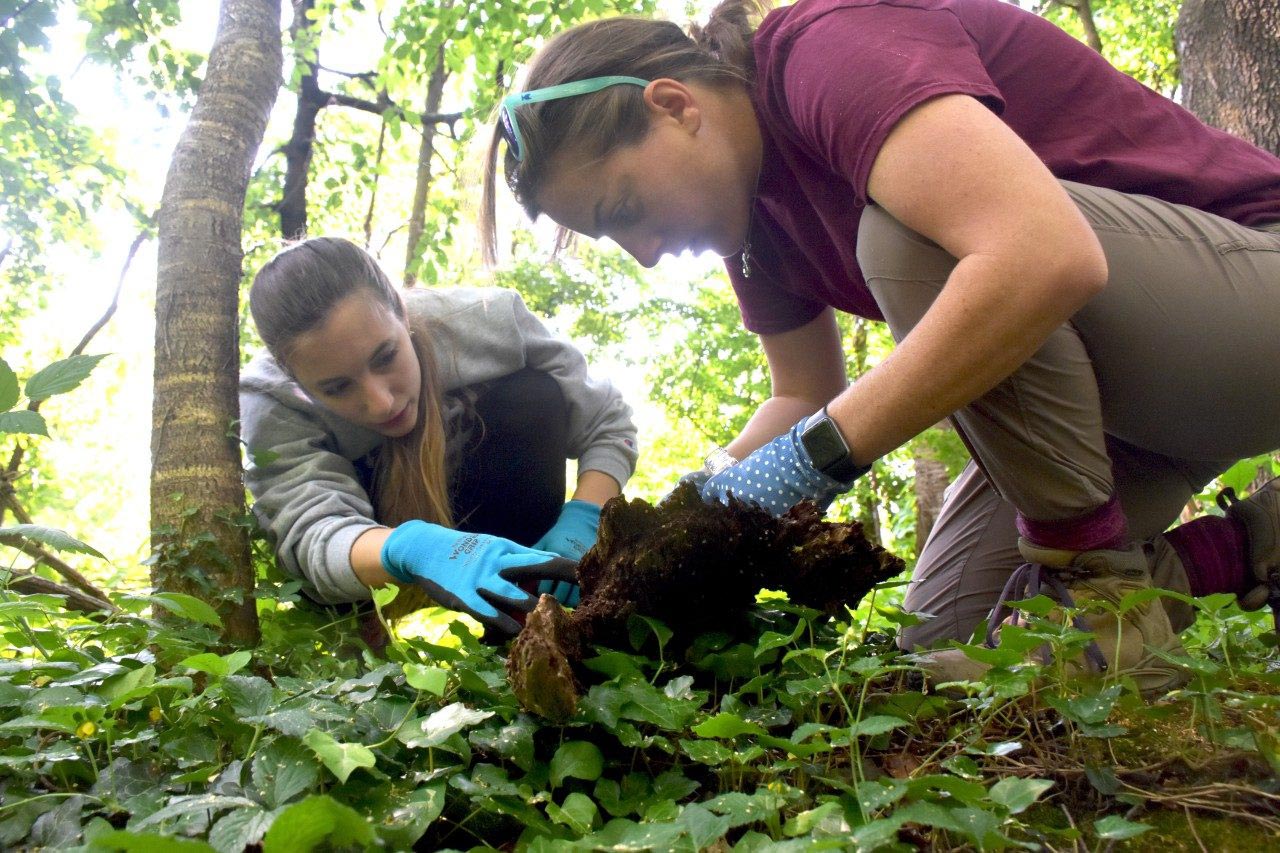
    Emily Mevers and Rose Campbell
    Chemist Emily Mevers (at right) and her graduate student, Rose Campbell, lift logs in Stadium Woods in search for millipedes. Credit: Steven Mackay/Virginia Tech

    Mysteries of the Millipede World

    Despite their pervasiveness, much about millipedes remains mysterious — including their specific habitats, numbers, diets, behaviors, and chemistry. Mevers, in collaboration with millipede expert Paul Marek in the entomology department, is working to fill in some of these gaps and see if what they uncover could be useful for future medications.

    Previously, Mevers and Marek examined a millipede native to the Pacific Northwest, Ishchnocybe plicata, and discovered that related alkaloids potently and selectively interact with a single neuroreceptor called Sigma-1. The interaction suggested that this family of compounds may have useful pharmacological potential for the treatment of pain and other neurological disorders.

    The Mevers group discovered that the new alkaloids are actively secreted from the Hokie millipede when it is physically disturbed. The secretions cause disorientation in ants, a presumed natural predator. A subset of these compounds possesses similar interactions with the Sigma-1 neuroreceptor.

    From Millipede Trails to Medicine Cabinets

    With the newfound complex compounds in hand, the next step is finding people to actually make them in larger quantities and evaluate their biomedical applications.

    “These compounds are quite complex, so they’re going to take some time to synthesize in the lab,” said Mevers.

    Once larger quantities are available, Mevers will be able to better study their properties and potential in drug development.

    Reference: “The Discovery of Complex Heterocycles from Millipede Secretions” by Paige Banks, Carla Menegatti, Lin Du, Paul E. Marek and Emily Mevers, 17 July 2025, Journal of the American Chemical Society.
    DOI: 10.1021/jacs.5c08079

    Never miss a breakthrough: Join the SciTechDaily newsletter.
    Follow us on Google and Google News.

    Chronic Pain Entomology Millipede Pain Medication Pharmaceuticals Pharmacology Virginia Tech
    Share. Facebook Twitter Pinterest LinkedIn Email Reddit

    Related Articles

    Men and Women Use Different Pain Relief Pathways, New Study Show

    Crafting Tomorrow’s Cures: Unleashing Billions of Molecules To Accelerate Drug Discovery

    Peptides and AI Unveil New Pathways in Drug Design

    Innovative Light-Controlled Drugs Could Revolutionize Neuropathic Pain Treatment

    Scientists Solve the 250-Year-Old Origin Mystery of the Most Common Indoor Urban Pest Insect on the Planet

    The Dawn of Green Chemistry: Researchers Unveil Tenfold Increase in Reaction Efficiency

    An Unexpected New Way To Recycle – Scientists Transform Plastic Waste Into Soap

    Better Than Opiates: Pain Relief Without Side Effects and Addiction

    From Ibuprofen to Fentanyl: How Do Painkillers Actually Kill Pain?

    Leave A Reply Cancel Reply

    • Facebook
    • Twitter
    • Pinterest
    • YouTube

    Don't Miss a Discovery

    Subscribe for the Latest in Science & Tech!

    Trending News

    Millions of People Have Osteopenia Without Realizing It – Here’s What You Need To Know

    Researchers Discover Boosting a Single Protein Helps the Brain Fight Alzheimer’s

    World-First Study Reveals Human Hearts Can Regenerate After a Heart Attack

    Why Your Dreams Feel So Real Sometimes and So Strange Other Times

    This Simple Home Device May Boost Brain Power in Adults Over 40

    Enormous Prehistoric Insects Puzzle Scientists

    Scientists Develop Bioengineered Chewing Gum That Could Help Fight Oral Cancer

    After 37 Years, the World’s Longest-Running Soil Warming Experiment Uncovers a Startling Climate Secret

    Follow SciTechDaily
    • Facebook
    • Twitter
    • YouTube
    • Pinterest
    • Newsletter
    • RSS
    SciTech News
    • Biology News
    • Chemistry News
    • Earth News
    • Health News
    • Physics News
    • Science News
    • Space News
    • Technology News
    Recent Posts
    • After 100 Years, Scientists Uncover Hidden Rule Governing Cosmic Rays
    • The Milky Way Has a Hidden Edge and Scientists Finally Mapped It
    • Scientists Stunned by New Organic Molecules Found on Mars
    • Scientists Discover Evolution’s 120-Million-Year-Old “Cheat Sheet”
    • This New “Sound Laser” Could Measure Gravity With Stunning Precision
    Copyright © 1998 - 2026 SciTechDaily. All Rights Reserved.
    • Science News
    • About
    • Contact
    • Editorial Board
    • Privacy Policy
    • Terms of Use

    Type above and press Enter to search. Press Esc to cancel.