
Close Menu
    Facebook X (Twitter) Instagram
    SciTechDaily
    • Biology
    • Chemistry
    • Earth
    • Health
    • Physics
    • Science
    • Space
    • Technology
    Facebook X (Twitter) Pinterest YouTube RSS
    SciTechDaily
    Home»Space»Researchers Model the Workings of an X-ray Binary Star
    Space

    Researchers Model the Workings of an X-ray Binary Star

    By Harvard-Smithsonian Center for AstrophysicsMarch 14, 20141 Comment3 Mins Read
    Facebook Twitter Pinterest Telegram LinkedIn WhatsApp Email Reddit
    Share
    Facebook Twitter LinkedIn Pinterest Telegram Email Reddit
    Model of the Workings of an X-ray Binary Star
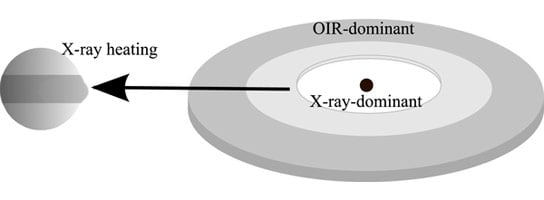
    A schematic image of the X-ray binary source LMC X-3 (not to scale). The disk around the black hole (on the right) is heated by accretion of material falling from the star (at the left) onto the disk, while some X-ray emission from the disk then heats the companion star. Astronomers were able to explain this process by modeling the time delay between the infrared and X-ray flares. Credit: Steiner, et al.

    Using ten years’ worth of optical, infrared, and X-ray data on LMC X-3, astronomers developed a model that can successfully explain the workings of an X-ray binary star.

    The bright X-ray source known as LMC X-3 resides in the Large Magellanic Cloud, the dwarf galaxy that is the Milky Way’s nearest neighbor. Two decades ago astronomers discovered that the source is actually a binary system with a normal star rapidly orbiting a nearby black hole (whose mass is about 2.3 solar masses) in only 1.7 days. In X-ray binary systems like this one, material from the normal star falls onto a disk around the black hole, causing it to glow and emit radiation – at X-ray wavelengths from the inner portion of the disk closest to the black hole, and at infrared wavelengths from the outer portions of the disk. The emission typically varies in time, presumably because the infalling matter arrives in clumps or in an uneven stream. The infrared and X-ray emissions also vary from one another, and astronomers have long thought that modeling their behaviors might lead to an enhanced understanding of black hole accretion processes.

    CfA astronomers James Steiner and Jeff McClintock, along with a team of five colleagues, analyzed a ten-year collection of optical, infrared and X-ray data on LMC X-3. They discovered from the relative timing of the flares as seen in the two bands that the X-ray emission events lagged the infrared emission by about two weeks, and were able to develop a model that can successfully explain the processes at work. They considered the radiation as coming from three locations: the star itself (normal starlight dominates the emission), the disk (it is heated by accretion and emits in both X-rays and infrared), and other hot material in the disk and/or the star (it is heated by X-rays from the hot inner disk).

    The scientists are able to conclude that the infrared probably arises from a narrow annular region of the disk, a somewhat surprising result because it had been thought that infrared would come from a much wider area. They also derive a more precise orbital period for the binary (1.704805 days) and key parameters of the disk. The authors note, however, that their model has about thirty parameters; their proposed scenario is the one that best fits the whole set of data. The new work is an impressive success at understanding a complex and dramatic extragalactic black hole system.

    Reference: “Modeling the Optical–X-ray Accretion Lag in LMC X-3: Insights into Black-Hole Accretion Physics” by James F. Steiner, Jeffrey E. McClintock, Jerome A. Orosz, Michelle M. Buxton, Charles D. Bailyn, Ronald A. Remillard and Erin Kara, 20 February 2014, The Astrophysical Journal.
    DOI: 10.1088/0004-637X/783/2/101
    arXiv:1401.5529


    Never miss a breakthrough: Join the SciTechDaily newsletter.
    Follow us on Google and Google News.

    Astronomy Astrophysics Binary Star Black Hole Harvard-Smithsonian Center for Astrophysics
    Share. Facebook Twitter Pinterest LinkedIn Email Reddit

    Related Articles

    CfA Astronomers Find a Black Hole in a Low Mass X-Ray Binary

    Researchers Study Mysterious Gamma Ray Source with No Known Counterpart

    Researchers Trace the Evolution of Galaxies that Host Massive Black Holes

    Distinguishing Black Holes from Naked Singularities

    Runaway Binary LP 400-22 is Leaving the Galaxy

    A Link Between Black Hole Accretion Rate and Star Formation Rate

    Astronomers Measure a Black Hole’s “Point of No Return”

    Cloud of Hydrogen and Helium Plunging Toward the Galactic Center

    Study Challenges Prevailing Ideas About How Supermassive Black Holes Grow

    1 Comment

    1. Tamal Sarkar on July 14, 2014 11:16 am

      I have analyzed few XMM data of LMC X-3 . In one data, I found that Luminosity falls to 2.0782e+34 ergs/s (0.50000 – 10.000 keV rest frame) with Error range 1.458e+34 – 2.968e+34 at assume distance of 55 kpc. Why? What is the cause?

      Reply
    Leave A Reply Cancel Reply

    • Facebook
    • Twitter
    • Pinterest
    • YouTube

    Don't Miss a Discovery

    Subscribe for the Latest in Science & Tech!

    Trending News

    Scientists Break 50-Year-Old Bottleneck To Supercharge Cancer Drug Production

    Popular Weight-Loss Drug Wegovy Linked to Sudden Vision Loss

    Extraordinary Fossil Reveals Fatal Duel Between Ocean Titans 80 Million Years Ago

    “Super Bizarre” – Neuroscientists Discover That Adult Brain Is Filled With Millions of “Silent Synapses”

    Simple Brain Training Cuts Dementia Risk Decades Later, Study Finds

    A Simple Injection Could Help the Heart Heal Itself After a Heart Attack

    Scientists Just Discovered a Hidden Freshwater World Beneath the Great Salt Lake

    Why Your Daily Shower Could Be Worsening the Water Crisis

    Follow SciTechDaily
    • Facebook
    • Twitter
    • YouTube
    • Pinterest
    • Newsletter
    • RSS
    SciTech News
    • Biology News
    • Chemistry News
    • Earth News
    • Health News
    • Physics News
    • Science News
    • Space News
    • Technology News
    Recent Posts
    • This Surprising Daily Habit Could Cut Dementia Risk by 35%
    • Just 10 Minutes a Day: Scientists Say This Ancient Chinese Practice Shows Powerful Blood Pressure Benefits
    • This Alga Rewrites the Rules of Photosynthesis To Survive in the Dark
    • Are Humans Naturally Violent? Scientists Challenge Long-Held Assumptions
    • Scientists Say This Popular Food Could Help Your Body Get Rid of Microplastics
    Copyright © 1998 - 2026 SciTechDaily. All Rights Reserved.
    • Science News
    • About
    • Contact
    • Editorial Board
    • Privacy Policy
    • Terms of Use

    Type above and press Enter to search. Press Esc to cancel.