
First-Ever RNA Sequencing of an Extinct Species
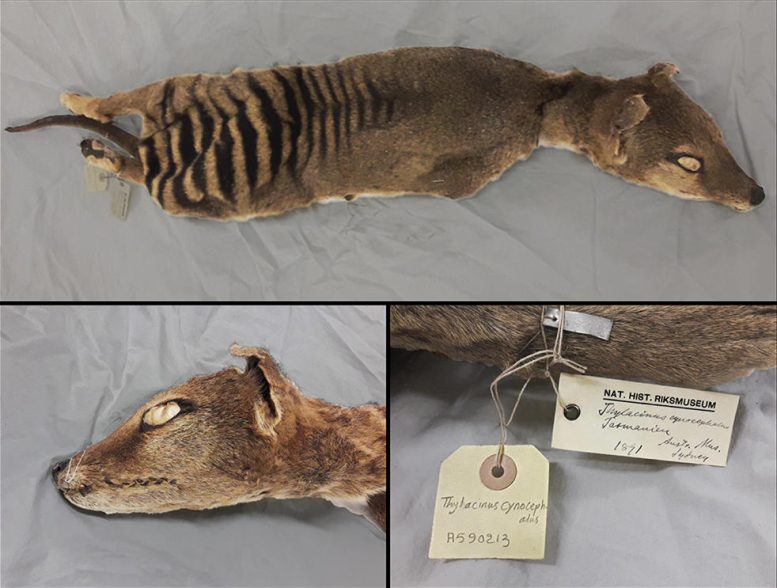
A recent study successfully isolated and sequenced century-old RNA molecules from a Tasmanian tiger specimen preserved at room temperature in a museum collection. This achievement marked the first-ever reconstruction of skin and skeletal muscle transcriptomes from an extinct species. The research team highlights that these discoveries hold significance for global initiatives aimed at reviving extinct species, such as the Tasmanian tiger and the woolly mammoth, and for research on pandemic RNA viruses.

The Tasmanian tiger, also known as the thylacine, was a remarkable apex carnivorous marsupial that was once distributed all across the Australian continent and the island of Tasmania. This extraordinary species found its final demise after European colonization, when it was declared as an agricultural pest, and a bounty of £1 per each full-grown animal killed was set by 1888. The last known living Tasmanian tiger died in captivity in 1936 at the Beaumaris Zoo in Hobart, Tasmania.
Recent efforts in de-extinction have focused on the Tasmanian tiger, as its natural habitat in Tasmania is still mostly preserved, and its reintroduction could help recover past ecosystem equilibriums lost after its final disappearance. However, reconstructing a functional living Tasmanian tiger not only requires a comprehensive knowledge of its genome (DNA) but also of tissue-specific gene expression dynamics and how gene regulation worked, which are only attainable by studying its transcriptome (RNA).
“Resurrecting the Tasmanian tiger or the woolly mammoth is not a trivial task, and will require a deep knowledge of both the genome and transcriptome regulation of such renowned species, something that only now is starting to be revealed,” says Emilio Mármol, the lead author of a study recently published in the Genome Research journal by researchers at SciLifeLab in collaboration with the Centre for Palaeogenetics*, a joint venture between the Swedish Museum of Natural History and Stockholm University.
RNA Molecules Recovered From the Tasmanian Tiger
The researchers behind this study have sequenced, for the first time, the transcriptome of the skin and skeletal muscle tissues from a 130-year-old desiccated Tasmanian tiger specimen preserved at room temperature in the Swedish Museum of Natural History in Stockholm. This led to the identification of tissue-specific gene expression signatures that resemble those from living extant marsupial and placental mammals.
The recovered transcriptomes were of such good quality that it was possible to identify muscle- and skin-specific protein-coding RNAs, and led to the annotation of missing ribosomal RNA and microRNA genes, the latter following MirGeneDB recommendations.
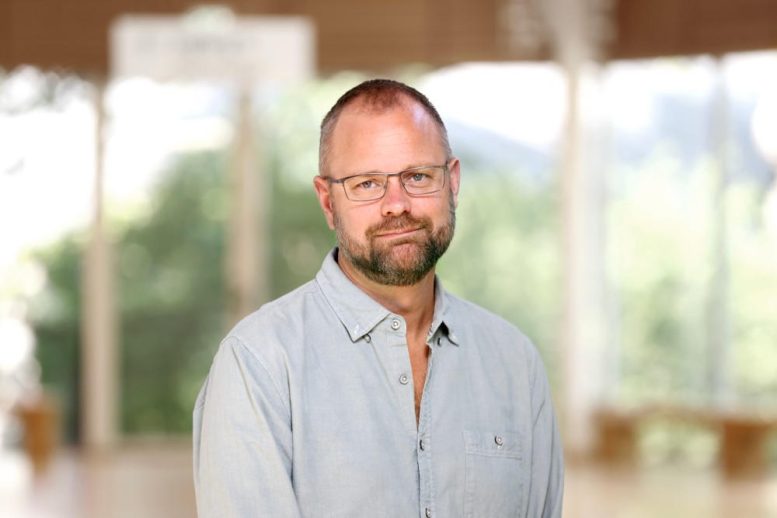
“This is the first time that we have had a glimpse into the existence of thylacine-specific regulatory genes, such as microRNAs, that got extinct more than one century ago,” says Marc R. Friedländer, Associate Professor at the Department of Molecular Biosciences, The Wenner-Gren Institute at Stockholm University and SciLifeLab.
New Frontiers in Museum Specimen RNA Recovery
This pioneering study opens up new exciting opportunities and implications for exploring the vast collections of specimens and tissues stored at museums across the globe, where RNA molecules might await to be uncovered and sequenced.
“In the future, we may be able to recover RNA not only from extinct animals but also RNA virus genomes such as SARS-CoV2 and their evolutionary precursors from the skins of bats and other host organisms held in museum collections”, says Love Dalén, Professor of evolutionary genomics at Stockholm University and the Centre for Palaeogenetics.
The authors of the study say they are excited for future holistic research developments integrating both genomics and transcriptomics towards a new era in palaeogenetics beyond DNA.
Reference: “Historical RNA expression profiles from the extinct Tasmanian tiger” by Emilio Marmol-Sanchez, Bastian Fromm, Nikolay Oskolkov, Zoe Pochon, Panagiotis Kalogeropoulos, Eli Eriksson, Inna Biryukova, Vaishnovi Sekar, Erik Ersmark, Bjorn Andersson, Love Dalen and Marc Friedlander, 18 July 2023, Genome Research.
DOI: 10.1101/gr.277663.123
Never miss a breakthrough: Join the SciTechDaily newsletter.
Follow us on Google and Google News.