
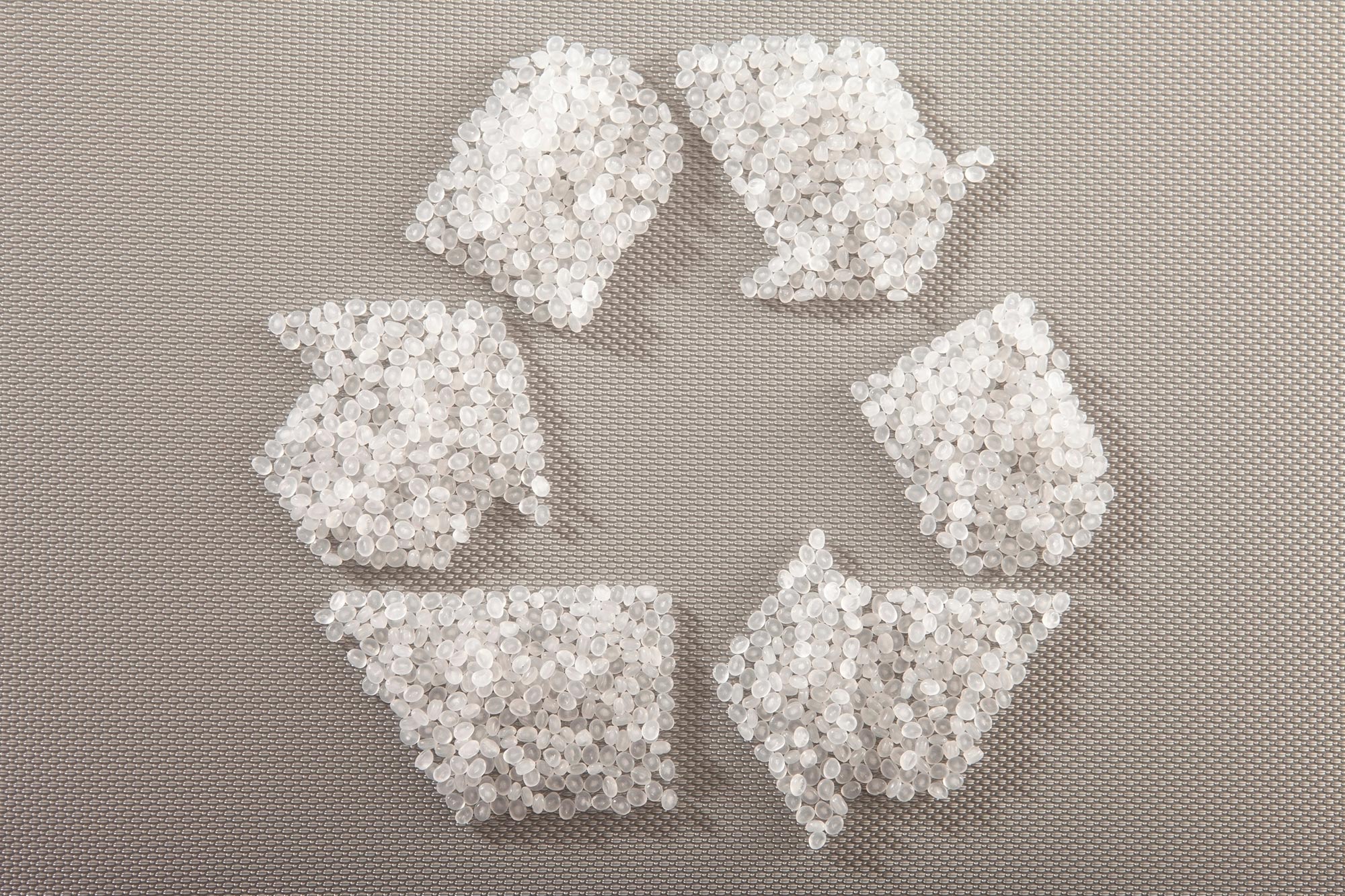
Korean researchers have bioengineered E. coli to produce a biodegradable polymer with potential biomedical applications, advancing sustainable plastic alternatives and addressing environmental challenges.
Bioengineers worldwide have been striving to develop microbes capable of producing plastics as an alternative to petroleum-based plastics. Recently, a team of researchers in Korea has made a significant breakthrough by engineering bacteria to produce polymers with ring-like structures, which enhance the rigidity and thermal stability of the resulting plastics.
Because these molecules are usually toxic to microorganisms, the researchers had to construct a novel metabolic pathway that would enable the E. coli bacteria to both produce and tolerate the accumulation of the polymer and the building blocks it is composed of.
The resulting polymer is biodegradable and has physical properties that could lend it to biomedical applications such as drug delivery, though more research is needed. The results are presented August 21 in the Cell Press journal Trends in Biotechnology, which now publishes original research in addition to review articles.
“I think biomanufacturing will be a key to the success of mitigating climate change and the global plastic crisis,” says senior author Sang Yup Lee, a chemical and biomolecular engineer at the Korea Advanced Institute of Science and Technology. “We need to collaborate internationally to promote bio-based manufacturing so that we can ensure a better environment for our future.”
Advances in Microbial Plastic Production
Most plastics that are used for packaging and industrial purposes contain ring-like “aromatic” structures—for example, PET and polystyrene. Previous studies have managed to create microbes that can produce polymers made up of alternating aromatic and aliphatic (non-ring-like) monomers, but this is the first time that microbes have produced polymers made up entirely of monomers with aromatic sidechains.
To do this, the researchers first constructed a novel metabolic pathway by recombining enzymes from other microorganisms that enabled the bacteria to produce an aromatic monomer called phenyllactate. Then, they used computer simulations to engineer a polymerase enzyme that could efficiently assemble these phenyllactate building blocks into a polymer.
Optimizing Production for Commercial Use
“This enzyme can synthesize the polymer more efficiently than any of the enzymes available in nature,” says Lee.
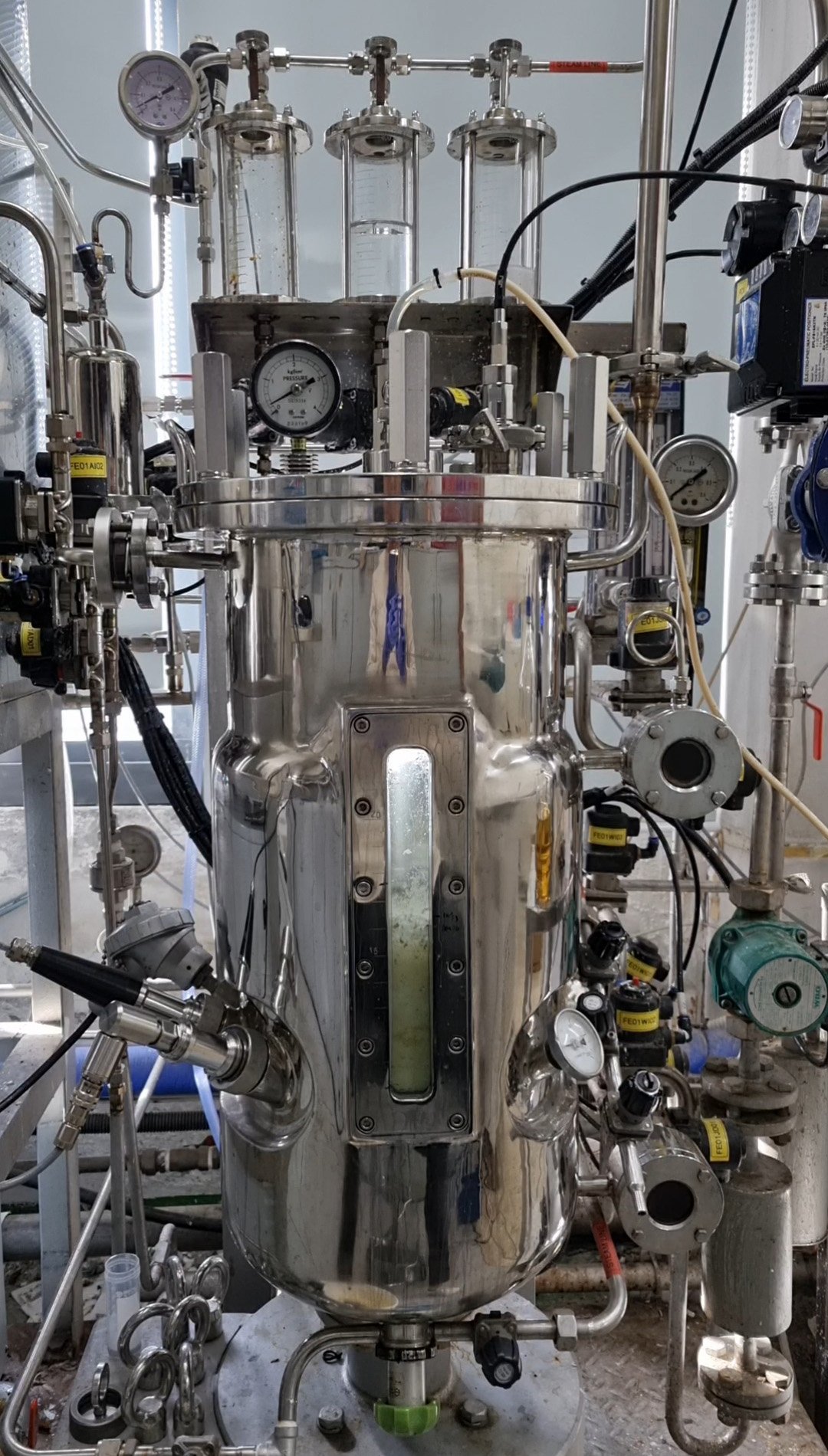
After optimizing the bacteria’s metabolic pathway and the polymerase enzyme, the researchers grew the microbes in 6.6 L (1.7 gallon) fermentation vats. The final strain was capable of producing 12.3 g/L of the polymer (poly(D phenyllactate)). To commercialize the product, the researchers want to increase the yield to at least 100 g/L.
“Based on its properties, we think that this polymer should be suitable for drug delivery in particular,” says Lee. “It’s not quite as strong as a PET, mainly because of the lower molecular weight.”
In future, the researchers plan to develop additional types of aromatic monomers and polymers with various chemical and physical properties—for example, polymers with the higher molecular weights required for industrial applications. They’re also working to further optimize their method so that it can be scaled up.
“If we put more effort into increasing the yield, then this method might be able to be commercialized at a larger scale,” says Lee. “We’re working to improve the efficiency of our production process as well as the recovery process, so that we can economically purify the polymers we produce.”
Reference: “Microbial production of an aromatic homopolyester” by Youngjoon Lee, Minju Kang, Woo Dae Jang, So Young Choi, Jung Eun Yang and Sang Yup Lee, 21 August 2024, Trends in Biotechnology.
DOI: 10.1016/j.tibtech.2024.06.001
This research was supported by the National Research Foundation, the Korean Ministry of Science, and ICT.
Never miss a breakthrough: Join the SciTechDaily newsletter.
Follow us on Google and Google News.
2 Comments
What happens if these genetically-engineered E. coli bacteria get out of the lab and into someone’s gut? E. coli is a common bacteria in humans, and if it produces plastics, what will that do to the body? What would a rogue, plastic-producing E. coli do to the environment if accidentally released?
This is a real problem with genetically-modified bacteria and yeast used in biomedicine. These GMOs are used to produce human insulin, growth hormone, and other hormones, among other things, and there are accidental releases of these organisms into the environment. The fermentation process itself releases some into the air. There have been accidental spills of these kinds of GMOs from labs. If these get into the body, they could cause lots of metabolic diseases.
See my article, Could Genetically Modified Baker’s Yeast Be Causing Obesity, Diabetes, and Gluten Intolerance?
https://www.academia.edu/8396829/Could_Genetically_Modified_Bakers_Yeast_Be_Causing_Obesity_Diabetes_and_Gluten_Intolerance
I agree. They need to explain better. The article and the scientists.