
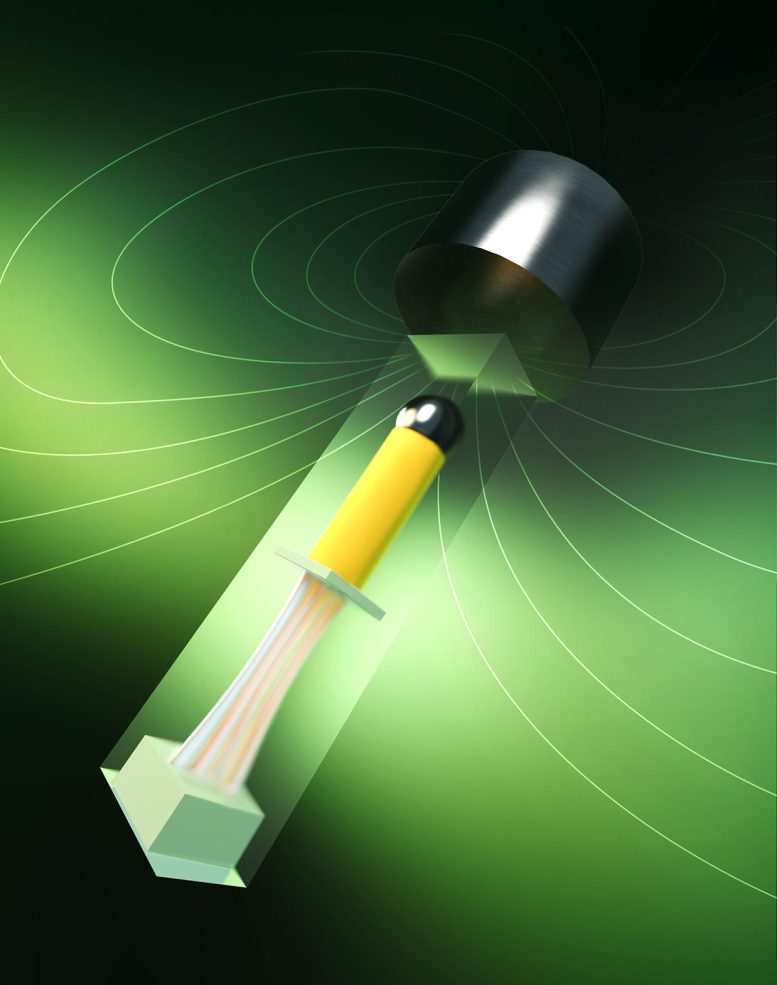
A novel electromagnetic device precisely measures soft tissue biomechanics, revealing diagnostic insights and advancing mechanobiology.
According to researchers, a groundbreaking electromagnetic device has set a new benchmark for precision in the field of mechanobiology. This device, which enables accurate measurement of a variety of soft biological tissues, makes it possible to conduct mechanical tests on samples the size of human biopsy specimens, making it particularly useful for research into human diseases.
The mechanical properties of the body’s soft tissues, including stiffness and strength, play a vital role in their proper functioning. For instance, the softness of the gastrointestinal tract’s tissues facilitates the movement and digestion of food, while tendons, which are relatively more stiff, transmit force from muscles to bones and enable movement.
The ability to accurately measure the mechanical properties of these tissues, which are subject to change during developmental processes or because of disease, has profound implications for the fields of biology and medicine. Methods to measure these properties are currently inadequate, and their accuracy and reliability remain limited – until now.
Breakthrough Device with Magnetic Actuation and Optical Sensing
New research involving researchers from the University of Cambridge and the MIT Institute for Medical Engineering and Science (IMES) has resulted in a device that relies on magnetic actuation and optical sensing, thus potentially allowing for live imaging of the tissue under an inverted microscope. This way, insights can be gained into the behavior of the tissue under mechanical forces at both a cellular and molecular level. The results are reported in the journal Science Advances.
An electromagnet exerts a pulling force on the tissue specimen which is mounted on the device, while an optical system measures the specimen’s change in size or shape.
“One of the most critical requirements for mechanical testing of soft biological tissues is the need to mimic the biological specimen’s physiological conditions (e.g., temperature, nutrients) as closely as possible, in order to keep the tissue alive and preserve its biomechanical properties,” said Dr. Thierry Savin, Associate Professor in Bioengineering, who led the research team. “To this end, we designed a transparent mounting chamber to measure the mechanical properties of tissues – at the millimeter scale – in their native physiologic and chemical environment. The result is a more versatile, precise, and robust device that shows high reliability and reproducibility.”
To directly assess the performance of their electromagnetic device, the researchers conducted a study on the biomechanics of a mouse esophagus and of its constitutive layers. The esophagus is the muscular tube connecting the throat with the stomach and it is composed of multiple tissue layers. The researchers used the device to conduct the first biomechanical investigation of each of the three individual layers of the mouse esophageal tissue. Their findings showed that the esophagus behaves like a three-layer composite material akin to those commonly used in several engineering applications. To the researchers’ knowledge, these are the first results acquired of the mechanical properties of each individual layer of the esophagus.
Setting New Standards for Tissue Biomechanics
“Our study demonstrated the enhanced reliability of the electromagnetic device, yielding errors in the stress-strain response below 15% – a level of accuracy not seen before,” said Dr. Adrien Hallou, Postdoctoral Fellow at the Wellcome Trust/Cancer Research UK Gurdon Institute. “We hope that this device may eventually become the new standard in the tissue biomechanics field, providing a standardized dataset for the characterization of mouse and human soft tissue mechanics across the board.”
Luca Rosalia, a Ph.D. candidate at IMES, added: “Through analysis of the biomechanics of healthy tissues and their changes as they occur during disease, our device could eventually be used to identify alterations in tissue properties that are of diagnostic relevance, therefore becoming a valuable tool to inform clinical decisions.”
Reference: “A magnetically actuated, optically sensed tensile testing method for mechanical characterization of soft biological tissues” by Luca Rosalia, Adrien Hallou, Laurence Cochrane and Thierry Savin, 11 January 2023, Science Advances.
DOI: 10.1126/sciadv.ade2522
Never miss a breakthrough: Join the SciTechDaily newsletter.
Follow us on Google and Google News.