
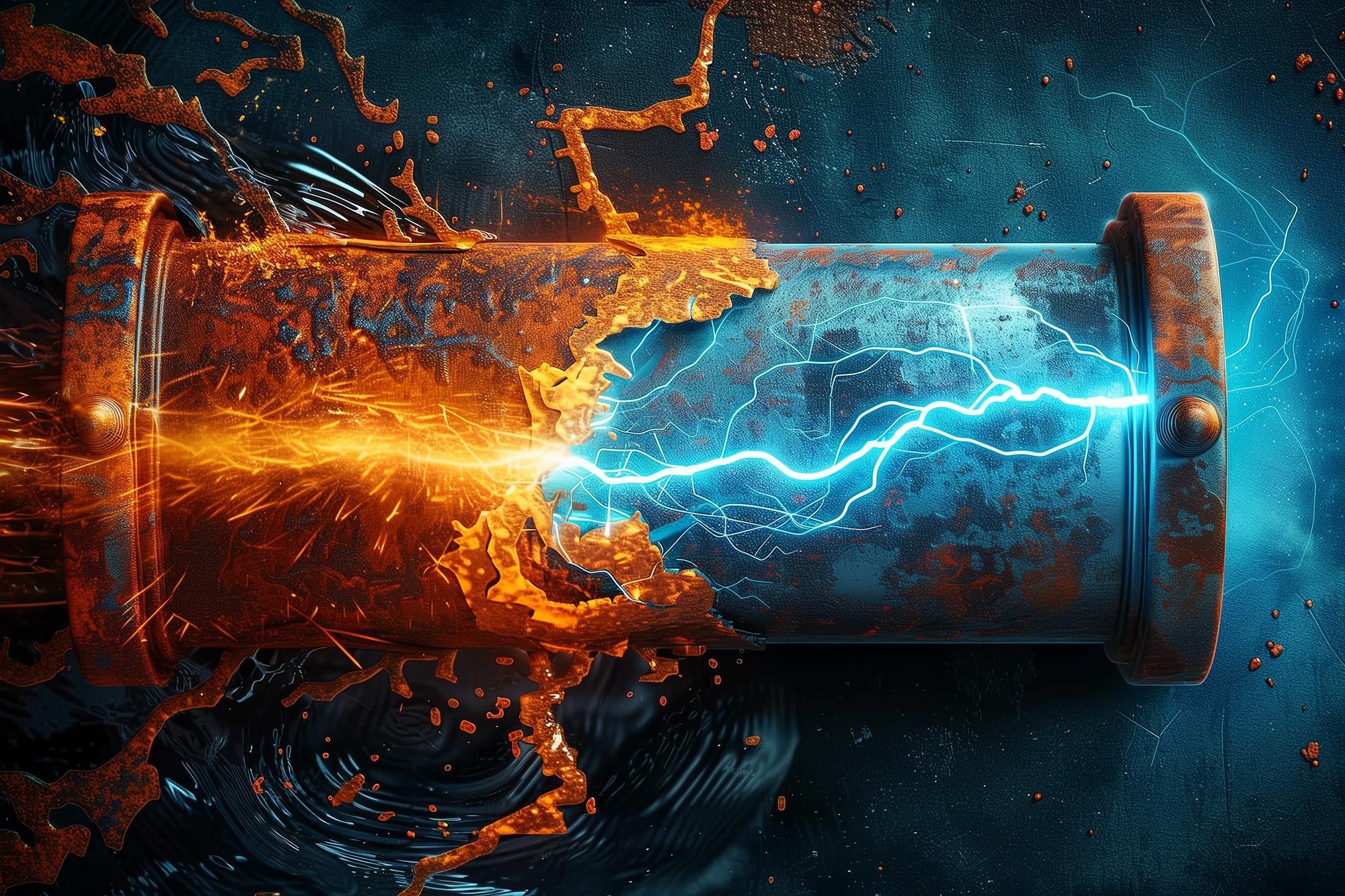
In a bold leap toward more sustainable energy storage, researchers at Worcester Polytechnic Institute have discovered a revolutionary battery chemistry powered by chloride ions—the most abundant negatively charged ions in seawater.
This breakthrough could challenge lithium-ion dominance, which relies on expensive and geographically limited materials.
Chloride: A Surprising Contender for Future Batteries
Sodium, potassium, and zinc have all been explored as potential alternatives to lithium in rechargeable batteries. Now, researchers at Worcester Polytechnic Institute (WPI) have introduced another unexpected but abundant contender: chloride—the most plentiful negatively charged ion in seawater.
Xiaowei Teng, the James H. Manning Professor of Chemical Engineering at WPI, has discovered a new redox chemistry that utilizes chloride ions to advance the development of seawater-based green batteries.
While lithium-ion batteries power everything from electric vehicles to consumer electronics, they pose challenges for large-scale energy storage due to their high cost and dependence on scarce materials like cobalt, nickel, and lithium. More than 85% of the world’s lithium reserves are concentrated in just six countries, making supply chains vulnerable and costly.
Pushing Green Battery Technology Forward
To push battery technology forward, Teng collaborated with Heath Turner, a professor of Chemical and Biological Engineering at the University of Alabama, along with research scientists Lihua Zhang, Milinda Abeykoon, Gihan Kwon, and Daniel Olds from Brookhaven National Laboratory in New York. Their research explores how chloride ions can enhance the redox chemistry of iron oxide battery materials, opening new possibilities for sustainable energy storage.
Teng and his colleagues reported on the new battery chemistry in “Chloride-Insertion Enhances the Electrochemical Oxidation of Iron Hydroxide Double Layer Hydroxide into Oxyhydroxide in Alkaline Iron Batteries,” a paper published in the American Chemical Society journal Chemistry of Materials and highlighted in the supplementary front cover.
How Chloride Ions Improve Battery Performance
This study revealed that chloride ion insertion into Fe(OH)2 layered double hydroxide formed a Green Rust intermediate crystalline material, which assisted a one-charge transfer Fe(OH)2/FeOOH conversion reaction and improved cycling stability. This new iron redox chemistry was discovered and examined in the WPI lab. Teng and his graduate student Sathya Narayanan Jagadeesan, who is the leading author of the article, further traveled to Department of Energy User Facilities at Brookhaven National Laboratory to conduct experiments to validate the results using operando synchrotron X-ray diffraction and high-resolution elementary mapping.
Aqueous Battery Prototype and Real-World Impact
Teng and his WPI team made an aqueous battery, a small lab-scale prototype that operated in the water-based electrolyte, using electrodes made mostly from abundant elements such as iron oxides and hydroxides. While the team hasn’t calculated the cost, the use of earth-abundant materials should tip the scale in their favor, Teng says.
The U.S. produces over 15 million tons of scrap iron wastes that are not recycled each year, many of which exist in the form of rust. Therefore, the reported rechargeable alkaline iron battery chemistry helps repurpose the iron rust waste materials for modern energy storage.
Reference: “Chloride Insertion Enhances the Electrochemical Oxidation of Iron Hydroxide Double-Layer Hydroxide into Oxyhydroxide in Alkaline Iron Batteries” by Sathya Narayanan Jagadeesan, Gabriel D. Barbosa, Fenghua Guo, Lihua Zhang, A. M. Milinda Abeykoon, Gihan Kwon, Daniel Olds, C. Heath Turner and Xiaowei Teng, 2 August 2023, Chemistry of Materials.
DOI: 10.1021/acs.chemmater.3c01496
The research was funded by the National Science Foundation and the Department of Energy (DOE).
Never miss a breakthrough: Join the SciTechDaily newsletter.
Follow us on Google and Google News.
1 Comment
Daaaaaaaaaammmmmmnnnnnah! From rust to re-tweets in no time flat. Grab your tetanus shot boosters & some sea water cause we gonna hit up the junkyard!