
Close Menu
    Facebook X (Twitter) Instagram
    SciTechDaily
    • Biology
    • Chemistry
    • Earth
    • Health
    • Physics
    • Science
    • Space
    • Technology
    Facebook X (Twitter) Pinterest YouTube RSS
    SciTechDaily
    Home»Space»School Bus-Size Asteroid Approaching Earth – Here’s How Close NASA Says It Will Come
    Space

    School Bus-Size Asteroid Approaching Earth – Here’s How Close NASA Says It Will Come

    By Jet Propulsion LaboratorySeptember 23, 2020No Comments3 Mins Read
    Facebook Twitter Pinterest Telegram LinkedIn WhatsApp Email Reddit
    Share
    Facebook Twitter LinkedIn Pinterest Telegram Email Reddit
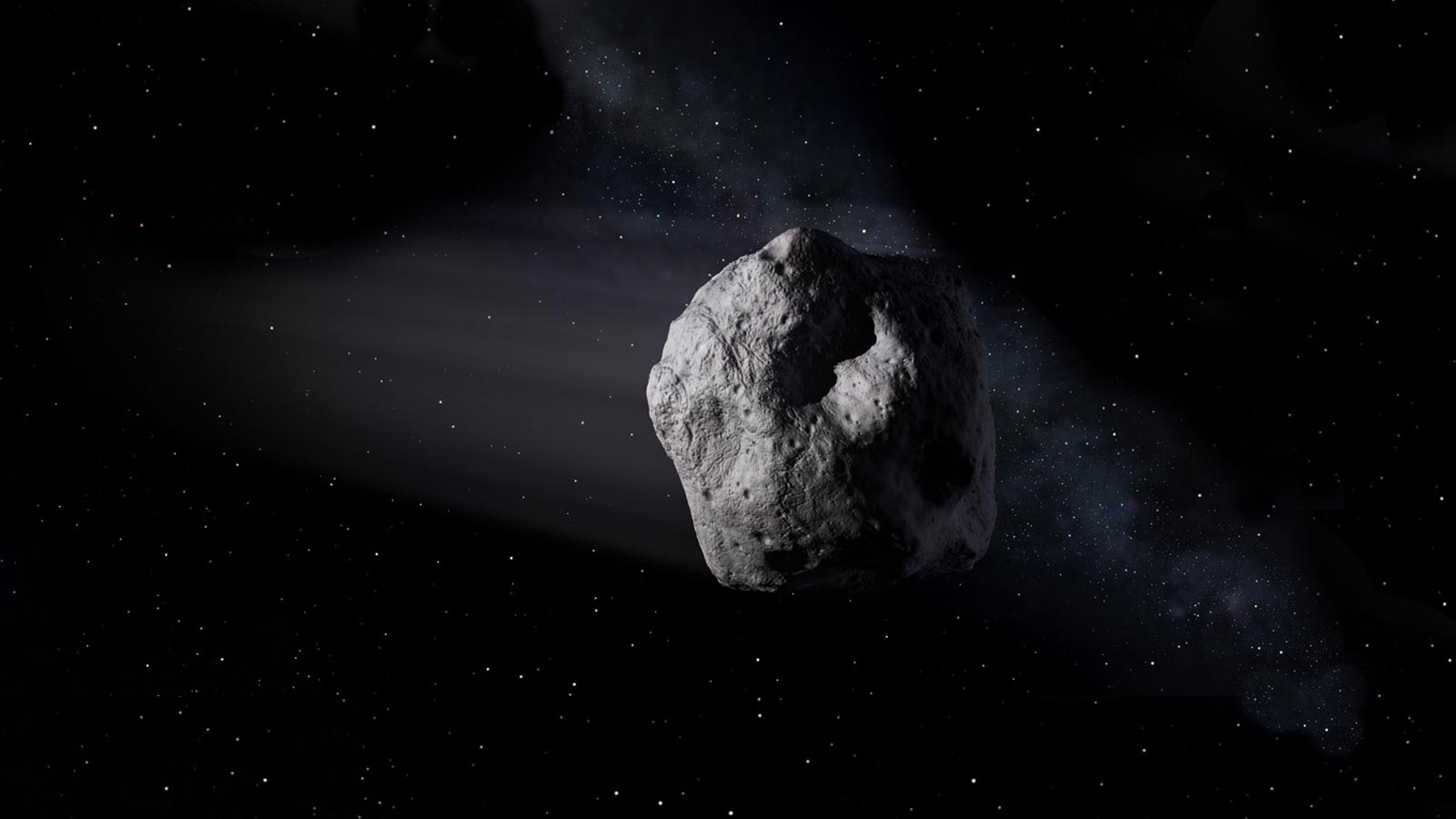
    Asteroid 2020 SW
    This illustration shows a near-Earth asteroid like asteroid 2020 SW traveling through space. Credit: NASA/JPL-Caltech

    Roughly 15 to 30 feet wide, the object will make its closest approach on September 24.

    A small near-Earth asteroid (or NEA) will briefly visit Earth’s neighborhood on Thursday, September 24, zooming past at a distance of about 13,000 miles (22,000 kilometers) above our planet’s surface. The asteroid will make its close approach below the ring of geostationary satellites orbiting about 22,000 miles (36,000 kilometers) away from Earth.

    Based on its brightness, scientists estimate that 2020 SW is roughly 15 to 30 feet (5 to 10 meters) wide — or about the size of a small school bus. Although it’s not on an impact trajectory with Earth, if it were, the space rock would almost certainly break up high in the atmosphere, becoming a bright meteor known as a fireball.

    “There are a large number of tiny asteroids like this one, and several of them approach our planet as close as this several times every year,” said Paul Chodas, director of the Center for Near-Earth Object Studies (CNEOS) at NASA’s Jet Propulsion Laboratory in Southern California. “In fact, asteroids of this size impact our atmosphere at an average rate of about once every year or two.”

    Asteroid 2020 SW Earth
    This animation from NASA’s Center for Near-Earth Object Studies depicts asteroid 2020 SW’s trajectory as it safely passes Earth on September 24, 2020. Also shown is the location of a typical geosynchronous satellite (labeled “GEOSAT”), orbiting 22,000 miles (36,000 kilometers) above Earth’s equator. Credit: NASA/JPL-Caltech

    After asteroid 2020 SW was discovered on September 18 by the NASA-funded Catalina Sky Survey in Arizona, follow-up observations confirmed its orbital trajectory with high precision, ruling out any chance of impact. CNEOS scientists determined that it will make its closest approach at 4:12 a.m. PDT (7:12 a.m. EDT) on September 24 over the Southeastern Pacific Ocean. After Thursday’s close approach, the asteroid will continue its journey around the Sun, not returning to Earth’s vicinity until 2041, when it will make a much more distant flyby.

    In 2005, Congress assigned NASA the goal of finding 90% of the near-Earth asteroids that are about 460 feet (140 meters) or larger in size. These larger asteroids pose a much greater threat if they were to impact, and they can be detected much farther away from Earth, because they’re simply much brighter than the small ones. It is thought that there are over 100 million small asteroids like 2020 SW, but they are hard to discover unless they get very close to Earth.

    “The detection capabilities of NASA’s asteroid surveys are continually improving, and we should now expect to find asteroids of this size a couple of days before they come near our planet,” added Chodas.

    A division of Caltech in Pasadena, JPL hosts CNEOS for NASA’s Near-Earth Object Observations Program in NASA’s Planetary Defense Coordination Office. More information about CNEOS, asteroids, and near-Earth objects can be found at:

    Never miss a breakthrough: Join the SciTechDaily newsletter.
    Follow us on Google and Google News.

    Asteroid JPL NASA
    Share. Facebook Twitter Pinterest LinkedIn Email Reddit

    Related Articles

    NASA’s DART Impact Actually Changed an Asteroid System’s Orbit Around the Sun

    Could This Asteroid Be a Lost Chunk of the Moon?

    NASA’s Breakthrough Discovery Explains Vesta’s Mysterious Gullies

    NEO Surveyor: NASA’s Next Leap in Asteroid Defense

    New Video Highlights Asteroid Vesta’s Surface Composition in Many Colors

    NEOWISE Data Reveals Potentially Hazardous Asteroids

    Dawn Mission Reveals the Inner Secrets of Vesta

    Dawn Images Shine New Light on Vesta

    Scientists Believe Water Ice May Exist on the Giant Asteroid Vesta

    Leave A Reply Cancel Reply

    • Facebook
    • Twitter
    • Pinterest
    • YouTube

    Don't Miss a Discovery

    Subscribe for the Latest in Science & Tech!

    Trending News

    This Experimental Drug Repaired the Gut and Reversed Severe Fatty Liver Disease

    Physicists Just Turned a Black Hole Energy Theory Into Reality

    Stanford Scientists Solve a 252-Million-Year-Old Mass Extinction Mystery

    The Ancient Survival Mechanism Making Weight Loss So Difficult

    Just 3,000 Steps a Day May Help Protect the Brain From Alzheimer’s

    “Weird Clams” Reveal a New Invasion Along the U.S. Northeast Coast

    Archaeologists Decapitated Tutankhamun and Glued His Body Back Together

    New Black Hole Theory Solves a 50-Year-Old Problem

    Follow SciTechDaily
    • Facebook
    • Twitter
    • YouTube
    • Pinterest
    • Newsletter
    • RSS
    SciTech News
    • Biology News
    • Chemistry News
    • Earth News
    • Health News
    • Physics News
    • Science News
    • Space News
    • Technology News
    Recent Posts
    • Scientists Discover Why Teenage Memories Can Become Temporarily Inaccessible
    • Scientists Let Nature Take Over a Former Crop Field. The Results Were Remarkable
    • Scientists Name Bizarre New Beetle Genus After Popular Anime Character Luffy
    • New Tool Supercharges Immunotherapy Against Prostate Cancer
    • A Single Human Neuron Is Far More Powerful Than Scientists Thought
    Copyright © 1998 - 2026 SciTechDaily. All Rights Reserved.
    • Science News
    • About
    • Contact
    • Editorial Board
    • Privacy Policy
    • Terms of Use

    Type above and press Enter to search. Press Esc to cancel.