
A new study proposes the beginnings of a shared language for cannabis aroma, uncovering distinct scent patterns and challenging assumptions about what truly drives them.
Researchers have made notable progress toward developing a standardized language to describe the aromas found in cannabis and hemp.
“Aroma plays a key role in how consumers judge cannabis quality, yet until now there’s been no standardized language to describe it,” said Tom Shellhammer, professor of food science and technology at Oregon State University. “This research lays the groundwork for a shared vocabulary that benefits consumers, retailers and growers.”
The study, recently published in PLOS One, also raises important public health considerations. Shellhammer explained that evaluating products by scent provides an alternative to focusing mainly on THC potency, the chemical responsible for cannabis’s psychoactive effects. Although high THC levels are often treated as a sign of superior quality, scientific evidence links them to several potential risks, including impaired driving, cannabinoid hyperemesis (severe nausea and vomiting) and acute psychosis.
Lessons from Beer and Wine
Shellhammer, whose work often focuses on hops and beer flavor, drew a parallel between the cannabis market’s reliance on THC levels and the idea of evaluating beer or wine only by how much alcohol they contain. He noted that wines were frequently strengthened with additional alcohol after Prohibition, and early IPAs were also known for elevated alcohol content. As those beverage industries developed, however, greater attention shifted toward aroma and the origins of ingredients when determining overall quality.
Cannabis and hemp are both categorized as Cannabis sativa L., which is a single species within the Cannabaceae family. In the U.S., they are separated by THC concentration: hemp contains 0.3% THC or less, while products with higher levels must be distributed through state-regulated cannabis systems.
For the study, a panel of 24 individuals (ages 21–70, median age 32; 14 females, 10 males) evaluated aroma profiles. Most had prior experience with sensory analysis of food and beverages. They were asked about their familiarity with cannabis and hemp, and were fairly equally split between slightly, moderately, and extremely familiar.
Evaluation Methods and Controlled Handling
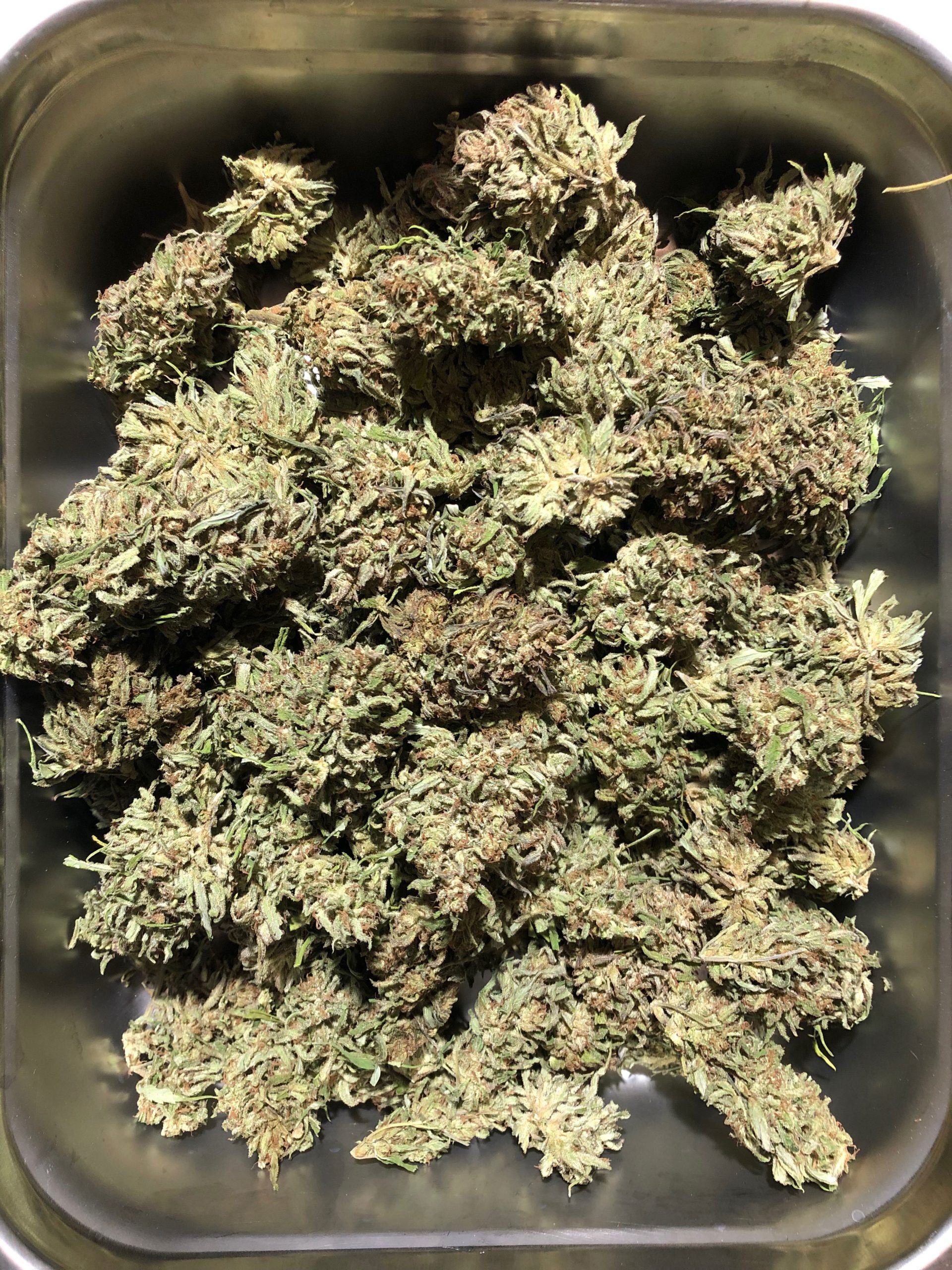
The panel analyzed the hemp samples at Oregon State and, to ensure legal and state-compliant handling, the cannabis sample evaluation was carried out in space owned by a local cannabis dispensary. The panelists only examined aroma of the plant material, not aroma from smoked cannabis or hemp.
Researchers developed a descriptive aroma lexicon of 25 terms, building on earlier work published in 2023 by a team including Jeremy Plumb and Adie Rae, a neurobiologist who is also a co-author of the paper with Shellhammer. The terms originated from data collected in Portland’s Cultivation Classic cannabis competitions from 2018 to 2020.
In the new study, researchers found hemp and cannabis exhibited overlapping sensory profiles, though cannabis was more frequently described as skunky, musty, and animalic (savory), whereas hemp had higher frequencies of citrus, fruity, and candy-like aromas.
Additionally, four distinct aroma profiles emerged from the research:
- Fruit, berry, candy.
- Citrus and chemical.
- Cheesy and vomit/fecal.
- Funky, earthy, musty, straw, fuel, black tea, woody, and nutty/toasted.
The first three were predominately associated with hemp samples and the fourth was mostly related to cannabis. The scientists believe the profiles will evolve with more research.
Chemical Analysis and Misconceptions
The researchers also studied terpenes and volatile sulfur compounds in hemp and cannabis and found neither strongly predicted sensory perception. This is important, the researchers note, because in the hemp and cannabis industry specific aromas are often mistakenly associated with specific terpenes.
“As the cannabis industry transitions from unregulated to legal frameworks, it’s critical to offer consumers tools for assessing product quality beyond terpenes and THC,” Shellhammer said. “This work begins to lay the foundation for that.”
Reference: “Beyond potency: A proposed lexicon for sensory differentiation of Cannabis sativa L. aroma” by Solomon E. Isaacson, Adrianne R. Wilson-Poe, Tingting Ye, Yanping L. Qian and Thomas H. Shellhammer, 21 October 2025, PLOS ONE.
DOI: 10.1371/journal.pone.0335125
Never miss a breakthrough: Join the SciTechDaily newsletter.
Follow us on Google and Google News.
4 Comments
thanks
Here’s the deal (that’s waiting for you if you haven’t arrived yet): You do not want to live in a stupor. Fun is fun, and we learn from our various experiences, etc, but your life trajectory, in fact, is not enhanced by on-going stupor. You don’t want that.
Nothing for Groovy???
Thinking of someone calling a cannabis scent “vomit/fecal” made me dry heave/gag. Like are you sure that’s not just your ass? Like should i hide my brains? Cuz despite my initial thought i get hints of like undead zombie chupacabra. From people like that. So…