
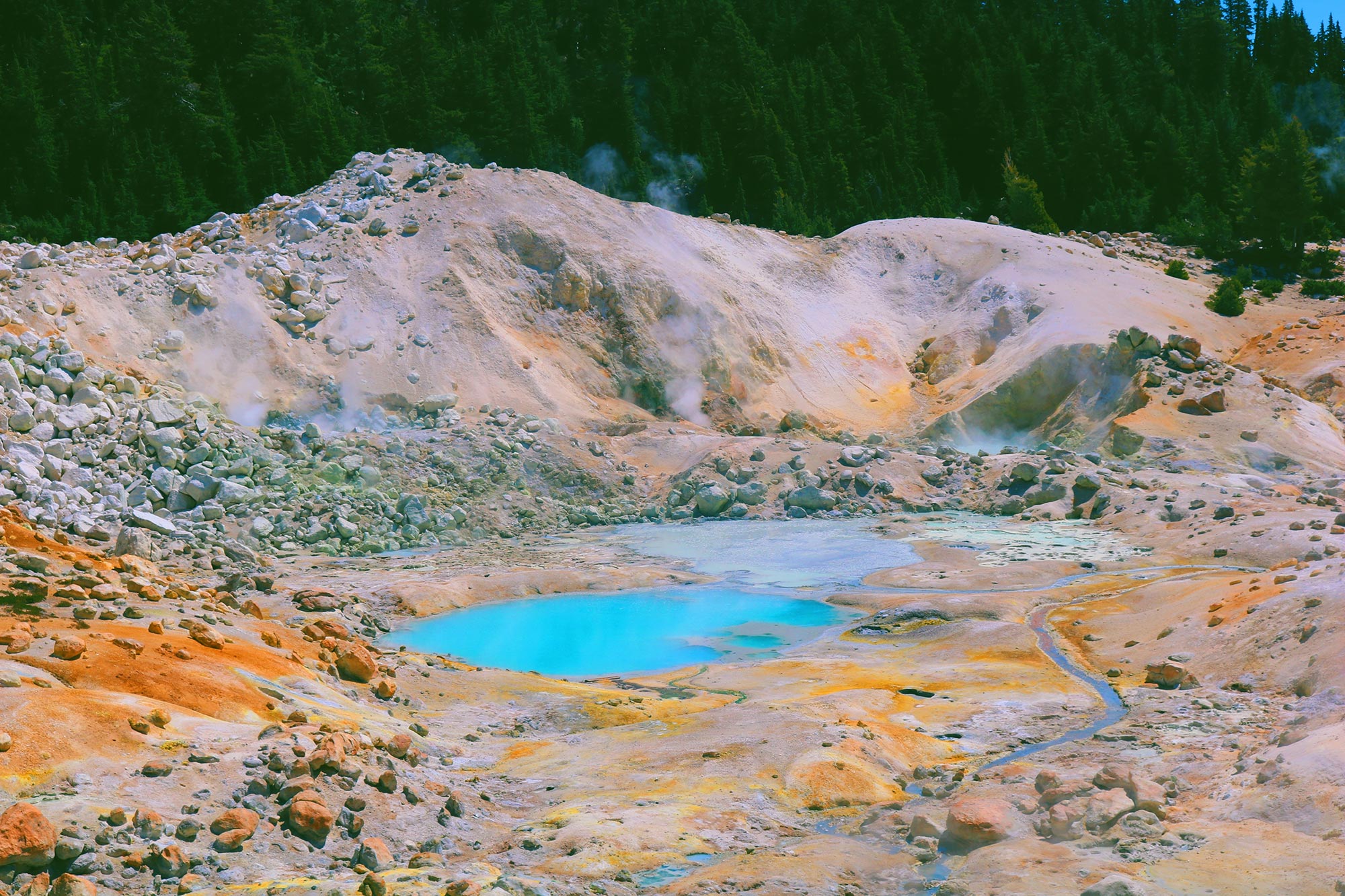
A newly identified amoeba from a volcanic region of California is challenging long-held assumptions about how much heat complex cells can withstand.
Heat can quickly become destructive to complex cells. As temperatures rise, proteins can lose their shape, DNA can sustain damage, and essential cellular processes can begin to fail. This has made extreme heat largely the domain of bacteria and archaea.
A newly discovered amoeba is now pushing that boundary higher. Researchers found that the microscopic organism can actively grow and reproduce at 63°C (145°F), hotter than the long-accepted growth limit for eukaryotes. It was discovered in the geothermal waters of California’s Lassen Volcanic National Park and is described in a study published in the journal Cell.
The amoeba can survive even hotter conditions. When exposed to temperatures as high as 70°C (158°F), it changes form and develops a protective outer layer, allowing it to recover once temperatures fall.
“This finding pushes the bounds of what we thought was possible, which is incredibly exciting,” says corresponding author Angela Oliverio of Syracuse University. “There could be more eukaryotes that can survive at even higher temperatures than we know of.”
Why Extreme Heat Is Such a Challenge
Some microorganisms thrive at temperatures far beyond anything humans could tolerate. The known growth record belongs to Methanopyrus kandleri, an archaeon found around deep-sea hydrothermal vents that can grow at 122°C (252°F).
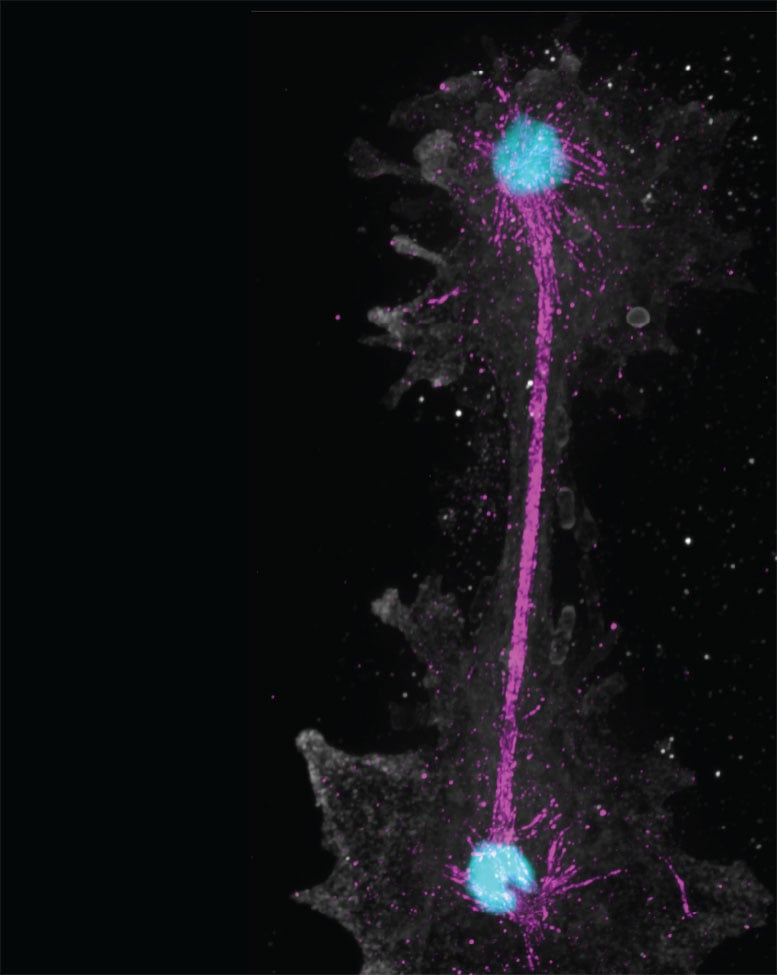
Archaea and bacteria have different cellular organization from eukaryotes. Eukaryotic organisms, including animals, plants, fungi, amoebae, and many other microorganisms, contain a nucleus and other specialized cellular structures.
For decades, roughly 60°C (140°F) was considered the upper growth limit for eukaryotes. Only a small number of species were known to approach it.
A Search Through Volcanic Waters
Scientists had previously detected amoebae near geothermal springs where temperatures can exceed 140°F. But detecting an organism in such an environment does not prove that it can actively grow and reproduce there. Cells can be carried in from cooler areas, while some organisms may survive brief exposure without thriving.
Oliverio and her colleagues wanted to determine whether amoebae associated with geothermal habitats were truly adapted to extreme heat.
From 2023 through 2025, the researchers collected microorganisms from geothermal streams in Lassen Volcanic National Park in California’s Cascade Range. Temperatures at the sampling sites ranged from about 47°C to 64°C (117°F to 147°F).
One previously unknown amoeba stood out. In laboratory experiments, it grew vigorously at 57°C (135°F), reaching the highest temperature previously documented for amoeba growth. The researchers then continued raising the temperature.
At 63°C (145°F), they observed the amoeba undergoing mitosis, the process eukaryotic cells use to divide. This showed that the organism was not simply surviving the heat. It was still able to grow and reproduce.
Meet the “Fire Amoeba”
The researchers named the species Incendiamoeba cascadensis, roughly translated as “fire amoeba from the Cascades.”
Above 63°C (145°F), the amoeba changed shape and produced a protective outer layer instead of continuing to grow normally.
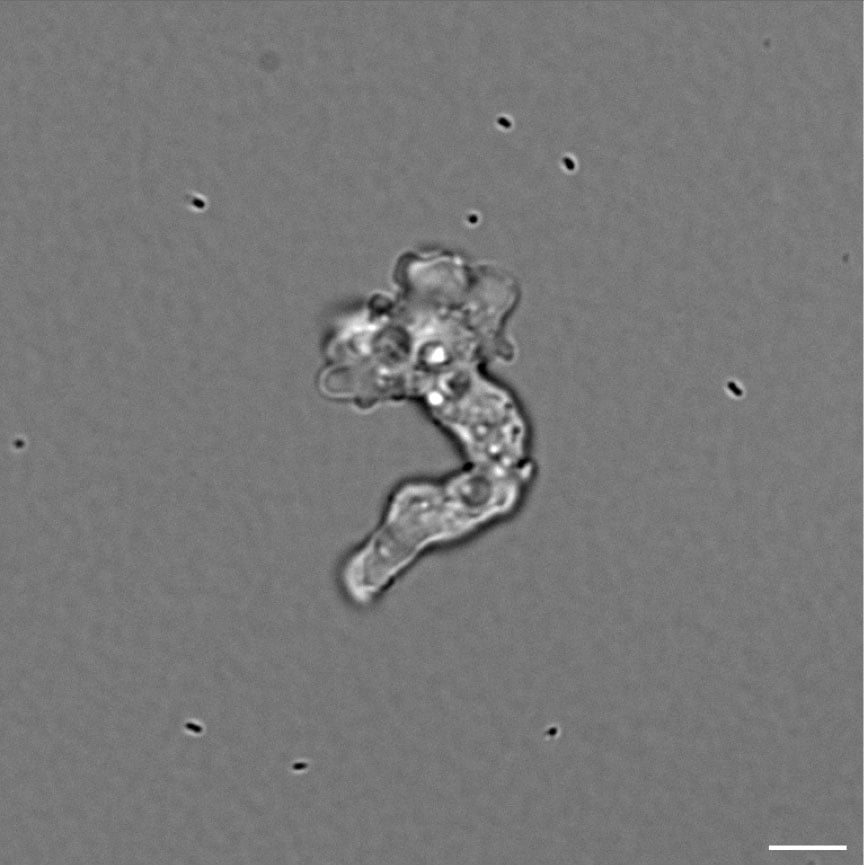
Even after exposure to 70°C (158°F), the amoebae could recover when researchers returned them to cooler conditions. The organism was shown to grow and divide at 63°C (145°F), while 70°C (158°F) represents a survival temperature rather than an active growth temperature.
How Its Cells Cope With Heat
Sequencing the amoeba’s genome revealed possible explanations for its unusual heat tolerance. Compared with amoebae adapted to milder environments, I. cascadensis carries additional genes associated with maintaining proteins and repairing DNA.
Proteins depend on precise three-dimensional structures to function, and high temperatures can cause them to unfold or clump together. Heat can also damage other cellular components, increasing the importance of repair and maintenance systems.
The fire amoeba’s proteins also contain more positively charged amino acids on their surfaces, a characteristic found in some highly heat-tolerant bacteria and archaea. These properties may help proteins remain stable at temperatures that would disrupt similar molecules in less heat-adapted organisms.
“Even though these organisms are so different, there’s convergence in how protein properties are selected for stability under high temperatures,” says first author H. Beryl Rappaport, a doctoral student at Syracuse University.
A Small Record With Bigger Implications
The new record extends the known temperature range for eukaryotic growth by only a few degrees. But biological limits often reflect the organisms scientists have found and tested rather than an absolute boundary that has been proven impossible to cross.
The discovery raises the possibility that other organisms may also survive or reproduce beyond currently accepted environmental limits.
Oliverio says the findings could encourage researchers to test environmental tolerances without allowing previous records to determine where experiments should stop.
“Every time we set a new world record in sports, it’s amazing and celebrated, even if it’s by milliseconds,” Oliverio says. “We should do the same for amoebae. These very small changes expand our understanding of what we think is possible.”
Reference: “A geothermal amoeba sets a new upper temperature limit for eukaryotes” by H. Beryl Rappaport, Natalie A. Petek-Seoane, Tomáš Tyml, Jessica K. Niblo, Felix Mikus, Naomi E. Gilbert, Kurt LaButti, Godwin Ani, Ethan MacVicar, Rachel M. Shepherd, Ignacio de la Higuera, Samuel J. Lord, Gautam Dey, Gordon V. Wolfe, Omaya Dudin, Laura A. Katz, Kenneth M. Stedman, Shahar Sukenik, Kristen Skruber, Frederik Schulz, R. Dyche Mullins and Angela M. Oliverio, 22 September 2026, Cell.
DOI: 10.1016/j.cell.2026.08.043
Funding: National Science Foundation, National Aeronautics and Space Administration, American Philosophical Society, NIH/National Institutes of Health, Howard Hughes Medical Institute, Water and Life Interface Institute, Alfred P. Sloan Foundation, Syracuse University, European Commission, European Molecular Biology Laboratory, Swiss National Science Foundation, Gordon and Betty Moore Foundation, Department of Energy
Never miss a breakthrough: Join the SciTechDaily newsletter.
Follow us on Google and Google News.