
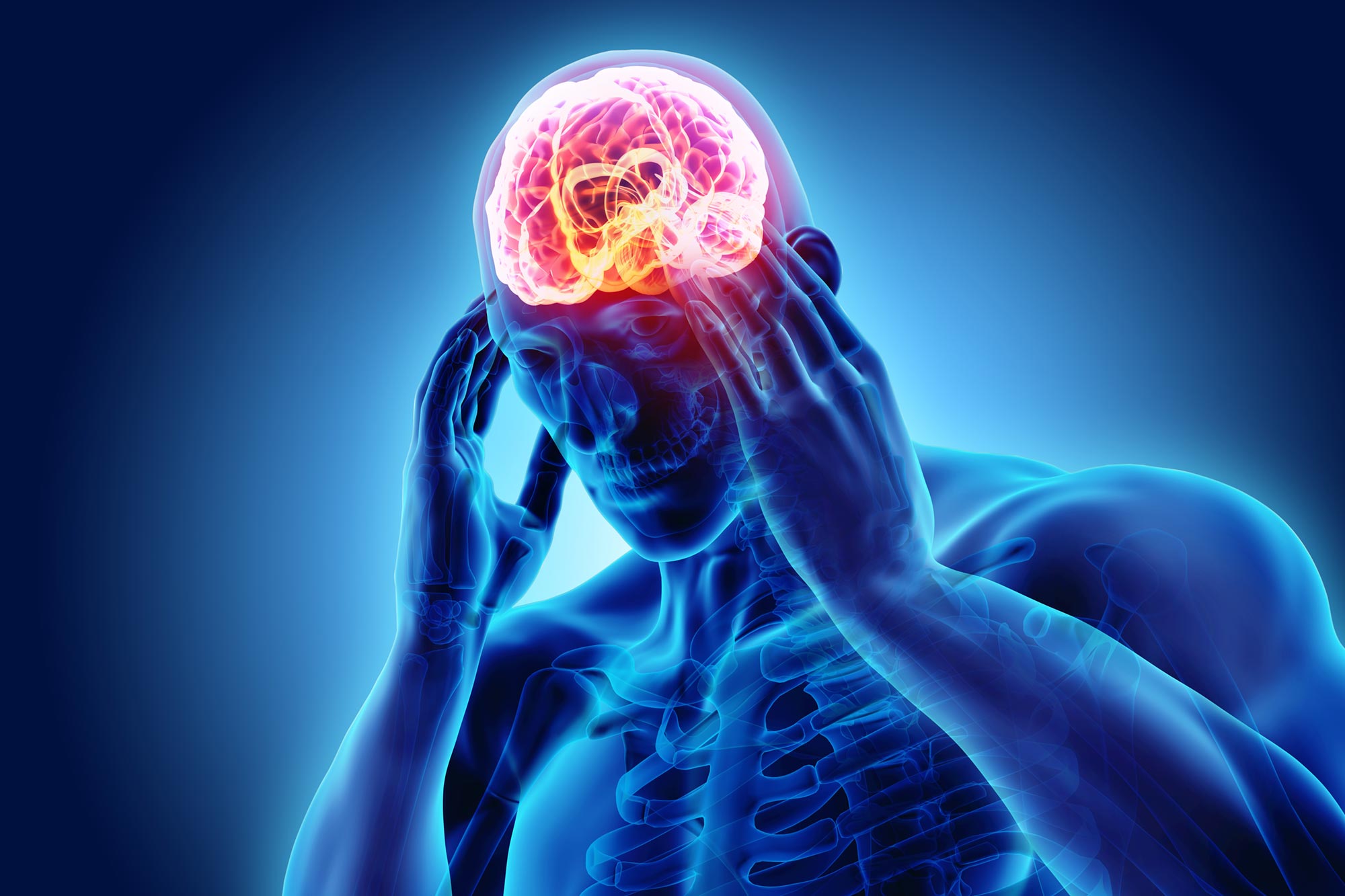
New research reveals previously unknown ways opioid receptors can function, opening the door to safer pain treatments.
Scientists at USF Health are advancing the understanding of how emerging opioid compounds interact with the body to control pain. Their work raises the possibility that future opioid medications could ease pain effectively while reducing the serious risks that have long been associated with this class of drugs.
The team’s latest findings were recently published in Nature, one of the world’s leading peer-reviewed medical journals. A related manuscript was released the same day in Nature Communications, expanding on the underlying biological mechanisms explored in the primary study.
“Our overarching research aims to understand how opioids work so that we can ultimately provide safer options for chronic pain and develop therapies for opioid use disorders,” said the study’s senior author, Laura M. Bohn, PhD, senior associate dean for Basic and Translational Research and professor of Molecular Pharmacology and Physiology in the USF Health Morsani College of Medicine.
How Opioids Relieve Pain—and Cause Harm
Together, the studies examine a growing group of pain-relieving compounds that function in a similar way to morphine and related medications. These drugs reduce pain by attaching to mu opioid receptors, which are specialized proteins found in nerve cells that help interrupt the transmission of pain signals when activated by opioids.
When drugs similar to morphine attach to these receptors, they can trigger harmful effects in addition to pain relief, including suppressed breathing. To address this risk, Dr. Bohn and her research team are working to design new opioid compounds that relieve pain without causing the dangerous side effects linked to overdoses and fatalities. Their latest findings reveal previously unrecognized ways these receptors behave when interacting with opioid pain medications.
While the current studies may not directly lead to a new drug in the clinic immediately, they could lead to a better understanding of how receptors work, said Edward Stahl, PhD, assistant professor of Molecular Pharmacology and Physiology in the Morsani College of Medicine and also a corresponding author on the study, which was funded by the National Institutes of Health.
“Our manuscripts describe a unique way that drugs can control receptors,” Dr. Stahl said. “Fundamentally, knowing more about how receptors work is the first step in understanding how to drug them and how to drug them safer. If this research is further validated, it would add to our textbook knowledge of how receptors function and, more importantly, to our ability to treat human health and disease.”
Reversing the Chain Reaction
The team’s research addresses how certain drugs, when binding to a receptor, start a chain reaction that ultimately leads to biological responses in a person’s body. Prolonged use of pain-relieving opioids such as morphine, oxycodone, and fentanyl can have harmful and even deadly results, particularly respiratory suppression. Another major challenge is how to slow down or stop what scientists call “tolerance development” of these drugs.
“We’ve found that the first step of the chain reaction is reversible, and that some drugs can favor a reverse reaction over the forward reaction,” Dr. Bohn said. “We’ve studied two new chemicals that strongly favor the reverse cycle and, when administered at non-effective doses, can enhance morphine and fentanyl-induced pain relief while not enhancing the respiratory suppression effects.”
These prototype molecules are not considered drug candidates because they do suppress respiration at high doses and they haven’t been tested for toxicity or other side effects of opioids, Dr. Bohn said. However, she said, “they do provide the framework for building new drugs.”
Dr. Bohn’s lab previously discovered a compound called SR-17018 that does not produce respiratory suppression or tolerance. SR-17018 activates the same pain-relieving receptor as morphine, oxycodone and fentanyl. However, it binds to opioid receptors in a different way from those drugs, leaving the receptor open and available to the body’s own natural pain-relieving substances.
While SR-17018 prefers the “reverse direction,” it has other features that researchers believe lead to its improved profile. For this reason, Dr. Bohn said, “We will be using our new findings to improve upon SR-17018.”
Broader Implications Beyond Pain
Ongoing research could lead to the development of drugs for other receptors that can be activated in the “reverse” direction. For example, the serotonin 1A receptor is shown to have this property, Bohn said, and “this is an important drug target in neuropsychiatric disorders, including depression and psychosis.”
Dr. Bohn’s research is especially significant in the larger context of the ongoing public health crisis created by opioid dependency and misuse. Studies show that 68 percent of all overdose deaths in 2024 involved opioids, of which 88 percent were due to fentanyl and other synthetic opioid compounds.
An internationally recognized leader in molecular pharmacology and neurobiology, Dr. Bohn recently joined USF Health. She is best known for her pioneering studies on G protein–coupled receptors (GPCRs) — the most abundant class of drug targets in the human body.
Her laboratory has made landmark discoveries in opioid receptor signaling bias, showing how selective activation of intracellular pathways can manage pain without respiratory depression or tolerance development. This research adds to the understanding of opioid pharmacology and the search for next-generation, non-addictive pain therapeutics.
References: “GTP release-selective agonists prolong opioid analgesic efficacy” by Edward L. Stahl, Matthew A. Swanson, Vuong Q. Dang, Michael D. Cameron, Nicole M. Kennedy, Thomas D. Bannister and Laura M. Bohn, 17 December 2025, Nature.
DOI: 10.1038/s41586-025-09880-5
“Characterization of the GTPγS release function of a G protein-coupled receptor” by Laura M. Bohn, and Edward L. Stahl, 17 December 2025,Nature Communications.
DOI: 10.1038/s41467-025-66516-y
Never miss a breakthrough: Join the SciTechDaily newsletter.
Follow us on Google and Google News.
3 Comments
This is old news. Lol. Wow. What an unreliable source. Sr-17018 and the sr-14968 have been around for a while online. Cheap. It works great. It got me off methadone once and just recently got me off suboxone, mgm-15,and 7ohm. With absolutely no withdrawal. A life saver. A game changer that lots will not like like the clinics and suboxone providers will lose money big time. Its like finding a cure for cancer and they kept it quiet on purpose several people sell it for about 70$ a gram and only takes about 2 grams to get off any hard opioid opiates etc
Sounds wonderful!! Will the general public be able to afford this new pain medicine? If History is repeated as with other new pain medicines on the market, the price will be so high that normal people on a fixed income will not be able to afford this medicine.
opioid related deaths are an inflated statistic in the u.s. because of this fact, all u.s. “research” on opioids is suspect.