

New research suggests that low oxygen levels may help alleviate disease caused by defects in mitochondrial quality control.
Oxygen is essential for people—and most other organisms—but more is not always better. When oxygen accumulates beyond what cells can safely use, it can become toxic and contribute to serious health problems.
In the brain, excess oxygen has been associated with 3-MGA, a rare and often fatal childhood disorder, along with Leigh syndrome (the most common pediatric mitochondrial disease), Parkinson’s disease, and premature aging. Scientists at Gladstone Institutes are now investigating whether hypoxia therapy, which deliberately lowers the body’s oxygen supply, could help address these conditions.
Gladstone Investigator Isha Jain, PhD, has studied this approach for the past decade. Her research has examined how oxygen levels similar to those found at high altitudes can produce beneficial effects in Leigh syndrome, diabetes, and solid tumors.
The unresolved question was whether the same strategy might work across a broader range of rare and common mitochondrial disorders and neurological diseases. Jain’s lab therefore set out to identify additional conditions that could respond to reduced oxygen.
For the study, published in Nature Metabolism, the researchers worked with James Shorter, PhD, professor of biochemistry and biophysics at the University of Pennsylvania, and Daniel Southworth, PhD, professor of biochemistry and biophysics at UC San Francisco.
A faulty protein leaves oxygen behind
The researchers found that a malfunctioning protein called HTRA2 can cause excess oxygen to accumulate dangerously in tissues. In mice with motor neuron degeneration caused by defective HTRA2, breathing air with less oxygen substantially extended lifespan and improved brain function.
“This protein is linked to many other conditions, so our findings suggest that hypoxia therapy could be transformative for treating many neurological diseases,” says Jain, who is also a core investigator at Arc Institute.
Mitochondria explain the oxygen buildup
Mitochondria, the structures that supply cells with energy, consume oxygen to keep the body functioning. Their largest internal molecular machine is known as Complex 1.
“Every time we breathe, 90 percent of the oxygen we consume goes to our mitochondria,” says Ankur Garg, PhD, postdoctoral fellow in Jain’s lab and first author of the study. “But if Complex 1 malfunctions, the mitochondria can no longer burn off oxygen at normal rates.”
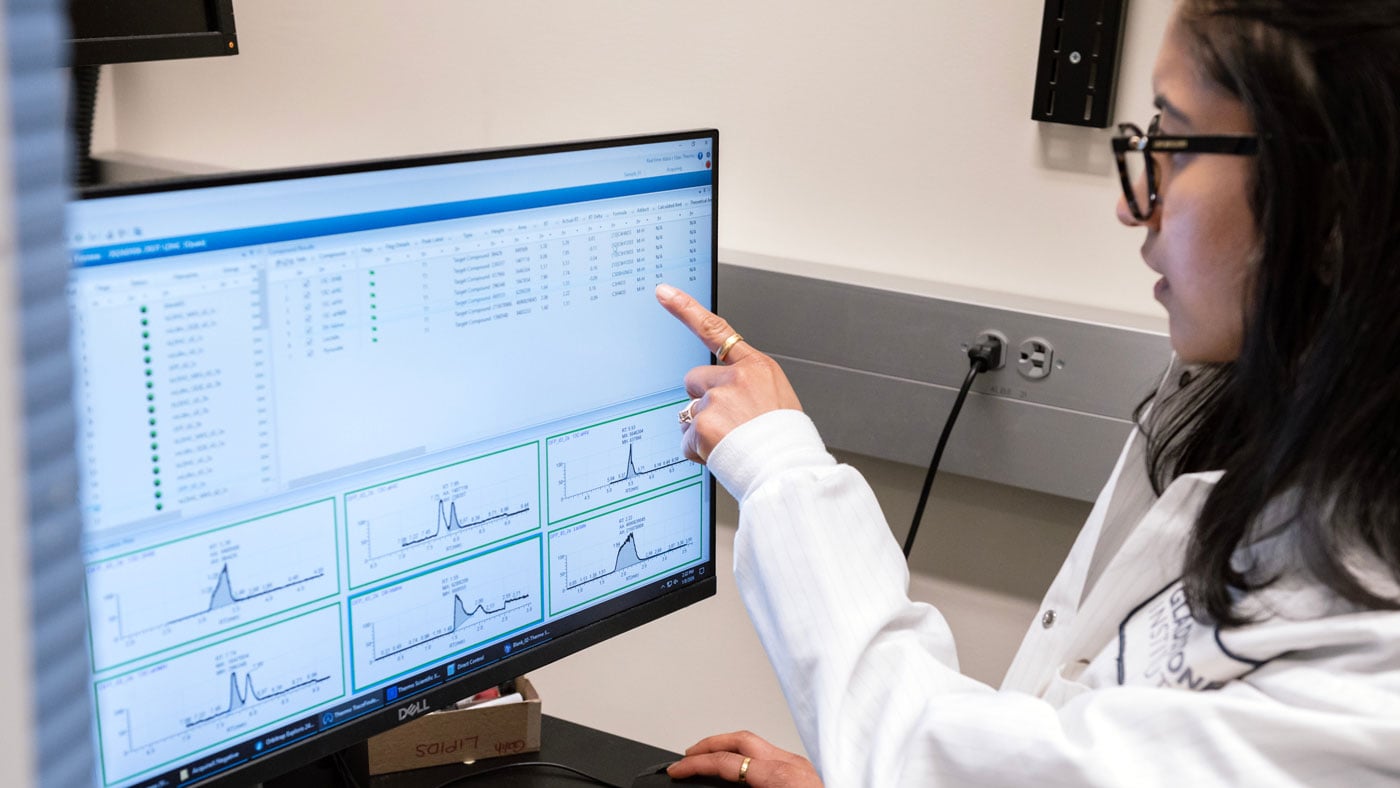
Without normal Complex 1 activity, oxygen can build up in tissues until it becomes harmful, potentially contributing to the brain damage seen in some mitochondrial and neurological diseases. The researchers wanted to determine whether lowering oxygen exposure could offset this problem.
A genetic screen identifies HTRA2
To narrow the search, the researchers revisited data from a large earlier experiment that identified genes whose absence caused cells to struggle in ordinary air but thrive under low oxygen. They then compared those results with a catalog of known genetic disorders, producing a list of 75 disease-linked genes whose effects might be eased by hypoxia therapy.
HTRA2 emerged as one of the strongest candidates. Further experiments showed that it works with another protein (CLPB) to preserve Complex 1.
“Together, these two proteins act like a clean-up crew inside mitochondria, preventing the machinery from becoming clogged with clumps of misfolded proteins,” says Jain.
When HTRA2 or CLPB was missing or defective, this protective system broke down. Misfolded proteins accumulated, and a crucial part of Complex 1 stopped working correctly.
Low oxygen tripled mouse survival
The researchers next tested whether reduced oxygen could help a living organism by studying mice deficient in HTRA2.
When the mice breathed air containing less oxygen than the usual atmospheric level of about 21 percent, they survived three times longer. Hypoxia therapy also reduced inflammation in the striatum, a brain region involved in movement and other functions.
“By showing these mice could be successfully treated with low oxygen, our study expands the potential of hypoxia therapy to a wide range of conditions that affect mitochondrial Complex 1, either directly or indirectly as in the case of HTRA2 deficiency,” Garg says. “This will motivate a broader application of ‘turning the oxygen dial’ to conditions ranging from rare genetic diseases to common neurological conditions and beyond.”
Although the mice received low oxygen by breathing it, Jain and colleagues are developing a drug called HypoxyStat that could potentially reproduce the same effects through a pill or injection.
“Right now, no treatments are uniformly available for mitochondrial diseases, and hypoxia therapy offers the hope that we could treat not just one, but many of these genetic conditions,” Jain says. “We’re working hard to make it a practical treatment for human patients in the clinic.”
Reference: “Hypoxia rescues complex 1-associated disease caused by proteostatic defects” by Ankur Garg, Brandon R. Desousa, Raju Roy, Amy Flis, Skyler Y. Blume, Yohei Abe, Arthur A. Melo, Ryan R. Cupo, Gabriela Grigorean, Daniel R. Southworth, James Shorter and Isha H. Jain, 8 July 2026, Nature Metabolism.
DOI: 10.1038/s42255-026-01566-0
This work was supported by NIH DP5OD026398, the Keck Foundation, a gift from Dave Wentz, the Klingenstein-Simons Fellowship and DOD CDMRP PR230499-HT94252410163.
Never miss a breakthrough: Join the SciTechDaily newsletter.
Follow us on Google and Google News.