
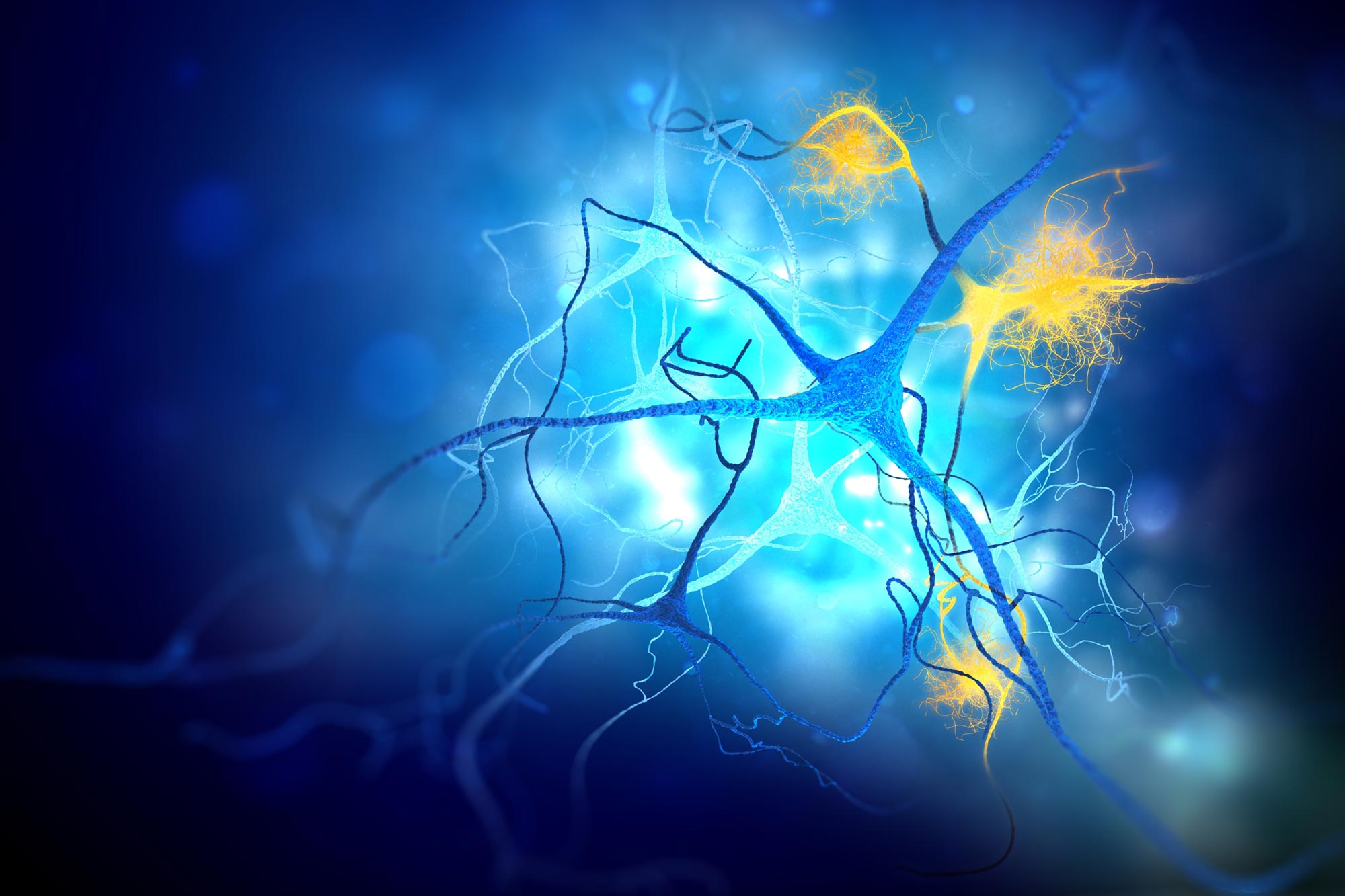
A newly identified enzyme appears to control tau production, brain inflammation, and aging.
Researchers at the University of New Mexico have uncovered an unexpected role for OTULIN, an enzyme best known for its involvement in immune system regulation. The team found that OTULIN also plays a key role in the production of tau, a protein linked to many neurodegenerative disorders, along with brain inflammation and the biological processes associated with aging.
The findings were reported in the journal Genomic Psychiatry. In the study, scientists showed that disabling OTULIN stopped tau from being produced and cleared existing tau from neurons. This was achieved in two ways: by using a specially designed small molecule or by removing the gene responsible for producing the enzyme. The experiments were carried out in two types of cells, including cells derived from a person who had died from late-onset sporadic Alzheimer’s disease and human neuroblastoma cells that are commonly used in laboratory research.
A New Target for Neurodegenerative Disease
According to Karthikeyan Tangavelou, PhD, the discovery suggests a new direction for developing treatments for Alzheimer’s disease and related neurological disorders. Tangavelou is a senior scientist in the laboratory of Kiran Bhaskar, PhD, a professor in the Department of Molecular Genetics & Microbiology at the UNM School of Medicine.
“Pathological tau is the main player for both brain aging and neurodegenerative disease,” Tangavelou said. “If you stop tau synthesis by targeting OTULIN in neurons, you can restore a heathy brain and prevent brain aging.”
The OTULIN gene (an acronym for “OTU deubiquitinase with linear linkage specificity”) provides the blueprint for a protein involved in controlling inflammation and autophagy, the cellular process that removes damaged proteins and other waste. The researchers were originally studying how OTULIN contributes to cellular cleanup when they discovered its unexpected influence on tau production. Tangavelou describes the finding as a “groundbreaking discovery that will be helpful to solve a complex puzzle in various neurological diseases and aging of the brain.”
Why Tau Matters
Tau normally stabilizes microtubules that help give structure to neurons, but when it is chemically altered in a process called phosphorylation it creates the neurofibrillary tangles within neurons that are characteristic of Alzheimer’s and more than 20 other neurodegenerative diseases – collectively known as tauopathies.
Researchers are increasingly focusing on tau because immunotherapy drugs that reduce extracellular plaques of the better-known amyloid beta protein in the brains of dementia patients appear to have little clinical benefit. Bhaskar’s lab has already developed (and is planning to test in patients) a vaccine that prevents the buildup of toxic tau proteins.
The new study by Bhaskar, Tangavelou, and colleagues at UNM and the University of Tennessee made another unexpected finding. When they made tau disappear by de-activating the OTULIN gene, the neurons appear to be unaffected. “Neurons can survive without tau,” Tangavelou said. “They are looking healthy, even with the tau removed.”
He also notes that there are many other types of cells in the brain apart from neurons, including astrocytes, microglia, oligodendrocytes, and endothelial cells.
“We discovered OTULIN’s function in neurons,” he said. “We don’t know how OTULIN functions in other cell types in the brain. If there is no OTULIN in microglia, that may cause auto-inflammation. We are testing OTULIN in different brain cell types to narrow down OTULIN as a therapeutic target for various brain cell diseases.”
OTULIN and Brain Aging
The study also found that when they suppressed OTULIN, it affected messenger RNA (mRNA) signaling and altered the expression of numerous genes.
“We believe that OTULIN is the master regulator of brain aging, because this protein regulates RNA metabolism,” Tangavelou said. “Knocking out the OTULIN gene alters many dozens of genes, mainly in the inflammatory pathway.”
The team used CRISPR (clustered regularly interspaced short palindromic repeats) gene editing technology, pluripotent stem cell induction, comprehensive bulk RNA sequencing, and computational drug design to create the small molecule that was used to inhibit OTULIN formation in the study.
There is an imbalance between protein synthesis and degradation during normal brain aging and accelerated brain aging in diseased brains, Tangavelou said. “OTULIN could be a key regulator in creating an imbalance between protein synthesis and degradation and may cause brain aging,” he said.
The new discoveries point the way to multiple new avenues of investigation, he said. “We are developing a project to study the role of OTULIN in brain aging. This is a great opportunity to develop many projects for further research to reverse brain aging and have a healthy brain.”
Reference: “The deubiquitinase OTULIN regulates tau expression and RNA metabolism in neurons” by Karthikeyan Tangavelou, Virginie Bondu, Mingqi Li, Wei Li, Francesca-Fang Liao and Kiran Bhaskar, 25 November 2025, Genomic Psychiatry.
DOI: 10.61373/gp025a.0116
Never miss a breakthrough: Join the SciTechDaily newsletter.
Follow us on Google and Google News.
2 Comments
Very interesting but probably too late for my younger sister who has advanced Alzheimer’s.
Great work, now get it to patients asap. These 3 UPSTREAM causes were tested amd treated along with lifestyle changes in the recent EVANTHEA that REVERSED dementia!!! A breakthrough by doing these tests, treatmemts. Preprint is out already out.
Their model should be a Standard of Care and Ethics at NIH and for clinicians, education- focus on the patient, not unending data, graphs, profits.
REQUIRE tests of brain dosorder patients in autism, dementia, psych, prenatal for toxins, infections, DNA SNPs. Change to researcher to clinician. Drug c: decentralized trials to clinicians not drug companies to lead. Since clinician focus is on cure, not a profitable drug, it was a multi-modal trial of tests, precision nutrients, for dwmentia patients, not mice. Done quickly, lower cost, multiple decentralized locations so it was more convenient for patients, published preprint within a year showing it worked to REVERSE people’s dementia, not just mice. Research links are on my LinkedIn and at those sites above.
HSV triggers tauper Otzhaki, Shemesh. . Borrelia, treponema triggers amyloid per Miklossy’s 2011 “Alzheimer’s Disease- a neurospirochetosis.”
Upstream of EVERY known brain pathway change are 8nfections, toxins and bra8n nutrient DNA SNPs ( MTHFR, COMT, dozens more) to precision target target the exact nutrient supplements needed per Alzheimer’s Pathobiome Initiatve at AlzPi.org and Neuroimmune.org,