
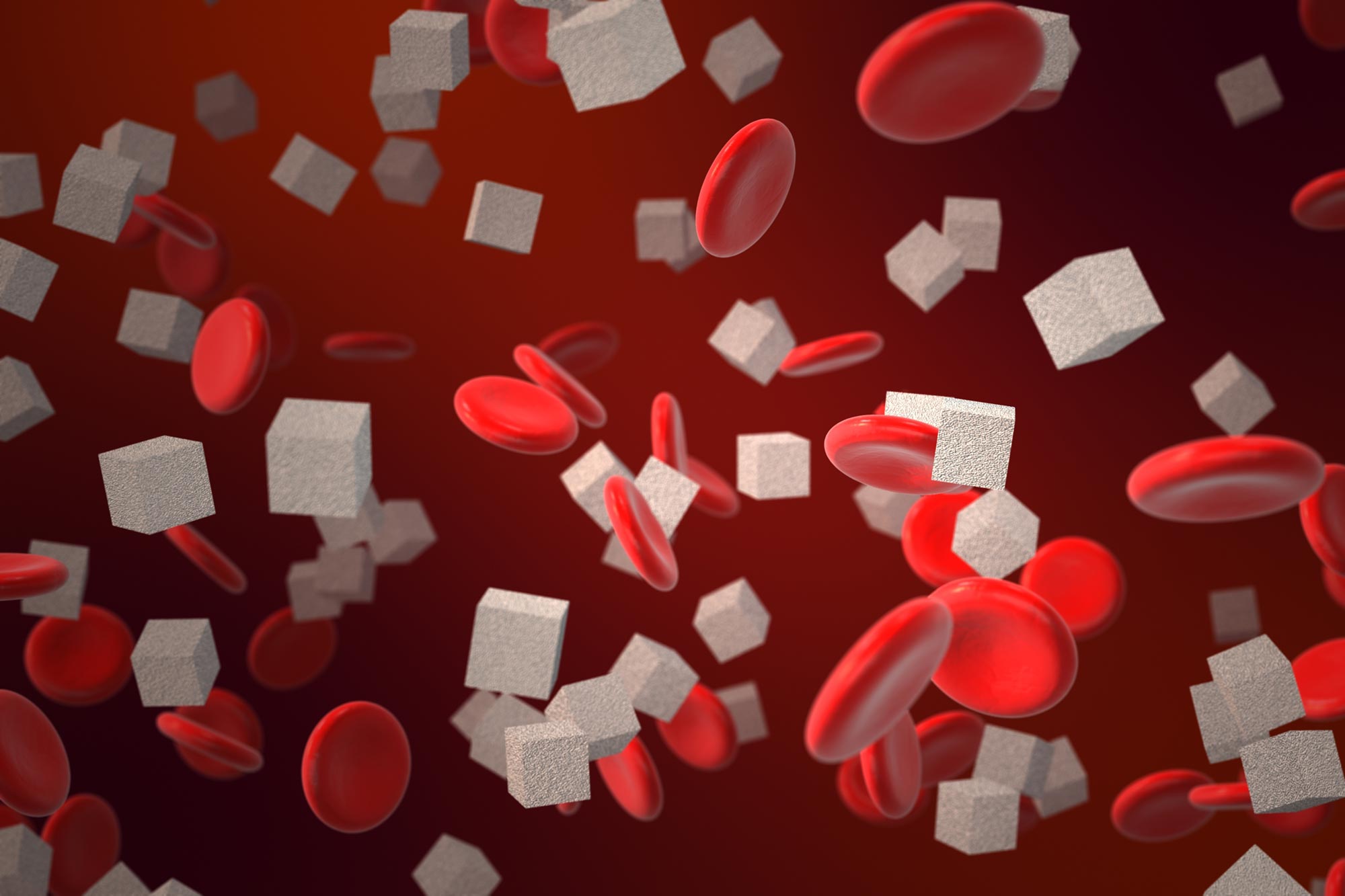
Red blood cells may hold the secret to fighting diabetes—by soaking up sugar when oxygen runs low.
People who live high in the mountains have long been observed to develop diabetes less often than those at sea level. Scientists have known about this pattern for years, but the biological reason behind it has remained unclear.
Researchers at Gladstone Institutes now believe they have uncovered the answer. Their findings show that in low oxygen environments, red blood cells begin absorbing large amounts of glucose from the bloodstream, effectively acting like sugar sponges.
In a study published today (February 19) in the journal Cell Metabolism, the team demonstrated that red blood cells can reprogram their metabolism under low oxygen conditions. At high altitude, this shift helps the cells deliver oxygen more effectively throughout the body. At the same time, it reduces the amount of sugar circulating in the blood.
According to senior author Isha Jain, PhD, a Gladstone Investigator, core investigator at Arc Institute, and professor of biochemistry at UC San Francisco, the results resolve a longstanding physiological mystery.
“Red blood cells represent a hidden compartment of glucose metabolism that has not been appreciated until now,” Jain says. “This discovery could open up entirely new ways to think about controlling blood sugar.”
Red Blood Cells as a Hidden Glucose Sink
Jain’s laboratory has spent years studying hypoxia, the condition that occurs when blood oxygen levels drop, and how it affects metabolism and overall health. In earlier experiments, her team noticed that mice exposed to low oxygen had much lower blood glucose levels than normal. The animals rapidly cleared sugar from their bloodstream after eating, which is typically associated with a reduced risk of diabetes. However, when researchers tracked where the glucose was going, major organs could not account for the missing sugar.
“When we gave sugar to the mice in hypoxia, it disappeared from their bloodstream almost instantly,” says Yolanda Martí-Mateos, PhD, a postdoctoral scholar in Jain’s lab and first author of the new study. “We looked at muscle, brain, liver—all the usual suspects—but nothing in these organs could explain what was happening.”
Using a different imaging approach, the scientists identified red blood cells as the unexpected “glucose sink,” meaning they were pulling in and using large amounts of sugar from circulation. This was surprising because red blood cells have traditionally been viewed as relatively simple cells whose main job is transporting oxygen.
Further studies in mice confirmed the finding. Under low oxygen conditions, the animals produced significantly more red blood cells. In addition, each individual red blood cell absorbed more glucose than cells formed under normal oxygen levels.
To uncover how this process works at a molecular level, Jain’s team collaborated with Angelo D’Alessandro, PhD, of the University of Colorado Anschutz Medical Campus, and Allan Doctor, MD, from the University of Maryland, who has long studied red blood cell biology.
Their research showed that in hypoxia, red blood cells use glucose to generate a molecule that enhances oxygen release to tissues. This extra oxygen delivery is especially important when oxygen is limited.
“What surprised me most was the magnitude of the effect,” D’Alessandro says. “Red blood cells are usually thought of as passive oxygen carriers. Yet, we found that they can account for a substantial fraction of whole-body glucose consumption, especially under hypoxia.”
A Potential New Approach to Diabetes Treatment
The team also found that the metabolic benefits of chronic hypoxia continued for weeks to months even after mice were returned to normal oxygen levels.
In addition, researchers tested a drug called HypoxyStat, recently developed in Jain’s lab to imitate the effects of low oxygen exposure. HypoxyStat is an oral medication that causes hemoglobin in red blood cells to bind oxygen more tightly, reducing the amount delivered to tissues. In mouse models of diabetes, the drug completely reversed high blood sugar levels and performed better than existing treatments.
“This is one of the first use of HypoxyStat beyond mitochondrial disease,” Jain says. “It opens the door to thinking about diabetes treatment in a fundamentally different way—by recruiting red blood cells as glucose sinks.”
The implications may extend beyond diabetes. D’Alessandro notes that these findings could be relevant to exercise physiology and to pathological hypoxia after traumatic injury. Trauma remains a leading cause of death in younger populations, and changes in red blood cell production and metabolism may affect how glucose is distributed and how muscles perform.
“This is just the beginning,” Jain says. “There’s still so much to learn about how the whole body adapts to changes in oxygen, and how we could leverage these mechanisms to treat a range of conditions.”
Reference: “Red blood cells serve as a primary glucose sink to improve glucose tolerance at altitude” by Yolanda Martí-Mateos, Zohreh Safari, Shaun Bevers, Ayush D. Midha, Will R. Flanigan, Tej Joshi, Helen Huynh, Brandon R. Desousa, Skyler Y. Blume, Alan H. Baik, Stephen Rogers, Aaron V. Issaian, Allan Doctor, Angelo D’Alessandro and Isha H. Jain, 19 February 2026, Cell Metabolism.
DOI: 10.1016/j.cmet.2026.01.019
Funding was provided by the National Institutes of Health (DP5 DP5OD026398, R01 HL161071, R01 HL173540, R01HL146442, R01HL149714, DP5OD026398), the California Institute for Regenerative Medicine, Dave Wentz, the Hillblom Foundation, and the W.M. Keck Foundation.
Never miss a breakthrough: Join the SciTechDaily newsletter.
Follow us on Google and Google News.
7 Comments
This article does not distinguish between type-1 and type-2 diabetes.
The findings appear to relate to type-2 (metabolic) and not to type-2 (autoimmune).
This should be clarified.
Q: Why Trade Hyper insulin levels for Hypoxia ?
When we can enjoy Both !
** Simply Breath “Tri mix / Saturation Diving, gas ( premixed with lowered Oxygen % …
Enjoy Sea Level & Relax ” Below the waves.
Chez. ‘Jardin d’Octopus / Under the Sea .. with Y’All !
Musique Boutique
BTW: Please include me as co-author on any/all of your patent applications !
Thanks,
John
Another study that promises a treatment, but leads to nowhere!!
Big pharma wants to keep people sick!!
BTW: Please include my name on any/all of your patent application(s)
Thx !
Please include my name on your new Patent applications specification with blended
Tri-mix / hypo & hyper baric breathing blends .
Thanks ,
John
thanks