
Close Menu
    Facebook X (Twitter) Instagram
    SciTechDaily
    • Biology
    • Chemistry
    • Earth
    • Health
    • Physics
    • Science
    • Space
    • Technology
    Facebook X (Twitter) Pinterest YouTube RSS
    SciTechDaily
    Home»Health»Higher Blood Fats More Harmful Than Previously Thought – Can Damage Muscle Cells
    Health

    Higher Blood Fats More Harmful Than Previously Thought – Can Damage Muscle Cells

    By University of LeedsApril 10, 2022No Comments3 Mins Read
    Facebook Twitter Pinterest Telegram LinkedIn WhatsApp Email Reddit
    Share
    Facebook Twitter LinkedIn Pinterest Telegram Email Reddit
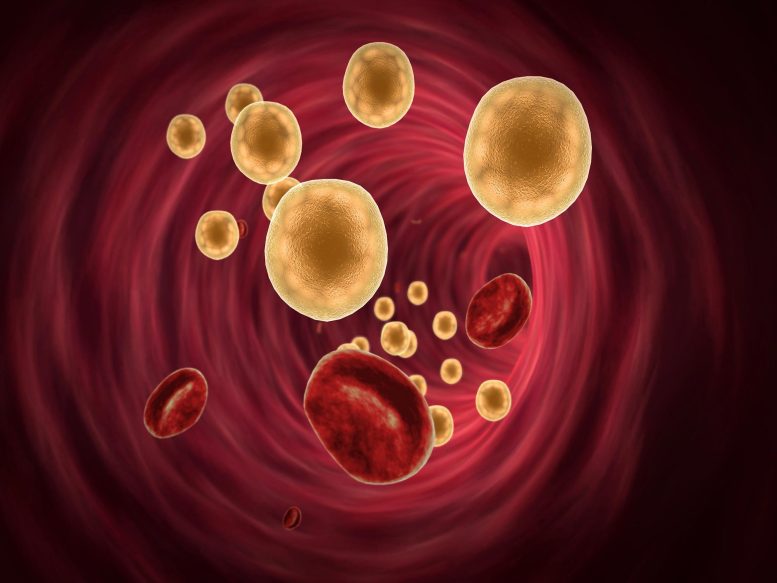
    Blood Fat Cells
    In patients with metabolic diseases, increased fat levels in the blood induce stress in muscle cells, leading to structural and functional damage caused by external changes.

    Increased levels of blood fats in people with type 2 diabetes and obesity are more harmful than previously thought, a new study has found.

    In patients with metabolic diseases, elevated fat levels in the blood create stress in muscle cells — a reaction to changes outside the cell which damage their structure and function.

    University of Leeds researchers have discovered that these stressed-out cells give off a signal which can be passed on to other cells.

    The signals, known as ceramides, may have a protective benefit in the short-term, because they are part of a mechanism designed to reduce stress in the cell. But in metabolic diseases, which are long-term conditions, the signals can kill the cells, make symptoms more severe, and worsen the illness.

    Impact of Elevated Blood Fats on Tissues and Organs

    Increased fat in the blood has long been known to damage tissues and organs, contributing to the development of cardiovascular and metabolic diseases including type 2 diabetes. The condition can be caused by obesity, rates of which have nearly tripled worldwide since 1975. In 2016, there were more than 650 million adults aged 18 and above with obesity.
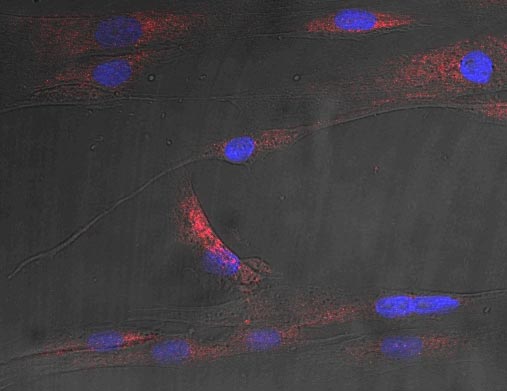
    Human Muscle Cells ER Stress
    Microscopy image showing human muscle cells with nuclei in blue, and stress caused by the ceramide stress signals shown in red. Credit: Lee Roberts

    Research supervisor Lee Roberts, Professor of Molecular Physiology and Metabolism in the University of Leeds’s School of Medicine, said: “Although this research is at an early stage, our discovery may form the basis of new therapies or therapeutic approaches to prevent the development of cardiovascular and metabolic diseases such as diabetes in people with elevated blood fats in obesity.”

    In the lab, the team replicated the blood fat levels observed in humans with metabolic disease by exposing skeletal muscle cells to a fatty acid called palmitate. The cells began to transmit the ceramide signal.

    When these cells were mixed with others which had not been previously exposed to fats, the researchers found that they communicated with each other, transporting the signal in packages called extracellular vesicles.

    Relevance of Findings to Human Metabolic Diseases

    The experiment was reproduced in human volunteers with metabolic diseases and gave comparable results. The findings provide a completely new angle on how cells respond to stress, with important consequences for our understanding of certain metabolic diseases including obesity.

    Professor Roberts said: “This research gives us a novel perspective on how stress develops in the cells of individuals with obesity, and provides new pathways to consider when looking to develop new treatments for metabolic diseases.

    “With obesity an ever-increasing epidemic, the burden of associated chronic disease such as type 2 diabetes necessitates new treatments. We hope the results of our research here open a new avenue for research to help address this growing concern.”

    Reference: “Long-chain ceramides are cell non-autonomous signals linking lipotoxicity to endoplasmic reticulum stress in skeletal muscle” by Ben D. McNally, Dean F. Ashley, Lea Hänschke, Hélène N. Daou, Nicole T. Watt, Steven A. Murfitt, Amanda D. V. MacCannell, Anna Whitehead, T. Scott Bowen, Francis W. B. Sanders, Michele Vacca, Klaus K. Witte, Graeme R. Davies, Reinhard Bauer, Julian L. Griffin and Lee D. Roberts, 1 April 2022, Nature Communications.
    DOI: 10.1038/s41467-022-29363-9

    The international research team included colleagues from the University of Cambridge, the University of Bonn, University of Bari, Imperial College and AstraZeneca.

    Never miss a breakthrough: Join the SciTechDaily newsletter.
    Follow us on Google and Google News.

    Cell Biology Diabetes Metabolism Muscle Obesity Popular University of Leeds
    Share. Facebook Twitter Pinterest LinkedIn Email Reddit

    Related Articles

    Could We Mimic Weight Loss With a Pill? New Fat Tissue Study Offers Hope

    Doctors Tested 3 Diets – Only One Stood Out for Beating Diabetes

    Researchers Find a Way To Trick the Body Into Changing How It Burns Fat

    New Research Uncovers Brain’s Hidden Role in Triggering Obesity

    Challenging Long-Held Beliefs: Researchers Flip the Script on How Obesity Causes Diabetes

    New Type of Beige Fat Cells Found: A Potential Game-Changer in Obesity Treatment

    Weight Loss Wonders: New Study Uncovers Surprising Benefits of the Protein Kallistatin

    New Research Finds That With Obesity, the Problem Isn’t an Excess of Fat but Its Loss of Function

    Researchers Find Belly Fat Is Resistant to Intermittent Fasting – “The Location Makes a Big Difference”

    Leave A Reply Cancel Reply

    • Facebook
    • Twitter
    • Pinterest
    • YouTube

    Don't Miss a Discovery

    Subscribe for the Latest in Science & Tech!

    Trending News

    Just a Few Breathless Minutes a Day Could Slash Your Risk of 8 Major Diseases

    This Simple Habit Could Cut Your Risk of Dementia by 30%

    Scientists Debunk Rattlesnake Myth That Fooled Hikers and Doctors for Decades

    Scientists Discover Plants Can “Count” – and May Be Smarter Than We Thought

    New Research Reveals Ancient Mars May Have Been Warm, Wet – and Possibly Alive

    This Surprising Daily Habit Could Cut Dementia Risk by 35%

    Just 10 Minutes a Day: Scientists Say This Ancient Chinese Practice Shows Powerful Blood Pressure Benefits

    Scientists Say This Popular Food Could Help Your Body Get Rid of Microplastics

    Follow SciTechDaily
    • Facebook
    • Twitter
    • YouTube
    • Pinterest
    • Newsletter
    • RSS
    SciTech News
    • Biology News
    • Chemistry News
    • Earth News
    • Health News
    • Physics News
    • Science News
    • Space News
    • Technology News
    Recent Posts
    • Scientists Uncover Massive Climate Secret Beneath Sweden’s Forests
    • Scientists Unlock 3 Million Years of Climate Secrets Hidden in Antarctic Ice
    • “We Were Truly Astonished”: New Discovery Rewrites Earth’s Origin Story
    • A Simple Nose Swab Could Detect Alzheimer’s Years Before Symptoms Appear
    • Scientists Warn: Vaping Likely Causes Cancer
    Copyright © 1998 - 2026 SciTechDaily. All Rights Reserved.
    • Science News
    • About
    • Contact
    • Editorial Board
    • Privacy Policy
    • Terms of Use

    Type above and press Enter to search. Press Esc to cancel.