
The Weevil Possesses Distinctive Characteristics and Is Sensitive to Human Disturbance
A new weevil species has been found in the pristine subtropical forests of Ishigaki Island and Yanbaru National Park in Okinawa, Japan.
The Ryukyu Islands, a chain of subtropical islands stretching between mainland Japan and Taiwan, are celebrated for their impressive biodiversity. With a unique evolutionary past due to their relative isolation, these islands house an array of intriguing insect species.
Researchers at the Okinawan Institute of Science and Technology (OIST) have been placing net traps to monitor insects on Okinawa Island since 2015, and have captured a wide range of insects, including beetles, flies, wasps, and bees, which are preserved in ethanol, dried and stored in the OIST insect collection. The newly discovered beetle species, Acicnemis ryukyuana, was successfully identified through microscope analysis and dissection by OIST entomologist Jake H. Lewis, who works as Collection Manager in the OIST Environmental Science and Informatics Section.

“When I arrived at OIST in 2022, I dove headfirst into the OIST weevil collection. As I closely examined them, this species immediately caught my eye. It clearly belonged to the genus Acicnemis, but was unlike anything else described from East Asia,” recounts Lewis. “Its elongated scales and unique coloration set this species apart from other known Japanese species.”
The genus Acicnemis contains over 180 species, so confirming the discovery of a new species within this genus requires a thorough examination of the existing literature and museum collections. As the “type specimens” (the original specimens used for species description) in the genus Acicnemis are housed in European and Japanese museums, Lewis had to reach out to several institutions, including the Kyushu University Museum (Japan), the Natural History Museum in London (UK), and the Senckenberg German Entomological Institute (Germany) in order to authenticate the status of Acicnemis ryukyuana as a novel species.
Based on the current knowledge, Acicnemis ryukyuana is endemic to the Ryukyus. The entomologist named this species ryukyuana [from Ryukyu] and リュウキュウカレキゾウムシ [pronunciation: Ryuku-kareki-zoumushi, translation: “Ryukyu dead-tree weevil”] in Japanese to emphasize that it is an endemic element of the Ryukyu biodiversity.
Weevils form one of the most diverse animal groups on the planet and generally feed on plants. Some weevil species are highly specialized and have a narrow range of plants they can feed on. The host plant(s) for this new species remain unknown, and Lewis hopes to conduct further field studies investigating this.
The Distinctive Features of Acicnemis Ryukyuana
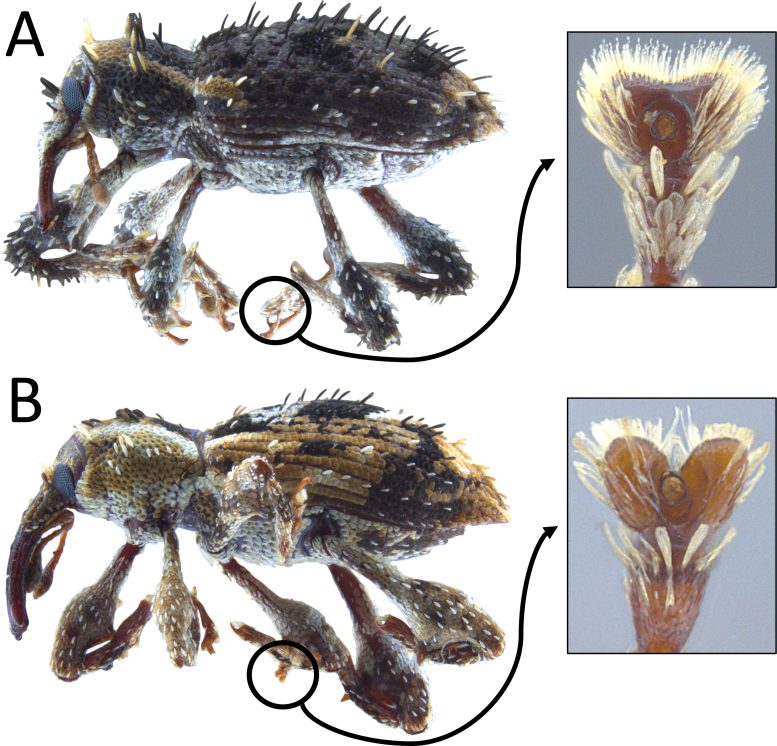
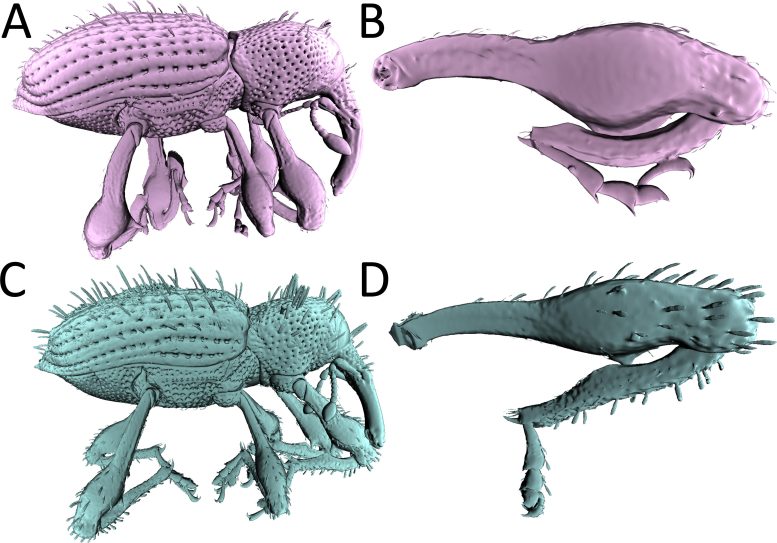
Acicnemis ryukyuana can be immediately recognized by the yellow bands on its shoulders, and distinct pattern of grey, black, and yellow scales on its tough forewings. Other unique features visible under the microscope include the long scales (hairs) on the back and the shape of the last segment of the leg.
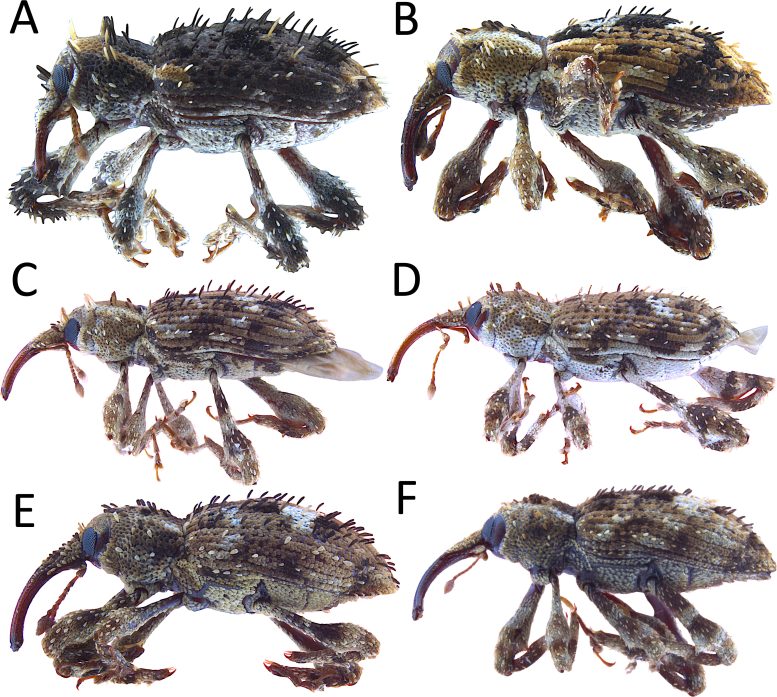
“Based on the unique set of features observed in this new species, A. ryukyuana appears to be closely related to some other species in southeast Asia, however, DNA analyses will be required to confirm this,” explains Lewis.
“I was drawn to Okinawa as there are numerous undescribed weevil species in the region, unlike in Canada, my home country, where weevils have been much more thoroughly studied. Living in Okinawa and having Yanbaru National Park as a backyard is very exciting as it is home to many undescribed, endemic species.” enthuses Lewis. “The Ryukyu Islands offer an irresistible playground for taxonomists, rich in species which you only find here”.
The Beetles’ Sensitivity to Human Presence
Although OIST researchers distributed insect traps widely across Okinawa Island including heavily populated and disturbed areas, A. ryukyuana was only captured in a pristine, specially protected part of Yanbaru National Park. The new species was also collected in well-preserved subtropical forest areas on Ishigaki Island; and located by Lewis in the Kyushu University Museum collection. “Based on these collection locations, this weevil species appears to be very sensitive to human disturbance compared to other Acicnemis species commonly found in the Ryukyu Islands.”
“This newly discovered beetle might be considered a vulnerable, endemic element of the Ryukyu fauna, similar to the flight-less bird Okinawa rail, the Yanbaru long-armed scarab beetle, and the Okinawa spiny rat,” says Lewis. “I am sure that taxonomists, conservation biologists, and local naturalists in Okinawa will be interested in knowing that yet another remarkable species has been discovered in the Ryukyu Islands.”
Reference: “A New Species of Acicnemis Fairmaire, 1849 (Coleoptera: Curculionidae) from Okinawa and Ishigaki Islands, Okinawa Prefecture, Japan” by Jake H. Lewis, 16 June 2023, The Coleopterists Bulletin.
DOI: 10.1649/0010-065X-77.2.185
Never miss a breakthrough: Join the SciTechDaily newsletter.
Follow us on Google and Google News.
1 Comment
very awestome! thanks you!