
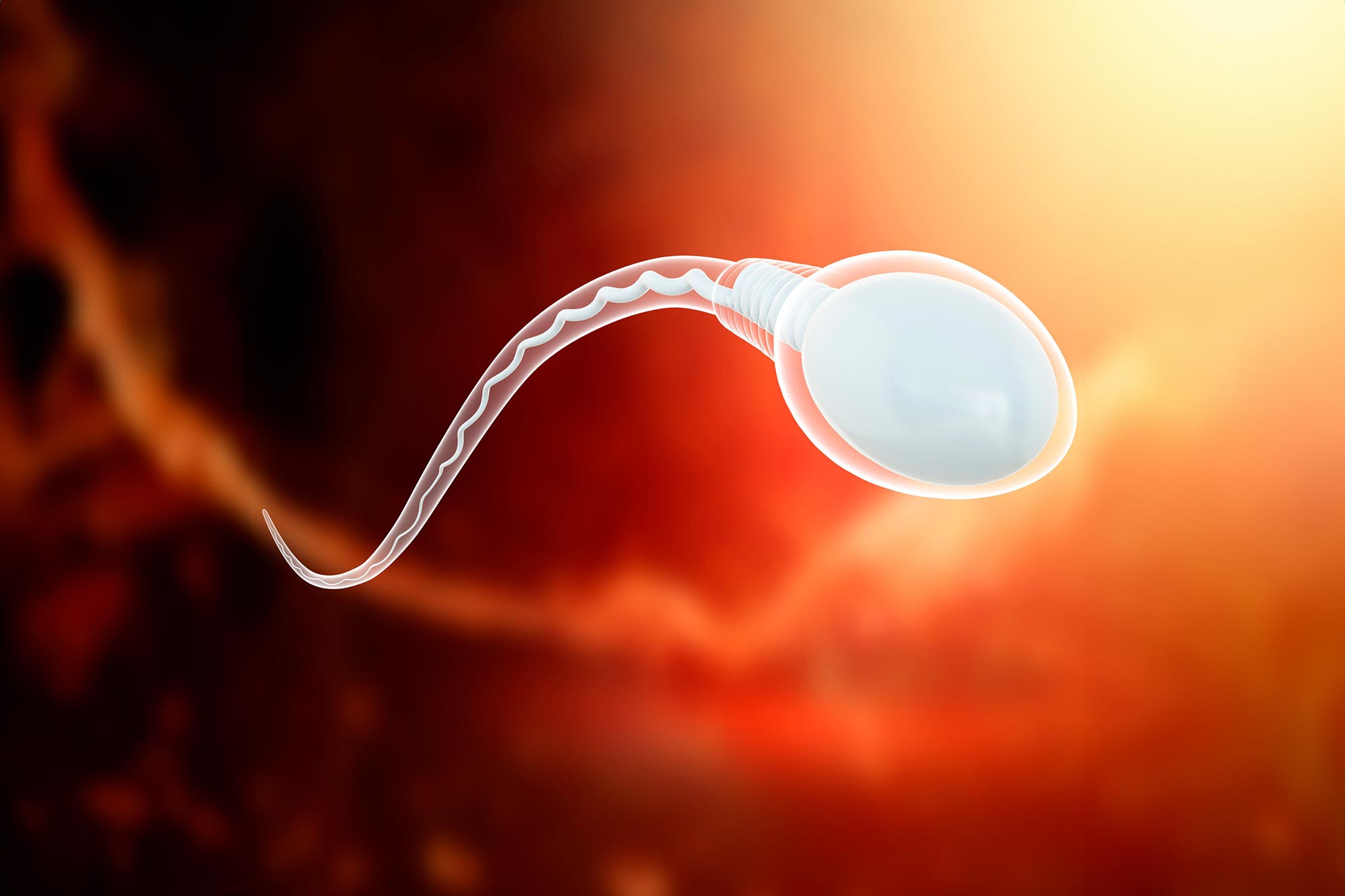
A mouse study may pave the way for new approaches to contraception and infertility treatment.
Sperm are surprisingly picky when it comes to temperature. In mammals, including humans, they perform best in environments that are a few degrees cooler than normal body temperature. This raises an intriguing question: how do these heat-sensitive cells manage to fertilize an egg in the much warmer environment of the female reproductive tract?
Scientists at Washington University School of Medicine in St. Louis have uncovered the answer. Their research reveals that warmer temperatures, like those inside the female reproductive system, activate a specific signal in sperm. This signal flips a biological switch that changes their movement. Instead of their usual smooth swimming, the sperm begin thrashing and twisting, the high-energy motion needed to break through the egg’s outer layer and achieve fertilization.
Working with mice, the researchers identified a protein that is found in the sperm of all mammals. This protein triggers the sperm’s hyperactive state when the surrounding temperature reaches the level typical of the female reproductive tract. The findings, published in Nature Communications, not only shed light on this fascinating process but also offer clues about how mammalian anatomy evolved to support it.
“That hyperactive state in sperm is key for successful fertilization, and no one knew exactly how temperature triggers it,” said Polina Lishko, PhD, a BJC Investigator and professor of cell biology and physiology at WashU Medicine. “Our work has identified a temperature-controlled switch in sperm that triggers these increased movements precisely when they are needed during fertilization.”
Introducing CatSper: The Molecular Switch
All mammals share a particular protein embedded in the surface of sperm called CatSper. It controls the entry of particles needed to power the hyperactive movements in the tail-like flagella that propel the sperm forward.

Temperature activation of CatSper was not known, however, it had been believed to be activated by a combination of the pH level in the female reproductive channel and, in primates, by progesterone, a female reproductive hormone. The theory didn’t entirely hold up, said Lishko, because most mammalian sperm do not respond to progesterone, so there had to be another controlling factor to flip the CatSper switch.
Temperature seemed a likely culprit. Mammalian evolution has developed ingenious ways to keep male reproductive organs at or below 34 degrees Celsius (93.2 degrees Fahrenheit). Dolphins, for instance, lower the temperature of blood destined for their internal testes by first passing it through their dorsal fin; elephants use a similar system that cools blood through their ears. Most other mammals, humans included, create and store sperm in testicles outside of their body. Animals without these cooling adaptations for their male reproductive organs, such as birds, lack the CatSper proteins on their sperm.
Microscale Technology Reveals the Trigger
Using micron-scaled tools and techniques originally developed to study brain cells, Lishko’s team observed the pattern of electric charges distinctive to CatSper’s activation in individual sperm cells, measuring clear spikes when the temperature surrounding the cell surpassed 38 degrees Celsius (100.4 degrees Fahrenheit). With CatSper activated, the sperm’s behavior switched from the relatively smooth motions they use for navigation to the hyperactive movements needed for them to enter the egg for fertilization.
Lishko said that understanding temperature’s role in fertility may help to improve male contraception and treatments for infertility. Because CatSper only appears in sperm, targeting it would not affect other bodily functions. There have been attempts to develop contraceptives that deactivate the channel, but Lishko said those have not been very effective so far. The insights from this discovery might point to new approaches.
“Instead of creating inhibitors, it might be possible to activate CatSper with temperature thus, prematurely switching on this channel to drain the sperm of energy, so that by the time the sperm cell is ready to do its job and enter the egg cell, it is powerless,” she said.
Reference: “The essential calcium channel of sperm CatSper is temperature-gated” by Dilip K. Swain, Citlalli Vergara, Júlia Castro-Arnau and Polina V. Lishko, 17 April 2025, Nature Communications.
DOI: 10.1038/s41467-025-58824-0
This work was supported by the BJC Investigator fund.
Never miss a breakthrough: Join the SciTechDaily newsletter.
Follow us on Google and Google News.