
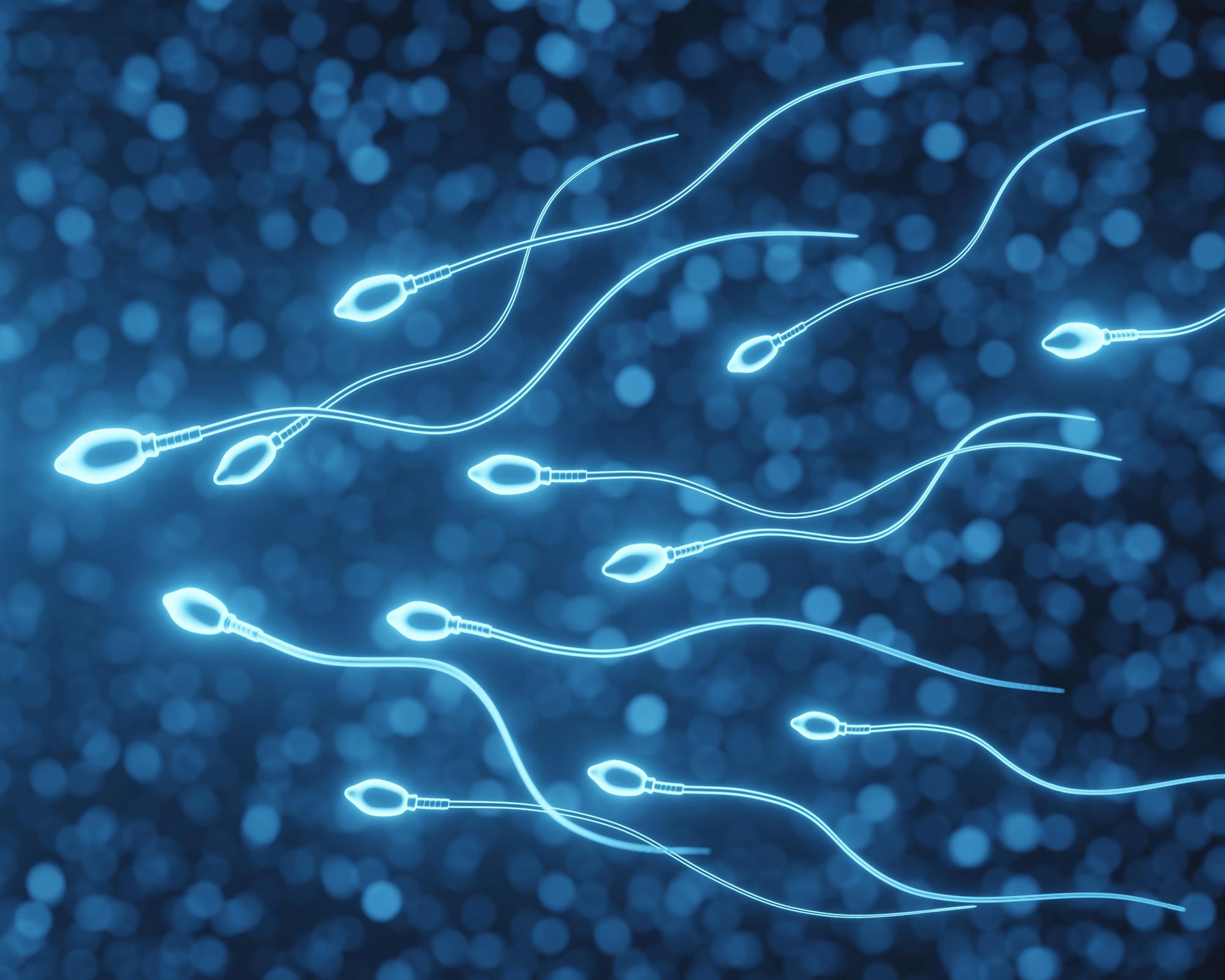
Higher BMI accelerates sperm cell aging, with older men over a BMI of 30 showing reduced sperm production.
According to a single-cell analysis of autopsied human testes, abnormalities associated with aging sperm cells may be exacerbated by elevated body mass index (BMI). The new research study will be published in the journal Developmental Cell today (May 2nd, 2022).
Despite the well-established fact that older men display reduced reproductive health, testis aging is still poorly understood at the molecular and genomic levels. Furthermore, it is unclear if this decrease is influenced by lifestyle or environmental variables.
“Aging may confer a combination of modest molecular changes that sensitize the testis for additional dysregulation, with pronounced dysregulation caused when aging is combined with additional factors such as obesity,” says co-senior author Bradley Cairns of the University of Utah School of Medicine.
Body mass index (BMI) is a value calculated from the mass (weight) and height of a person. Specifically, it is defined as the body mass divided by the square of the body height. It is a convenient rule of thumb used to broadly categorize a person as underweight, normal weight, overweight, or obese based on tissue mass (muscle, fat, and bone) and height.
To address this gap, Cairns and co-senior study author Jingtao Guo, also of the University of Utah School of Medicine, used single-cell RNA sequencing to profile more than 44,000 cells obtained from autopsy testis samples from four young men and eight older men. The older donors were screened for having offspring as young adults to ensure early-adult fertility.
The young samples clustered together and did not display molecular signatures of aging or a disrupted ability to produce sperm cells. Surprisingly, the older samples showed only modest age-related changes in stem cells that give rise to mature sperm, but were clearly classified into two distinct groups. The first group displayed an intact ability to produce sperm cells, with only weak molecular signatures that distinguished them from young samples. By contrast, the second group showed a very limited ability to develop sperm cells.
BMI’s Role in Testis Health and Fertility
Notably, BMI emerged as a critical factor among older individuals. All donors from the first group had levels lower than 27, whereas all donors from the second group had levels higher than 30. Taken together, the results reveal possible molecular mechanisms underlying the complex testicular changes associated with aging, and their possible exacerbation by concurrent chronic conditions such as obesity.
Moving forward, larger patient cohorts are needed to fully validate the results. Another avenue for future research is to explore whether the testicular cells of older, heavy-set males show unique aging signatures, or whether they simply display accelerated aging. It is also not clear whether diet, exercise, diabetes, or altered hormone production play a role in testis aging. In addition, determining at what age the dysregulation of supporting testis cells emerges, and whether and how it may be reversible, may lead to improved medical guidance for older men.
“Our study reveals potential biomarkers for diagnosis of testis aging and directions for potential treatment of aging-related subfertility,” says Guo. “It also serves as a foundational dataset for the scientific community to study how human testis and fertility respond to aging.”
Reference: “Single-cell analysis of human testis aging and correlation with elevated body mass index” by Xichen Nie, Sarah K. Munyoki, Meena Sukhwani, Nina Schmid, Annika Missel, Benjamin R. Emery, Donor Connect, Jan-Bernd Stukenborg, Artur Mayerhofer, Kyle E. Orwig, Kenneth I. Aston, James M. Hotaling, Bradley R. Cairns and Jingtao Guo, 2 May 2022, Developmental Cell.
DOI: 10.1016/j.devcel.2022.04.004
This work was supported by the National Institute on Aging.
Never miss a breakthrough: Join the SciTechDaily newsletter.
Follow us on Google and Google News.
1 Comment
Simple – Natural Selection is about producing offspring with the most likelyhood of success. Beer swilling couch potatoes get filtered out of the gene pool. Nature works!