

The Astrobee robots, Honey, Bumble, and Queen, were launched to the ISS to assist with space exploration tasks. They operate autonomously, performing maintenance and experiments, while freeing astronauts for more complex missions.
Three years ago, a pair of robots were launched to the International Space Station (ISS) to help pave the way for the future of robotics and autonomous systems in space. Those pioneers were Honey and Bumble, who were soon joined by a third companion called Queen, and together they make up the Astrobee free-flying robotic system. Robots like the Astrobees are essential components of NASA’s Artemis mission to deliver humans back to the Moon, before traveling to Mars and beyond.
“There’s a reason so many science fiction stories have a beloved robot alongside the human heroes – we know we can’t explore space alone,” said Jose Benavides, the Astrobee Facilities Project Manager at NASA’s Ames Research Center in California’s Silicon Valley. “We’re showing that humans and robotic systems can collaborate and support powerful science and engineering beyond Earth.”
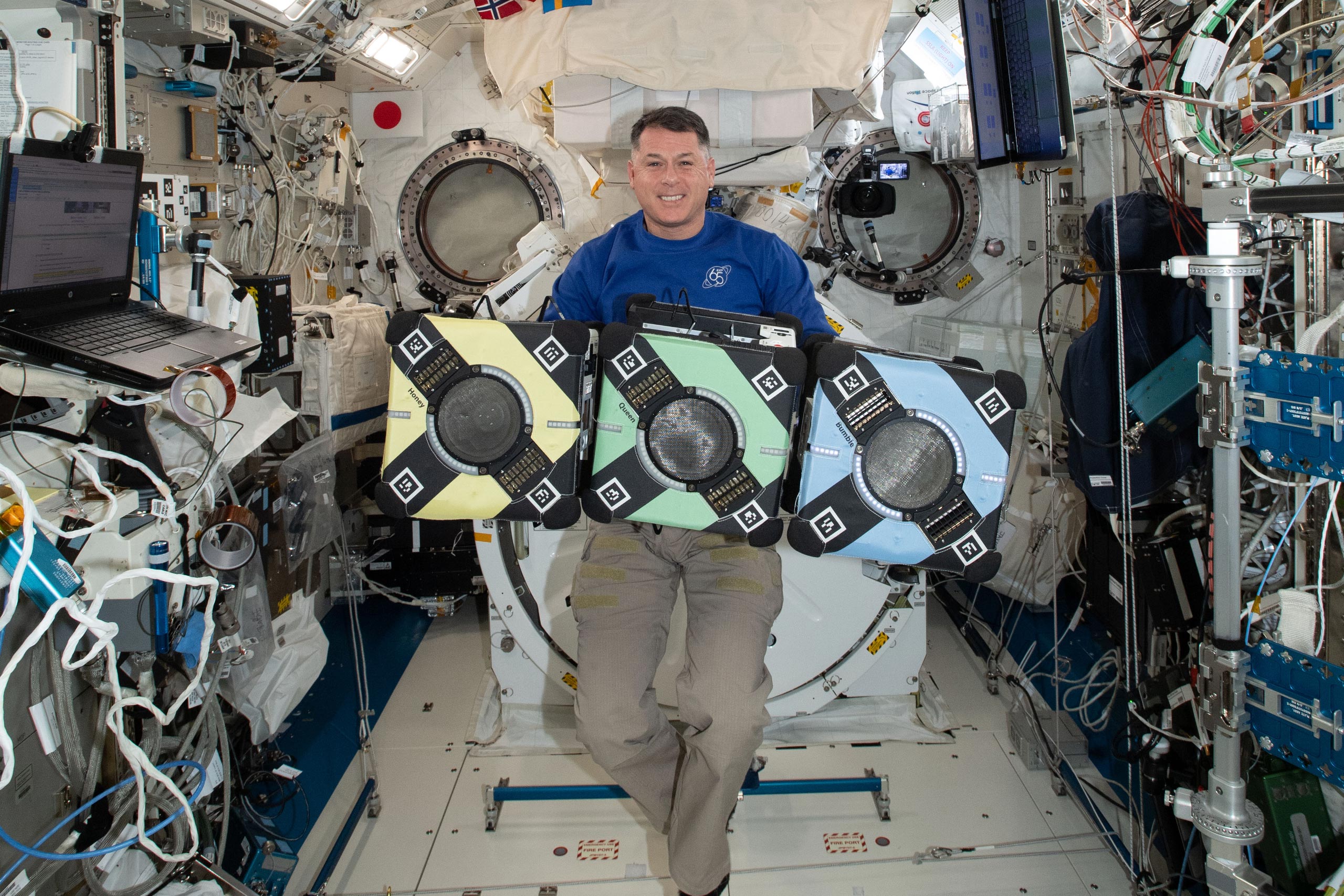
Since launch, the Astrobee program – run out of NASA Ames – has operated over 750 hours on the space station, completing over 100 activities, from tech demonstrations to assisting in experiments. The robots have proven capable of feats previously in the realm of science fiction, such as detecting an anomaly during a simulation on station (see video below) and connecting autonomously with station subsystems. Honey, Bumble, and Queen have been busy bees, and they show no signs of slowing down.
NASA’s Integrated System for Autonomous and Adaptive Caretaking, or ISAAC, is advancing new technology for robots to take care of spacecraft. Researchers recently demonstrated the tech aboard the International Space Station using Astrobee, NASA’s free-flying robotic assistants. Credit: NASA/Ames Research Center
Three Years of Evolving Astrobees
The Astrobees are a next-generation technology, building upon three orb-shaped robots of the Synchronized Position Hold, Engage, Reorient, Experimental Satellite (SPHERES) project. Astrobees evolved from that initial concept as researchers developed new tools and capabilities.
Video from April 1, 2018, explaining how the Astrobee project is developing a set of three free-flying robots that will operate inside the International Space Station (ISS) alongside astronauts. Credit: NASA
They fly through microgravity using electric fans, they “see” using cameras and sensors, and they have arms to hold objects or keep steady for tasks requiring stability. Researchers have also tested an adhesive technology, inspired by gecko feet, to allow the Astrobees to grab onto a variety of surfaces without applying force to adhere and then detach on demand. The Astrobee teams envision a robotic system that’s smart and versatile enough to handle simpler maintenance and monitoring chores to leave astronauts free to tackle more complex work.
Video from 2019, before the Astrobees were launched to the ISS. Astrobee is a free-flying robot system for the International Space Station. Designed and built at NASA’s Ames Research Center in California’s Silicon Valley, the system will be used to help scientists and engineers develop and test technologies for use in zero-gravity. These robots are designed to assist astronauts in Earth’s orbit and support sustained human exploration to the Moon, Mars, or other deep-space destinations. Credit: NASA/Ames Research Center
But the Astrobee platform isn’t just for astronauts. Through the annual Kibo Robot Programming Challenge, operated alongside the Japan Aerospace Exploration Agency (JAXA) and now in its third year, students from across the world can write code for the Astrobees. The winning teams get to see their programs run on the robots in space. Inspiring the next generation of programmers and engineers is vital as NASA prepares for a future where robotics will play a central role in humanity’s exploration beyond our planet.
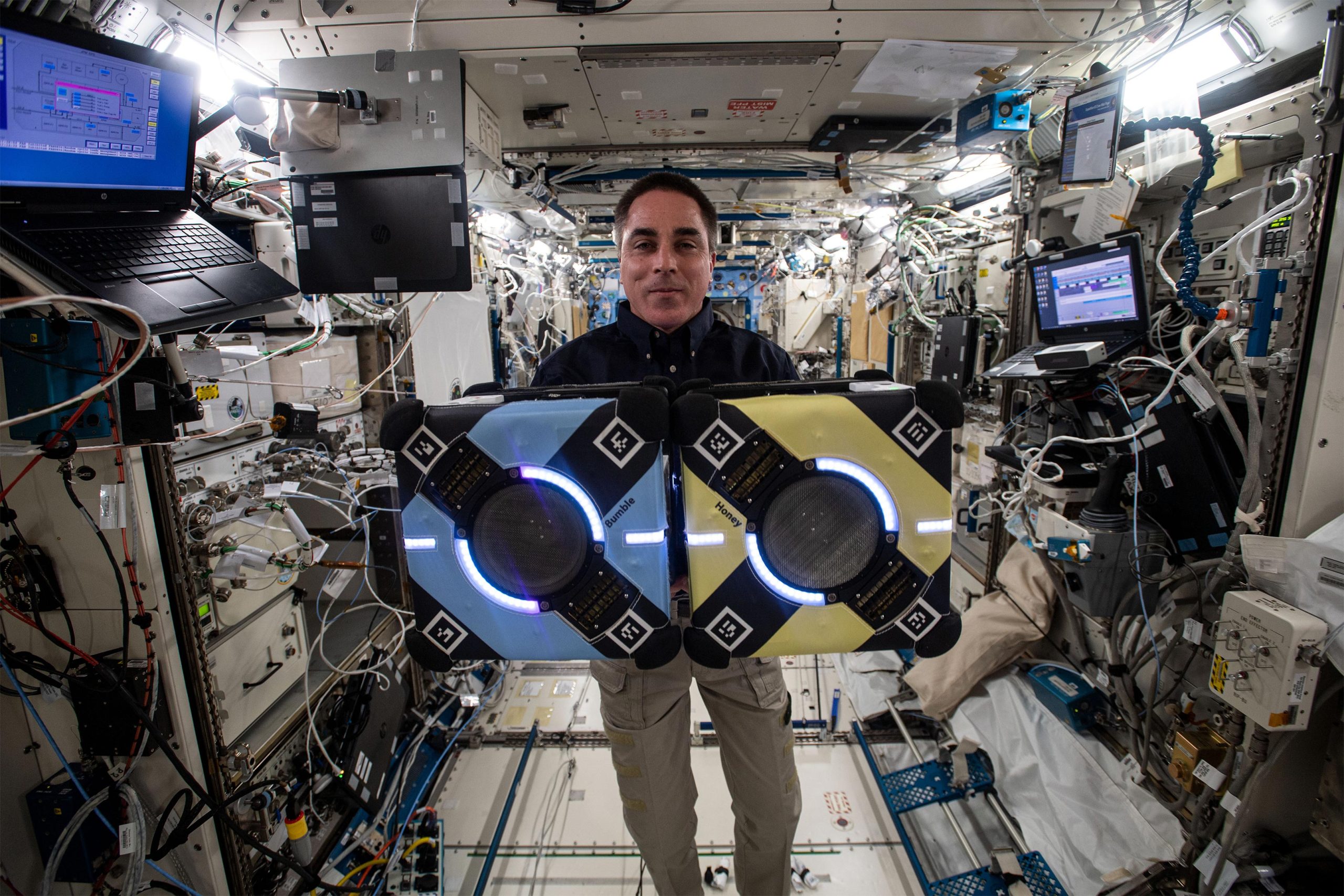
Robotic Autonomy for Artemis and Beyond
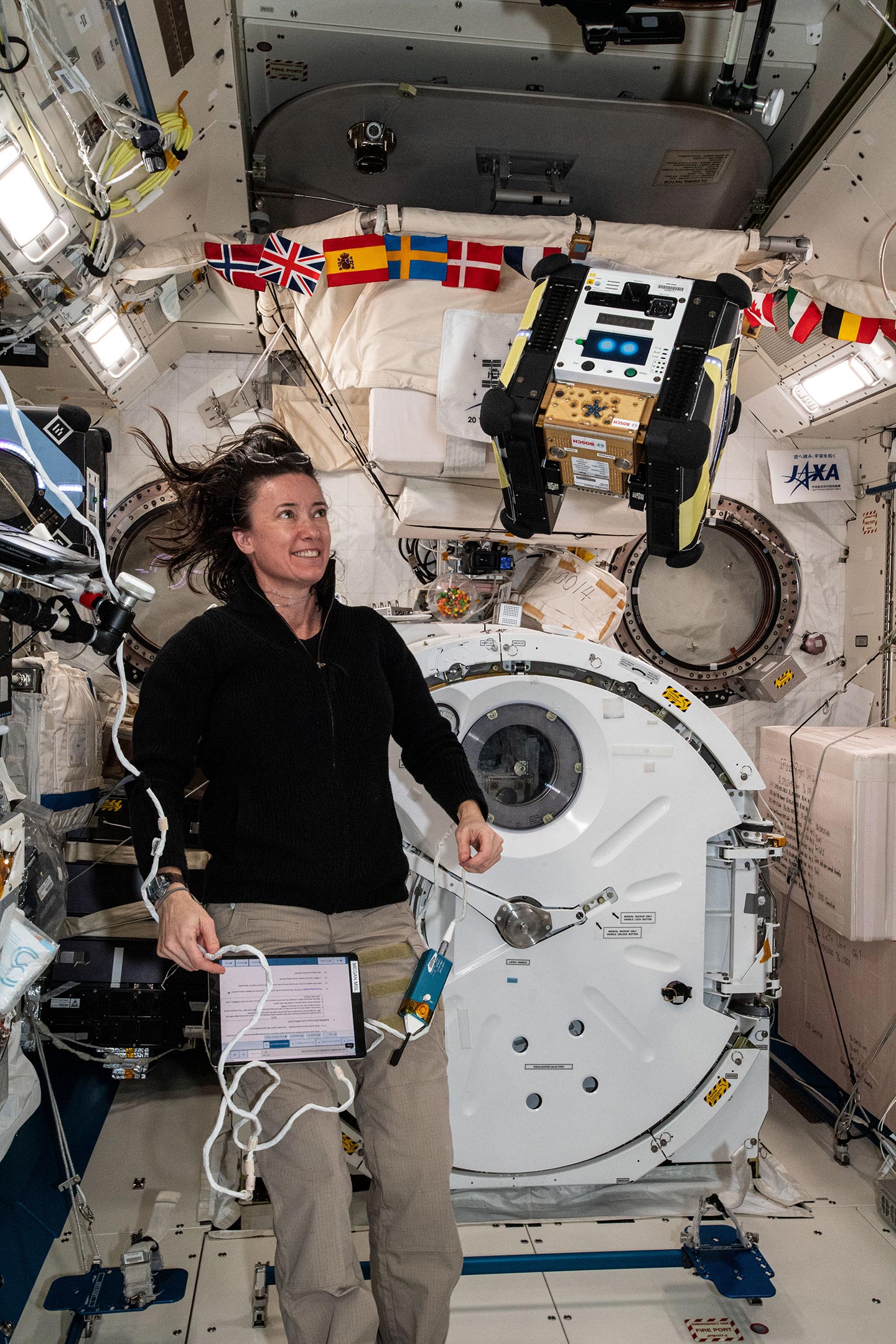
Unlike the space station, future deep space outposts may not be crewed year-round, and will need autonomous systems to remain operational. That includes Gateway, which will orbit the Moon and serve as a launching-point for missions to Mars.
The Integrated System for Autonomous and Adaptive Caretaking project (ISAAC) aims to test how robotic systems can complete tasks like repairs, maintenance, and even experiments independently.
By giving Honey and Bumble challenges to solve on their own – like removing a “sock” blocking an air vent – ISAAC is building capabilities needed for robots to take care of spacecraft when astronauts aren’t aboard. But a major component of autonomously operating in a complex environment is being able to have a detailed map and know where you are.
ISAAC’s two most recent demonstrations used Astrobees to create 3D maps of the space station’s interior. Bumble flew out of its home module and mapped out a new environment on its own. The ability to explore and map independently is essential to the future of autonomous robotics.
“Three years ago, we wanted to test out how robotics could support human space exploration, not just for this decade, but for the next several decades,” said ISAAC deputy project manager Maria Bualat at Ames. “We’re starting to see what that’ll look like.”
Astrobee and ISAAC were funded by NASA’s Game Changing Development Program, part of the Space Technology Mission Directorate.
Never miss a breakthrough: Join the SciTechDaily newsletter.
Follow us on Google and Google News.