
Close Menu
    Facebook X (Twitter) Instagram
    SciTechDaily
    • Biology
    • Chemistry
    • Earth
    • Health
    • Physics
    • Science
    • Space
    • Technology
    Facebook X (Twitter) Pinterest YouTube RSS
    SciTechDaily
    Home»Earth»Scientists Find 550 Million-Year-Old Fossilized Digestive Tract – Solving a Mystery of Primordial Evolution
    Earth

    Scientists Find 550 Million-Year-Old Fossilized Digestive Tract – Solving a Mystery of Primordial Evolution

    By University of Missouri-ColumbiaJanuary 10, 20201 Comment4 Mins Read
    Facebook Twitter Pinterest Telegram LinkedIn WhatsApp Email Reddit
    Share
    Facebook Twitter LinkedIn Pinterest Telegram Email Reddit
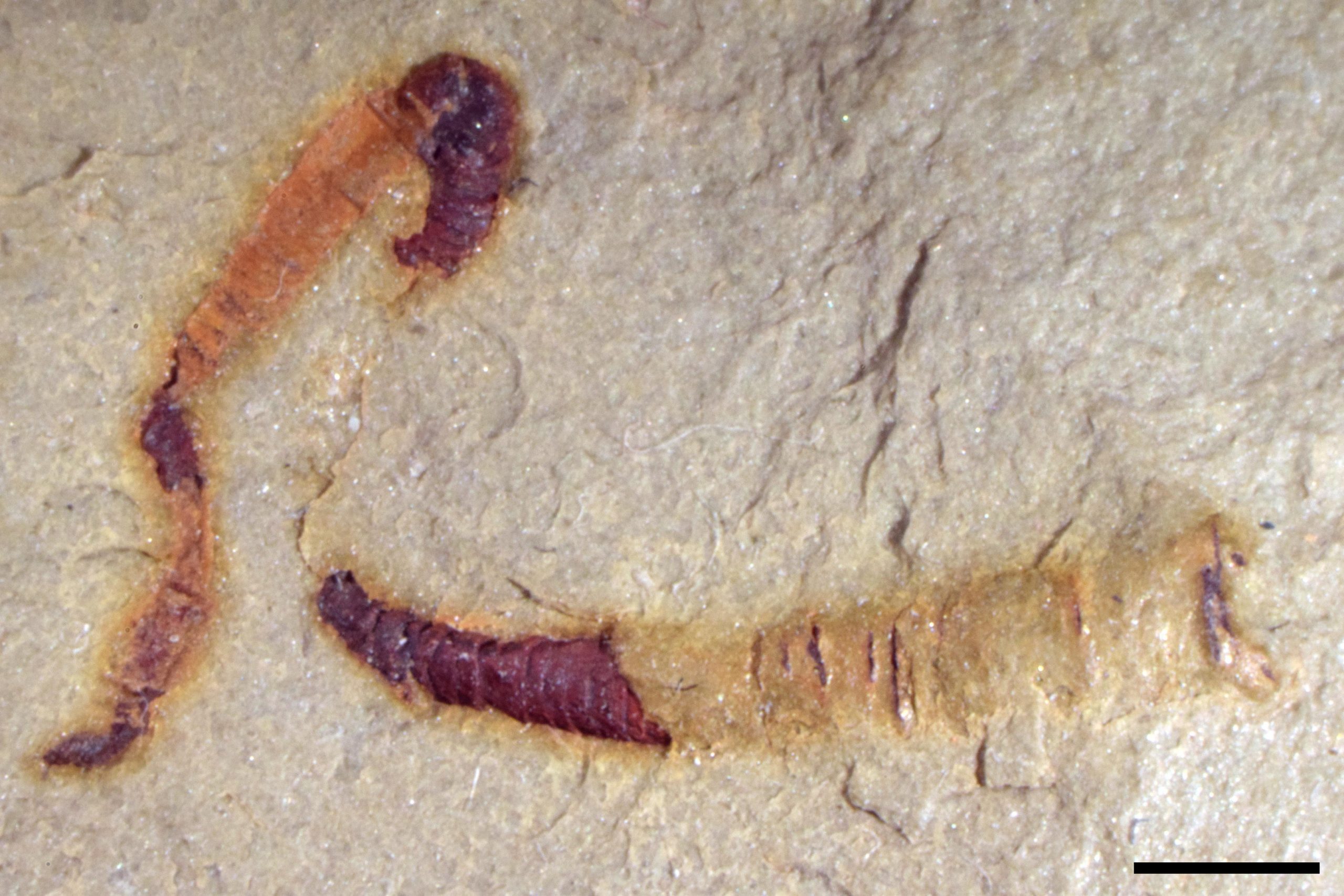
    Fossilized Cloudinomorph
    A fossilized cloudinomorph from the Montgomery Mountains near Pahrump, Nevada. This is representative of the fossil that was analyzed in the study. Credit: University of Missouri

    A 550 million-year-old fossilized digestive tract found in the Nevada desert could be a key find in understanding the early history of animals on Earth.

    Over a half-billion years ago, life on Earth was comprised of simple ocean organisms unlike anything living in today’s oceans. Then, beginning about 540 million years ago, animal structures changed dramatically.
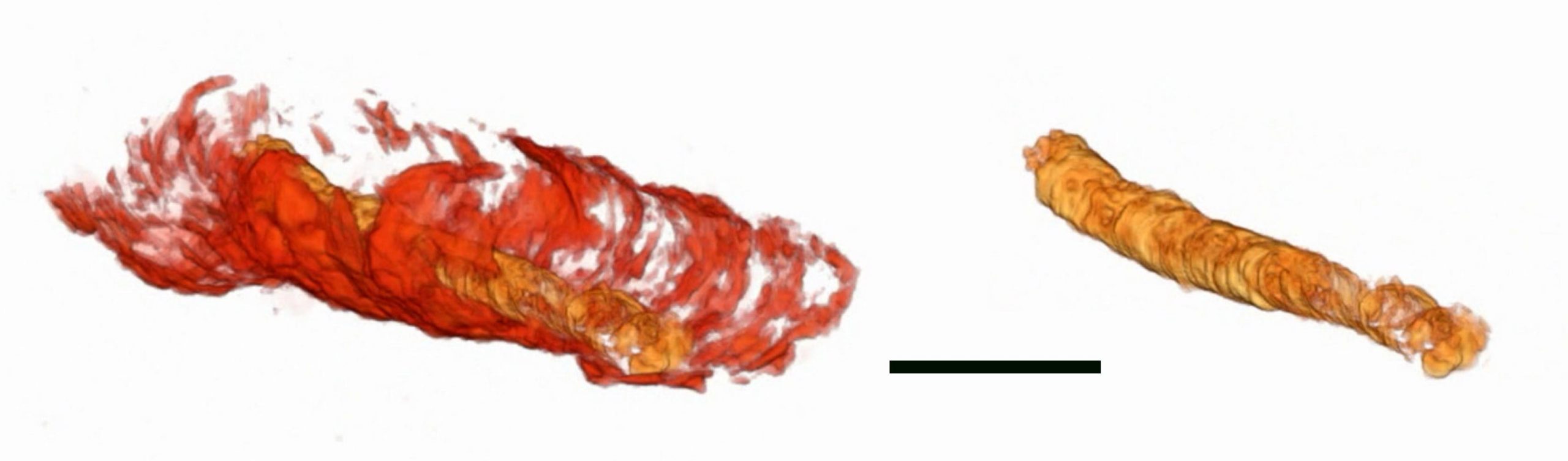
    3D Image of a 550 Million Year Old Fossilized Gut
    A three-dimensional image of a 550 million-year-old fossilized tube (left, in red) with internal digestive tract (gold, left and right). Credit: University of Missouri

    During this time, ancestors of many animal groups we know today appeared, such as primitive crustaceans and worms, yet for years scientists did not know how these two seemingly unrelated communities of animals were connected, until now. An analysis of tubular fossils by scientists led by Jim Schiffbauer at the University of Missouri provides evidence of a 550 million-year-old digestive tract — one of the oldest known examples of fossilized internal anatomical structures — and reveals what scientists believe is a possible answer to the question of how these animals are connected.

    The study was published in Nature Communications, a journal of Nature.
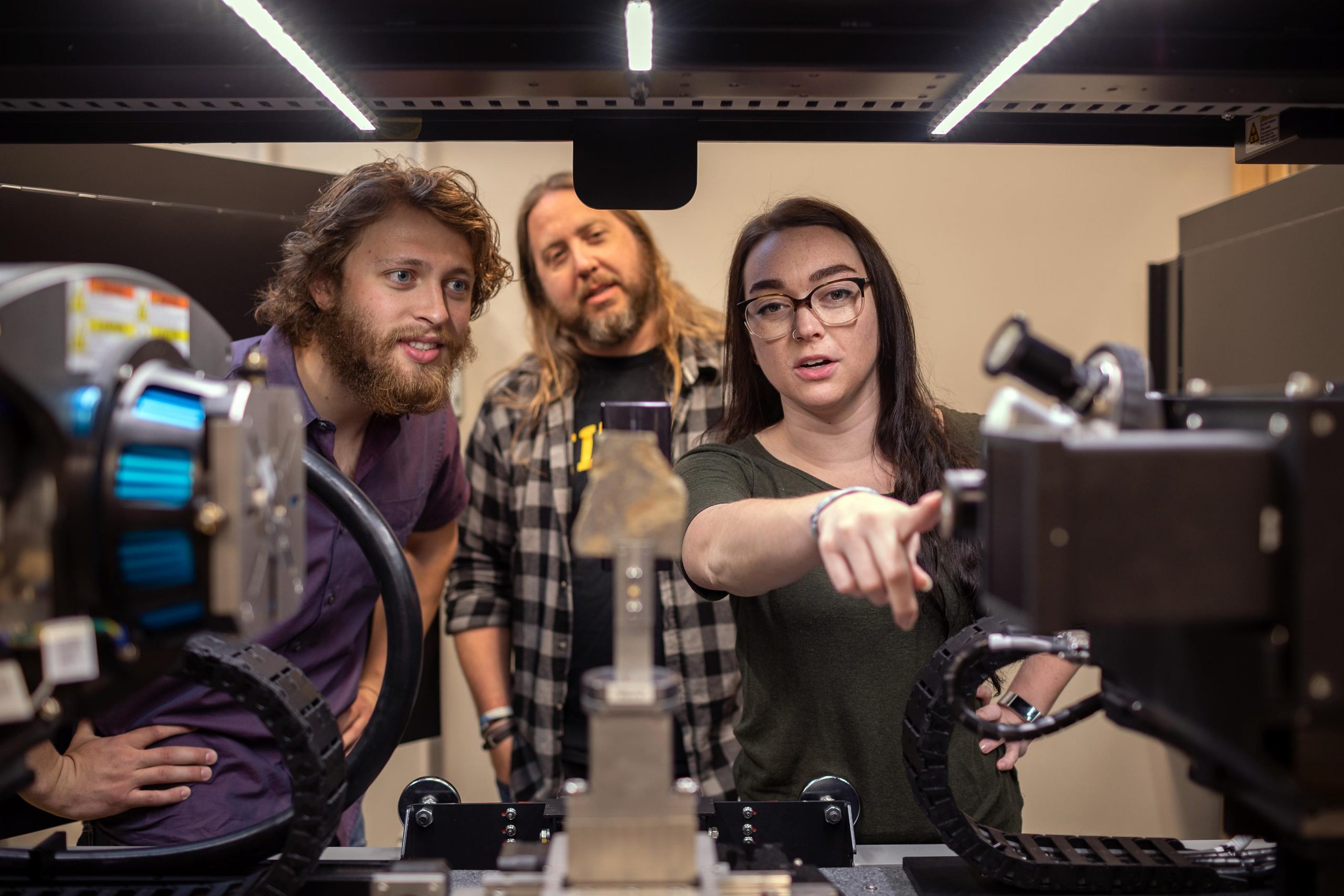
    University of Missouri X-ray Microanalysis Core facility
    Jim Schiffbauer, center, and Tara Selly, right, work with Brock Andreasen in the X-ray Microanalysis Core facility, one of MU’s core facilities. Credit: University of Missouri

    “Not only are these structures the oldest guts yet discovered, but they also help to resolve the long-debated evolutionary positioning of this important fossil group,” said Schiffbauer, an associate professor of geological sciences in the MU College of Arts and Science and director of the X-ray Microanalysis Core facility. “These fossils fit within a very recognizable group of organisms — the cloudinids — that scientists use to identify the last 10 to 15 million years of the Ediacaran Period, or the period of time just before the Cambrian Explosion. We can now say that their anatomical structure appears much more worm-like than coral-like.”

    The Cambrian Explosion is widely considered by scientists to be the point in history of life on Earth when the ancestors of many animal groups we know today emerged.
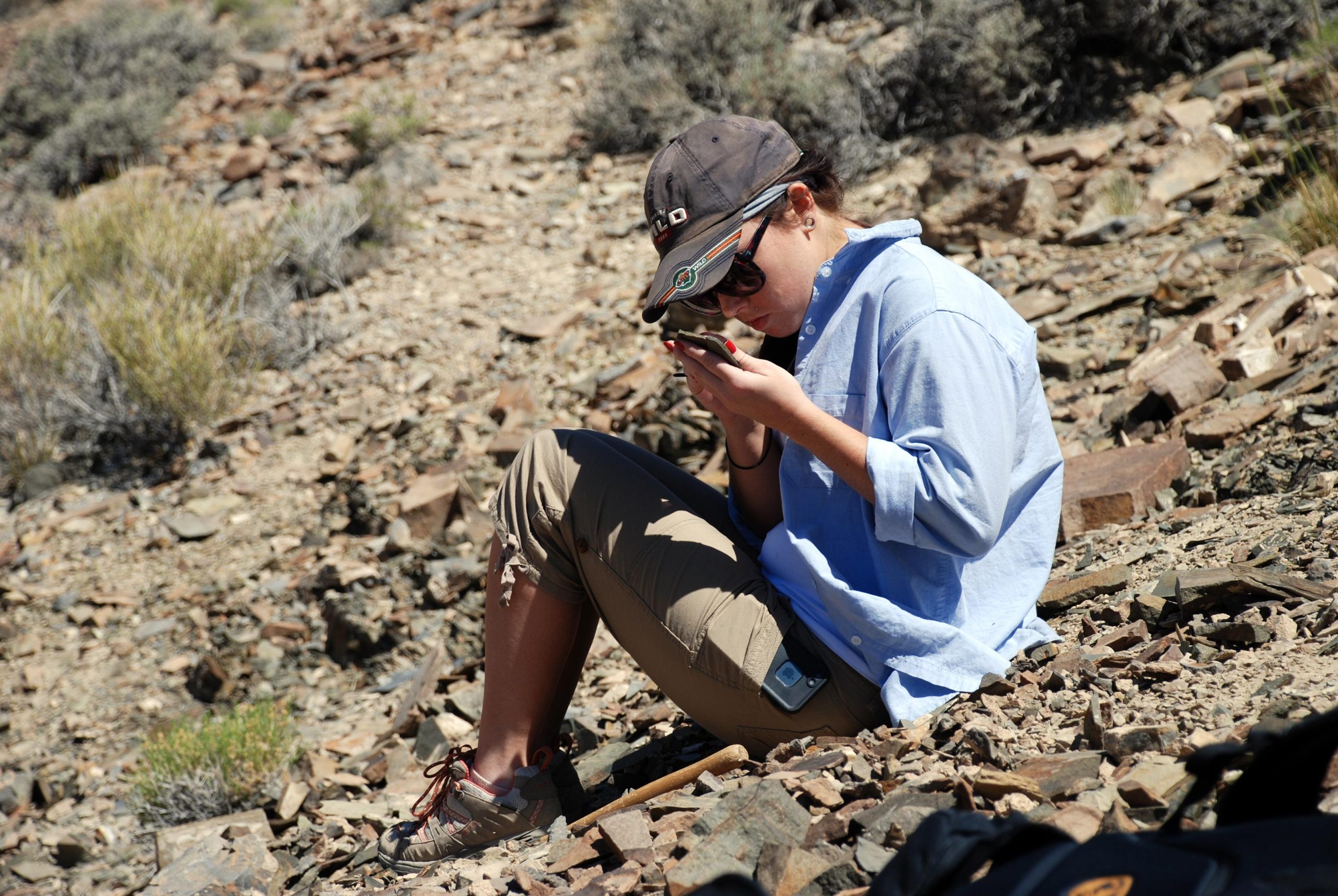
    Tara Selly
    Tara Selly investigates a slab of rock in Nevada containing a fossil. Credit: University of Missouri

    In the study, the scientists used MU’s X-ray Microanalysis Core facility to take a unique analytical approach for geological science — micro-CT imaging — that created a digital 3D image of the fossil. This technique allowed the scientists to view what was inside the fossil structure.

    “With CT imaging, we can quickly assess key internal features and then analyze the entire fossil without potentially damaging it,” said co-author Tara Selly, a research assistant professor in the Department of Geological Sciences and assistant director of the X-ray Microanalysis Core facility.
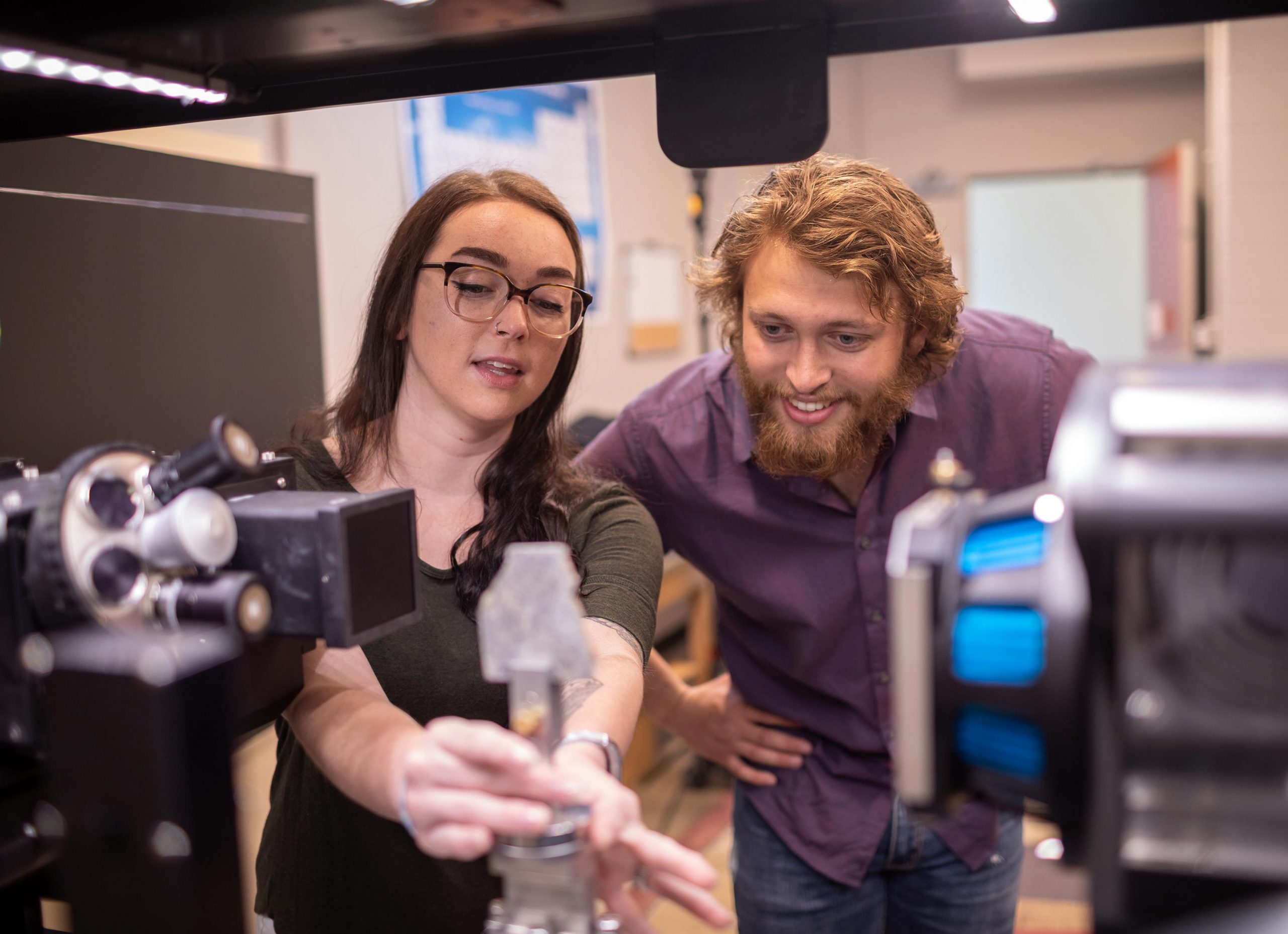
    Tara Selly and Brock Andreasen
    Tara Selly, left, and Brock Andreasen load a sample for analyzing in the X-Ray Microanalysis Core facility. Credit: University of Missouri

    The study, “Discovery of bilaterian-type through-guts in cloudinomorphs from the terminal Ediacaran Period,” was published in Nature Communications. Other authors include Sarah Jacquet from MU; Rachel Merz from Swarthmore College; Michael Strange from the University of Nevada, Las Vegas; Yaoping Cai from Northwest University in Xi’an, China; and Lyle Nelson and Emmy Smith from Johns Hopkins University.

    Funding was provided by grants from the NSF Sedimentary Geology and Paleobiology Program (CAREER 1652351) and Instrumentation and Facilities Program (1636643). The content is solely the responsibility of the authors and does not necessarily represent the official views of the funding agencies.

    Reference: “Discovery of bilaterian-type through-guts in cloudinomorphs from the terminal Ediacaran Period” by James D. Schiffbauer, Tara Selly, Sarah M. Jacquet, Rachel A. Merz, Lyle L. Nelson, Michael A. Strange, Yaoping Cai and Emily F. Smith, 10 January 2020, Nature Communications.
    DOI: 10.1038/s41467-019-13882-z

    Never miss a breakthrough: Join the SciTechDaily newsletter.
    Follow us on Google and Google News.

    Fossils Paleontology Popular University of Missouri-Columbia
    Share. Facebook Twitter Pinterest LinkedIn Email Reddit

    Related Articles

    Strange “Inside-Out” Fossil Stuns Scientists With 444-Million-Year-Old Soft Tissues

    300-Million-Year-Old Iridescent Fossil May Be One of Earth’s Rarest Prehistoric Gems

    500-Million-Year-Old “Worm-Like” Fossil Represents Rare Discovery of Ancient Animal in North America

    Giant Armored Fish Fed Similar to Basking Sharks 380-Million-Years Ago

    Story of Dinosaur Evolution and Ecology Rewritten After Unambiguous Fossil Evidence Discovered

    Ancestor of All Animals – Including Humans – Identified in Australian Fossils

    Global Warming, Ocean Acidification: Earth Was Stressed Before Dinosaur Extinction

    Gap in Fossil Record Filled by Find From School Class Hike – Ancient Rhinos Roamed the Yukon

    Hundreds of Lost Fossils From the Darwin Collection Rediscovered by the British Geological Survey

    1 Comment

    1. Torbjörn Larsson on January 11, 2020 8:35 am

      The paper argues for a polychaete annnelid (segmented worm) on the basis of a through-gut (two openings) instead of cnidarians sack gut (one opening) and other identifiable traits. Polychaetes are found in the Cambrian as well, so there is the connection. The main advance would be to shore up early major splits between Bilateria and Cnidaria within ParaHoxozoa [ https://en.wikipedia.org/wiki/ParaHoxozoa ] and between deuterostomes (including annelids) and protostomes within Bilateria [ https://en.wikipedia.org/wiki/Nephrozoa ].

      More data and figures of guts et cetera in this article: https://www.livescience.com/oldest-guts-fossilized-primordial-creature.html , as well as the researcher’s own article: https://natureecoevocommunity.nature.com/users/336548-james-d-schiffbauer/posts/57222-the-oldest-guts-unraveling-the-annals-of-ancient-animals .

      Reply
    Leave A Reply Cancel Reply

    • Facebook
    • Twitter
    • Pinterest
    • YouTube

    Don't Miss a Discovery

    Subscribe for the Latest in Science & Tech!

    Trending News

    Breakthrough Bowel Cancer Trial Leaves Patients Cancer-Free for Nearly 3 Years

    Natural Compound Shows Powerful Potential Against Rheumatoid Arthritis

    100,000-Year-Old Neanderthal Fossils in Poland Reveal Unexpected Genetic Connections

    Simple “Gut Reset” May Prevent Weight Gain After Ozempic or Wegovy

    2.8 Days to Disaster: Scientists Warn Low Earth Orbit Could Suddenly Collapse

    Common Food Compound Shows Surprising Power Against Superbugs

    5 Simple Ways To Remember More and Forget Less

    The Atomic Gap That Could Cost the Semiconductor Industry Billions

    Follow SciTechDaily
    • Facebook
    • Twitter
    • YouTube
    • Pinterest
    • Newsletter
    • RSS
    SciTech News
    • Biology News
    • Chemistry News
    • Earth News
    • Health News
    • Physics News
    • Science News
    • Space News
    • Technology News
    Recent Posts
    • Scientists Discover Stem Cells That Could Regrow Teeth and Bone
    • Scientists Discover Natural Molecule That Stops Alzheimer’s Protein Clumps From Forming
    • Early Cannabis Use May Stall Key Brain Skills in Teens
    • Popular Vitamin D Supplement Has “Previously Unknown” Negative Effect, Study Finds
    • Powerful Antioxidant Found To Play a Key Role in Proper Protein Folding
    Copyright © 1998 - 2026 SciTechDaily. All Rights Reserved.
    • Science News
    • About
    • Contact
    • Editorial Board
    • Privacy Policy
    • Terms of Use

    Type above and press Enter to search. Press Esc to cancel.