
Close Menu
    Facebook X (Twitter) Instagram
    SciTechDaily
    • Biology
    • Chemistry
    • Earth
    • Health
    • Physics
    • Science
    • Space
    • Technology
    Facebook X (Twitter) Pinterest YouTube RSS
    SciTechDaily
    Home»Science»Archaeologists Discover 1.6 Billion Years Old Fossilized Oxygen Bubbles
    Science

    Archaeologists Discover 1.6 Billion Years Old Fossilized Oxygen Bubbles

    By Birgitte Svennevig, University of Southern DenmarkMarch 2, 2018No Comments2 Mins Read
    Facebook Twitter Pinterest Telegram LinkedIn WhatsApp Email Reddit
    Share
    Facebook Twitter LinkedIn Pinterest Telegram Email Reddit
    Archaeologists Discover Fossilized Oxygen Bubbles
    Fossilized bubbles and cyanobacterial fabric from 1.6 billion-year-old phosphatized microbial mats from Vindhyan Supergroup, central India. Credit: Stefan Bengtson.

    Take a good look at these photos: They show you 1.6 billion years old fossilized oxygen bubbles, created by tiny microbes in what was once a shallow sea somewhere on young Earth. The bubbles were photographed and analyzed by researchers studying early life on Earth.

    Microbes are of special interest: They were not only the first life forms on Earth. They also turned our planet into a tolerable environment for plants and animals and thus their activity paved the way for life as we know it today.
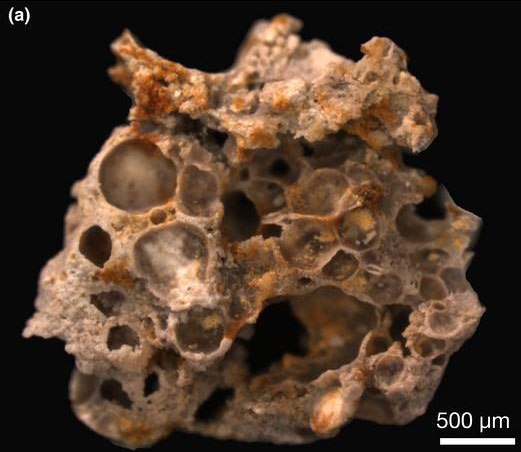
    Archaeologists Discover 2 Billion Year Old Fossilized Oxygen Bubbles
    Fossilized bubbles and cyanobacterial fabric from 1.6 billion-year-old phosphatized microbial mats from Vindhyan Supergroup, central India. Credit: Stefan Bengtson.

    Some of these early microbes were cyanobacteria that thrived in early shallow waters. They produced oxygen by photosynthesis, and sometimes the oxygen got trapped as bubbles within sticky microbial mats.

    The bubbles in the photos were preserved, and today they can be seen as a signature for life.

    Ph.D. Therese Sallstedt and colleagues from University of Southern Denmark, Swedish Museum of Natural History, and Stockholm University studied fossilized sediments from India, and they found round spheres in the microbial mats.
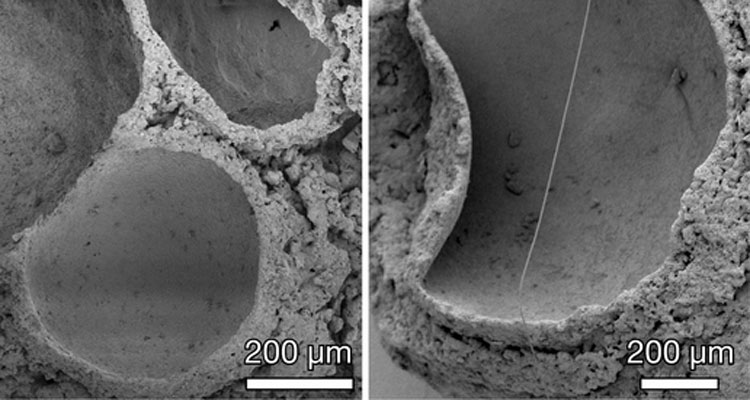
    Scientists Discover Fossilized Oxygen Bubbles
    Some bubbles have been partly compressed, suggesting a flexible original texture. Credit: Stefan Bengtson.

    We interpret them as oxygen bubbles created in cyanobacterial biomats in shallow waters 1.6 billion years ago, said Therese Sallstedt.

    Cyanobacteria changed the face of the Earth irreversibly since they were responsible for oxygenating the atmosphere. Simultaneously they constructed sedimentary structures called stromatolites, which still exist on Earth today.

    The researchers now think that cyanobacteria played a larger role than previously believed in creating phosphorites in shallow waters, thereby allowing today’s scientists a unique window into ancient ecosystems. They published their findings in the journal Geobiology.
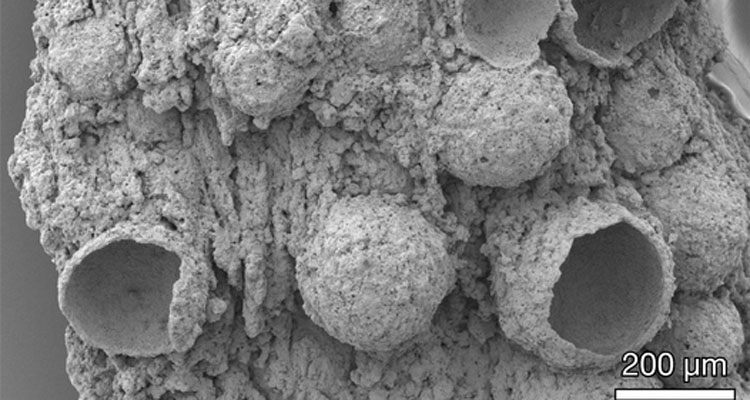
    Archaeologists Find Fossilized Oxygen Bubbles
    Fossilized bubbles and cyanobacterial fabric from 1.6 billion-year-old phosphatized microbial mats from Vindhyan Supergroup, central India. Credit Stefan Bengtson.

    Reference: “Evidence of oxygenic phototrophy in ancient phosphatic stromatolites from the Paleoproterozoic Vindhyan and Aravalli Supergroups, India” by T. Sallstedt, S. Bengtson, C. Broman, P. M. Crill and D. E. Canfield, 30 January 2018, Geobiology.
    DOI: 10.1111/gbi.12274

    Never miss a breakthrough: Join the SciTechDaily newsletter.
    Follow us on Google and Google News.

    Archaeology Cyanobacteria Earth Science Fossils Oxygen Popular University of Southern Denmark
    Share. Facebook Twitter Pinterest LinkedIn Email Reddit

    Related Articles

    Researchers Discover Two New Chinese Dinosaurs: Bannykus and Xiyunykus

    Jurassic Fossil Links Ancient Crocodiles With Dolphin-Like Animals

    New Fossil Discovery Highlights Canada-Russia Connection 53 Million Years Ago

    Archaeologists Discover Fossilized Domestic Goat Hair Dating Back to the Neolithic

    Anthropologists Shed New Light on Prehistoric Human Migration

    Scientists Discover Fossils of a Giant Extinct Burrowing Bat in New Zealand

    Newly Discovered Fossils Reveal Man’s Earliest Ancestors

    Ash Preserved Fossils of Rangeomorphs Discovered in Newfoundland

    Prehistoric Fossilized Eocene Epoch Turtles Died Locked In Coitus

    Leave A Reply Cancel Reply

    • Facebook
    • Twitter
    • Pinterest
    • YouTube

    Don't Miss a Discovery

    Subscribe for the Latest in Science & Tech!

    Trending News

    One of the Universe’s Largest Stars May Be Getting Ready To Explode

    Scientists Discover Enzyme That Could Supercharge Ozempic-Like Weight Loss Drugs

    Popular Sweetener Linked to DNA Damage – “It’s Something You Should Not Be Eating”

    Ancient “Rock” Microbes May Reveal How Complex Life Began

    Researchers Capture Quantum Interference in One of Nature’s Rarest Atoms

    “A Plague Is Upon Us”: The Mass Death That Changed an Ancient City Forever

    Scientists Discover Game-Changing New Way To Treat High Cholesterol

    This Small Change to Your Exercise Routine Could Be the Secret to Living Longer

    Follow SciTechDaily
    • Facebook
    • Twitter
    • YouTube
    • Pinterest
    • Newsletter
    • RSS
    SciTech News
    • Biology News
    • Chemistry News
    • Earth News
    • Health News
    • Physics News
    • Science News
    • Space News
    • Technology News
    Recent Posts
    • Natural Compounds Boost Bone Implant Success While Killing Bacteria and Cancer Cells
    • After 60 Years, Scientists Uncover Unexpected Brain Effects of Popular Diabetes Drug Metformin
    • New Research Uncovers Hidden Side Effects of Popular Weight-Loss Drugs
    • Scientists Rethink Extreme Warming After Surprising Ocean Discovery
    • The Surprising Role of Asteroids in the Origin of Life
    Copyright © 1998 - 2026 SciTechDaily. All Rights Reserved.
    • Science News
    • About
    • Contact
    • Editorial Board
    • Privacy Policy
    • Terms of Use

    Type above and press Enter to search. Press Esc to cancel.