
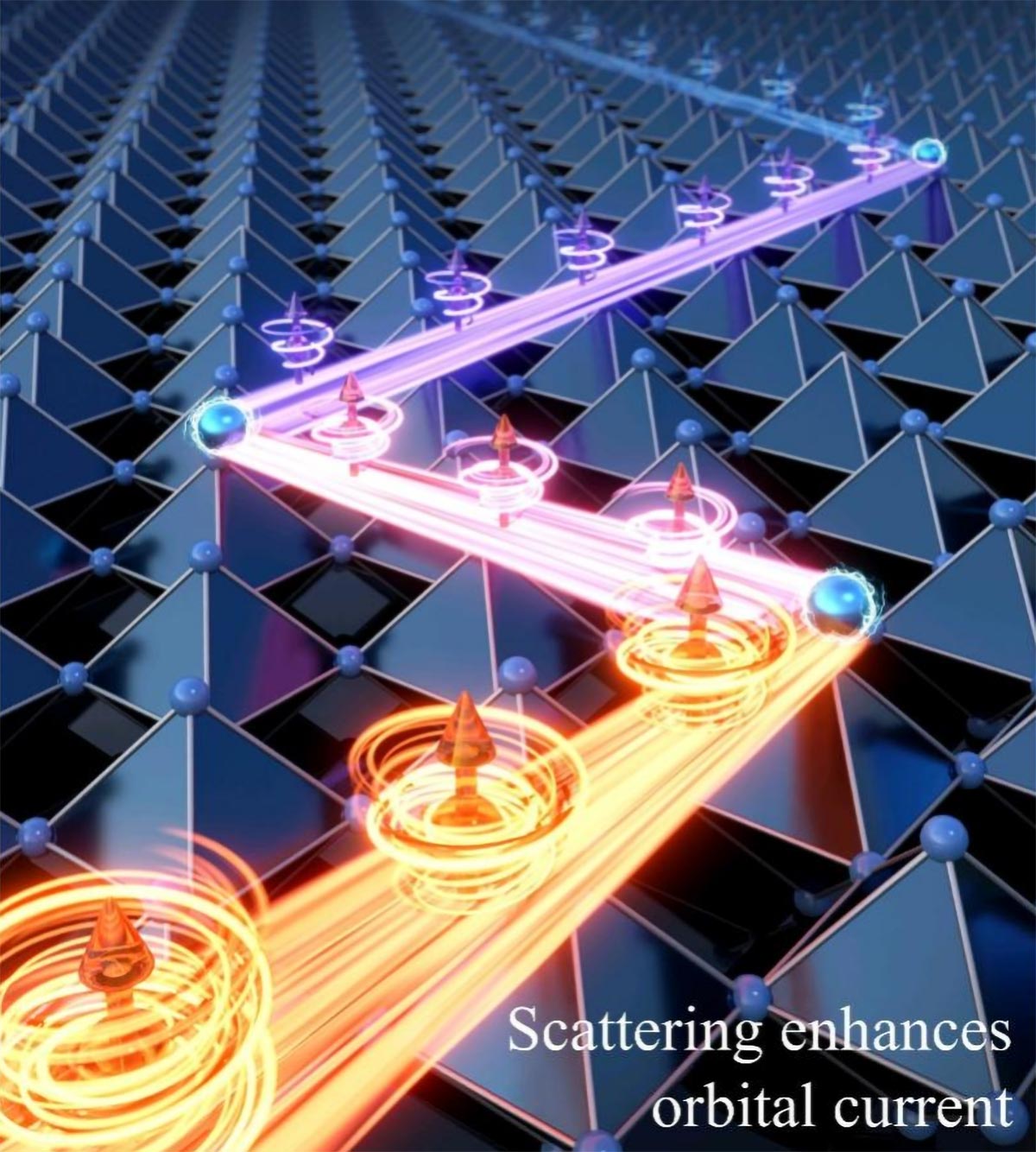
A breakthrough in spintronics reveals that material defects can be harnessed to boost device efficiency, overturning decades of assumptions.
Scientists have discovered a way to transform what was once considered a major problem in electronics, material defects, into a powerful quantum-based advantage. This breakthrough could open the door to a new generation of spintronic devices that operate with extremely low power demands.
Spintronics, short for “spin electronics,” is an area of research that seeks to move beyond the boundaries of traditional electronic technology. Standard devices depend solely on the electrical charge of electrons to process and store data.
In contrast, spintronics taps into two additional quantum features: spin angular momentum, which can be pictured as an inherent “up” or “down” orientation of each electron, and orbital angular momentum, which describes the paths electrons follow as they circle atomic nuclei. By using these added dimensions, spintronic systems can pack more information into smaller spaces, achieve higher speeds, cut energy use, and even preserve data after the power supply is turned off.
The Defect Dilemma
A longstanding challenge in spintronics has been the role of material defects. Introducing imperfections into a material can sometimes make it easier to “write” data into memory bits by reducing the current needed, but this typically comes at a cost: electrical resistance increases, spin Hall conductivity declines, and overall power consumption goes up. This trade-off has been a major obstacle to developing ultra-low-power spintronic devices.
Now, the Flexible Magnetic-Electronic Materials and Devices Group from the Ningbo Institute of Materials Technology and Engineering (NIMTE) of the Chinese Academy of Sciences has found a way to turn this problem into an advantage. Their study, published in Nature Materials, focused on the orbital Hall effect in strontium ruthenate (SrRuO3), a transition metal oxide whose properties can be finely tuned. This quantum phenomenon causes electrons to move in a way determined by their orbital angular momentum.
Using custom-designed devices and precision measurement techniques, the researchers uncovered an unconventional scaling law that achieves a “two birds with one stone” outcome: Defect engineering simultaneously boosts both orbital Hall conductivity and orbital Hall angle, a stark contrast to conventional spin-based systems.
To explain this finding, the team linked it to the Dyakonov-Perel-like orbital relaxation mechanism. “Scattering processes that typically degrade performance actually extend the lifetime of orbital angular momentum, thereby enhancing orbital current,” said Dr. Xuan Zheng, a co-first author of the study.
Rewriting the Rulebook
“This work essentially rewrites the rulebook for designing these devices,” said Prof. Zhiming Wang, a corresponding author of the study. “Instead of fighting material imperfections, we can now exploit them.”
Experimental measurements confirm the technology’s potential: tailored conductivity modulation yielded a threefold improvement in switching energy efficiency.
This study not only provides new insights into orbital transport physics but also redefines design strategies for energy-efficient spintronics.
Reference: “Unconventional scaling of the orbital Hall effect” by Siyang Peng, Xuan Zheng, Sheng Li, Bin Lao, Yamin Han, Zhaoliang Liao, Hongsheng Zheng, Yumeng Yang, Tianye Yu, Peitao Liu, Yan Sun, Xing-Qiu Chen, Shouzhong Peng, Weisheng Zhao, Run-Wei Li and Zhiming Wang, 15 August 2025, Nature Materials.
DOI: 10.1038/s41563-025-02326-3
This study received support from the National Key Research and Development Program of China, the National Natural Science Foundation of China, and other funding bodies.
Never miss a breakthrough: Join the SciTechDaily newsletter.
Follow us on Google and Google News.
1 Comment
Spin angular momentum, which can be pictured as an inherent “up” or “down” orientation of each electron, and orbital angular momentum, which describes the paths electrons follow as they circle atomic nuclei.
VERY GOOD.
Please ask researchers to think deeply:
1. What is the physical essence of spin?
2. What is the spin angular momentum?
3. What is the orbital angular momentum?
4. Is the explanation for the spin in today’s so-called peer-reviewed publications of physics scientific and honest?
An entire generation has been severely misled and poisoned by so-called peer-reviewed publications. In today’s physics, the so-called peer-reviewed journals—including Physical Review Letters, Nature, Science, and others—stubbornly insist on and promote the following:
1. Even though θ and τ particles exhibit differences in experiments, physics can claim they are the same particle. This is science.
2. Even though topological vortices and antivortices have identical structures and opposite rotational directions, physics can define their structures and directions as entirely different. This is science.
3. Even though two sets of cobalt-60 rotate in opposite directions and experiments reveal asymmetry, physics can still define them as mirror images of each other. This is science.
4. Even though vortex structures are ubiquitous—from cosmic accretion disks to particle spins—physics must insist that vortex structures do not exist and require verification. Only the particles that like God, Demonic, or Angelic are the most fundamental structures of the universe. This is science.
5. Even though everything occupies space and maintains its existence in time, physics must still debate and insist on whether space exists and whether time is a figment of the human mind. This is science.
6. Even though space, with its non-stick, incompressible, and isotropic characteristics, provides a solid foundation for the development of physics, physics must still insist that the ideal fluid properties of space do not exist. This is science.
And so on.
The so-called peer-reviewed journals—including Physical Review Letters, Nature, Science, and others openly define differences as sameness, sameness as differences, existence as nonexistence, and nonexistence as existence—all while deceiving and fooling the public with so-called “impact factors (IF),” never knowing what shame is.