
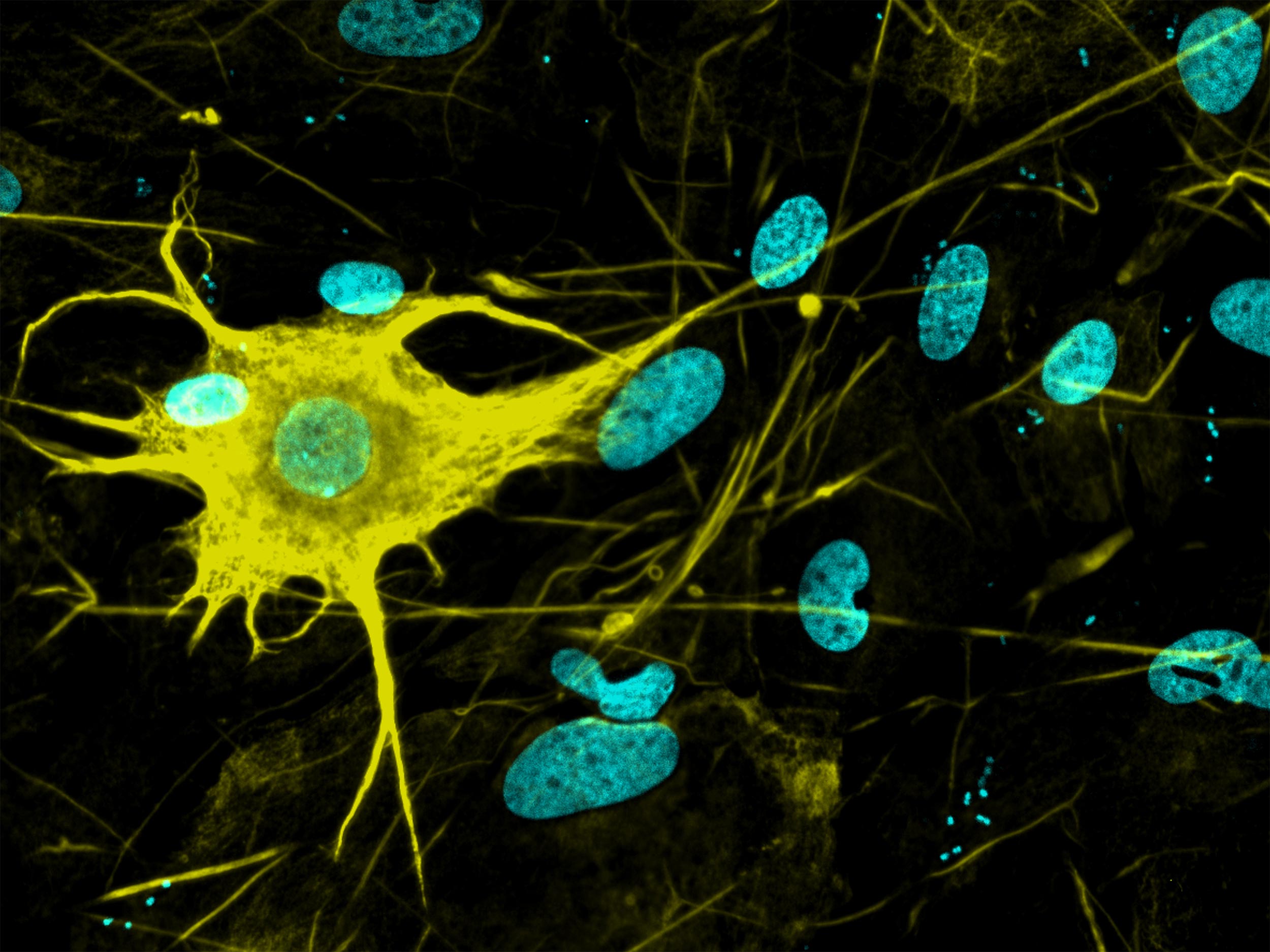
Scientists have successfully grown over 400 different types of nerve cells from stem cells in the lab—a groundbreaking step toward replicating the complexity of the human brain.
By systematically experimenting with combinations of morphogens and genetic triggers, researchers mimicked the incredible diversity of neurons found in various regions of the brain. This advance opens new doors for understanding neurological disorders like Alzheimer’s and Parkinson’s, building better lab models for drug testing, and even laying early groundwork for future neuron-replacement therapies.
Vast Diversity of Nerve Cells in the Human Brain
Not all nerve cells are the same. In fact, depending on how precisely scientists classify them, the human brain may contain anywhere from several hundred to several thousand distinct types. These neurons differ in a range of ways, including their roles, the size and shape of their branching structures, and how they connect to one another. They also release different chemical messengers (neurotransmitters) and vary by brain region. For instance, the cerebral cortex and the midbrain contain different sets of active neurons.
In earlier laboratory experiments, researchers used stem cells to grow nerve cells in Petri dishes, but replicating the full variety of neuron types found in the brain was not possible. Up to this point, only a few dozen types had been successfully created using genetic engineering or by applying signaling molecules that stimulate certain cellular processes. Despite these advances, scientists were still far from reproducing the enormous range of nerve cell types that actually exist.
“Neurons derived from stem cells are frequently used to study diseases. But up to now, researchers have often ignored which precise types of neuron they are working with,” says Barbara Treutlein, Professor at the Department of Biosystems Science and Engineering at ETH Zurich in Basel. However, this is not the best approach to such work. “If we want to develop cell culture models for diseases and disorders such as Alzheimer’s, Parkinson’s, and depression, we need to take the specific type of nerve cell involved into consideration.”
Over 400 Neuron Types Created in the Lab
Treutlein and her team have now successfully produced over 400 different types of nerve cell. In doing so, the scientists have paved the way for more precise basic neurological research with cell culture experiments.
The ETH researchers achieved this by working with a culture of human induced pluripotent stem cells that had been generated from blood cells. In these cells, they used genetic engineering to activate certain neuronal regulator genes and treated the cells with various morphogens, a special class of signalling molecules. Treutlein and her team took a systematic approach, using seven morphogens in different combinations and concentrations in their screening experiments. This resulted in almost 200 different sets of experimental conditions.
What Are Morphogens and Why They Matter
Morphogens are messengers that are known from research into embryonic development. They are not distributed uniformly within an embryo but occur in a variety of concentrations forming spatial patterns. In this way, they define the position of cells within the embryo, for example, whether a cell is near the body axis or in the back, abdomen, head, or torso. Accordingly, morphogens help to determine what grows where in the embryo.
The researchers used various analyses to prove that they had produced over 400 different types of nerve cell in their experiment. They examined the RNA (and therefore genetic activity) at the level of individual cells, as well as the external appearance of cells and their function: for example, which type of cell appendage they had in which quantities and which electric nerve impulses they emitted.
The researchers then compared their data with information from databases of neurons from the human brain. By doing this, they were able to identify the types of nerve cells that had been created, such as those found in the peripheral nervous system or brain cells, and the part of the brain they come from, whether they perceive pain, cold, or movement, and so on.
Toward Better Models for Brain Disorders
Treutlein clarifies that they are still a long way off from producing all types of nerve cells that exist in vitro. Nonetheless, the researchers now have access to a much larger number of different cell types than they had before.
They would like to use in-vitro nerve cells to develop cell culture models for studying serious neurological conditions, including schizophrenia, Alzheimer’s, Parkinson’s, epilepsy, sleep disorders, and multiple sclerosis. Cell culture models of this kind are also of great interest in pharmaceutical research for testing the effects of new active compounds in cell cultures without animal testing, with the ultimate aim of one day being able to cure these conditions.
From Drug Testing to Cell Therapy – What’s Next
In the future, the cells could also be used for cell replacement therapy, which involves replacing sick or dead nerve cells in the brain with new human cells.
But there is a challenge to overcome before this can happen: the researchers often produced a mixture of multiple different types of nerve cells in their experiments. They are now working to optimise their method so that each experimental condition only produces one specific cell type. They already have some initial ideas as to how this might be achieved.
Reference: “Human neuron subtype programming via single-cell transcriptome-coupled patterning screens” by Hsiu-Chuan Lin, Jasper Janssens, Benedikt Eisinger, Philipp Hornauer, Ann-Sophie Kroell, Malgorzata Santel, Maria Pascual-Garcia, Ryoko Okamoto, Kyriaki Karava, Zhisong He, Marthe Priouret, Manuel Schröter, J. Gray Camp and Barbara Treutlein, 10 July 2025, Science.
DOI: 10.1126/science.adn6121
Never miss a breakthrough: Join the SciTechDaily newsletter.
Follow us on Google and Google News.