
Close Menu
    Facebook X (Twitter) Instagram
    SciTechDaily
    • Biology
    • Chemistry
    • Earth
    • Health
    • Physics
    • Science
    • Space
    • Technology
    Facebook X (Twitter) Pinterest YouTube RSS
    SciTechDaily
    Home»Technology»Scientists Have Developed a Wearable Ring That Repels Insects
    Technology

    Scientists Have Developed a Wearable Ring That Repels Insects

    By Martin Luther University Halle-WittenbergNovember 15, 202210 Comments3 Mins Read
    Facebook Twitter Pinterest Telegram LinkedIn WhatsApp Email Reddit
    Share
    Facebook Twitter LinkedIn Pinterest Telegram Email Reddit
    Insect Repellent Ring
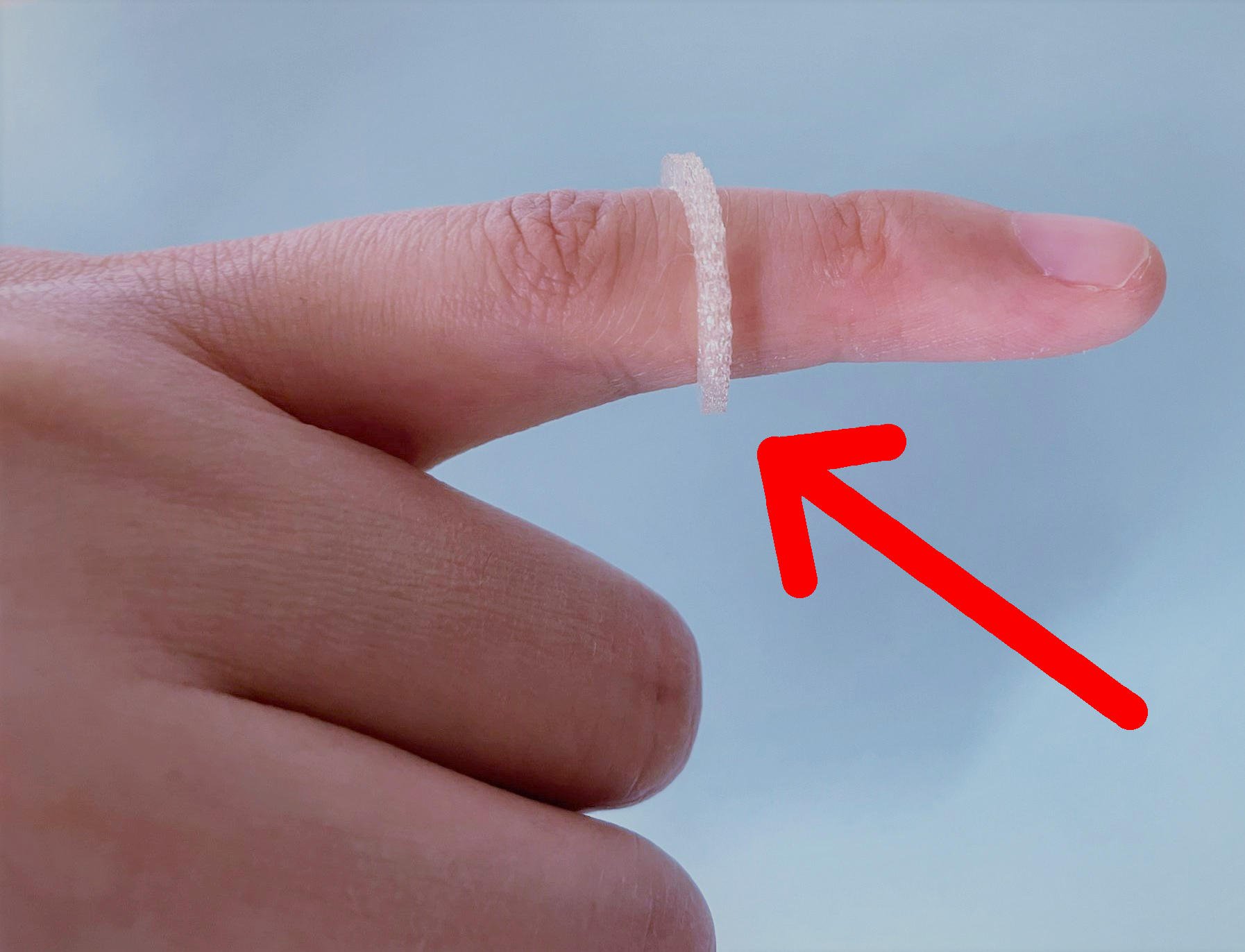
    This is what the ring looks like that could help repel insects. Credit: Uni Halle / Fanfan Du

    A New Printable and Wearable Insect Repellent

    Martin Luther University Halle-Wittenberg (MLU) scientists have invented a new type of insect-repellent delivery device. The active ingredient is first “encapsulated” and shaped into the appropriate shape, such as a ring, which may then be worn and releases an agent meant to repel mosquitoes for an extended period of time. The team published their findings in the International Journal of Pharmaceutics.

    The researchers used “IR3535” an insect repellent developed by MERCK, to create their prototypes.

    “Mosquito sprays containing IR3535 are very gentle on the skin and have been used all over the world for many years. That’s why we’ve been using the agent for our experiments”, says Professor René Androsch from the MLU.

    It typically comes in the form of a spray or lotion and provides protection for several hours. However, Androsch and his colleagues are searching for methods to release the agent over a much longer length of time, such as encapsulating it in a wearable ring or bracelet.

    Insect repellent was carefully inserted into a biodegradable polymer using a specialized 3D printing technology, and the mixture of substances was successfully shaped in various ways. “The basic idea is that the insect repellent continuously evaporates and forms a barrier for insects”, explains the lead author of the study, Fanfan Du, a doctoral candidate at MLU.

    The rate at which the insect repellent evaporates depends on many different factors, including temperature, concentration, and the structure of the polymer used. After conducting various experiments and simulations, the team predicts that the insect repellent needs well over a week to evaporate completely at a temperature of 37°C (98,6 °F, i.e., body temperature).

    While the researchers have proven that it is absolutely possible to develop a wearable insect repellent, the rings and other forms created for the study are only prototypes. According to Androsch, further research needs to be carried out to determine how well the rings function under actual conditions. The encapsulation material could also be further optimized.

    Reference: “3D-printing of the polymer/insect-repellent system poly(l-lactic acid)/ethyl butylacetylaminopropionate (PLLA/IR3535)” by Fanfan Du, Harald Rupp, Katalee Jariyavidyanont, Andreas Janke, Albrecht Petzold, Wolfgang Binder and René Androsch, 14 July 2022, International Journal of Pharmaceutics.
    DOI: 10.1016/j.ijpharm.2022.122023

    The study was funded by the German Research Foundation and within the framework of the graduate school “AGRIPOLY” at MLU. “AGRIPOLY” is funded by the European Social Fund (ESF) and the state of Saxony-Anhalt.


    Never miss a breakthrough: Join the SciTechDaily newsletter.
    Follow us on Google and Google News.

    3D Printing Insect Martin Luther University Halle-Wittenberg Popular
    Share. Facebook Twitter Pinterest LinkedIn Email Reddit

    Related Articles

    MIT’s 3D-Printed Robotic Hearts Look and Pump Just Like the Real Thing

    Japanese Scientists Create Remote-Controlled Cyborg Cockroaches

    First 3D-Printed High-Performance Nanostructured Alloy That’s Both Ultrastrong and Ductile

    Binding Polymer Discovery Gives 3D-Printed Sand Super Strength

    MIT Engineers Create 3D-Printed Objects That Sense How a User Is Interacting With Them

    3D-Printed Nanosatellite Thruster Emits Pure Ions for Propulsion

    Mighty Morphing 3D Printing: New Shape-Changing Nozzle That Could Revolutionize “4D Printing”

    “Cold Spray” Technology: 3D-Printing Biomedical Parts With Supersonic Speed

    Human Bone Structure Key to Stronger 3D-Printed Lightweight Materials [Video]

    10 Comments

    1. Tonya on November 15, 2022 5:29 pm

      Where can I get?

      Reply
      • Joe on November 17, 2022 8:59 am

        If you read the article carefully, you’ll see it’s a prototype, not yet available to the public.

        Reply
    2. Paul on November 15, 2022 11:35 pm

      Why make it a ring why not just make it like a broach so it does not have to have contact with the skin this is very exciting news

      Reply
      • guy on November 16, 2022 12:51 pm

        it might require body heat to evaporate at the intended temperature

        Reply
    3. TZ on November 16, 2022 3:11 pm

      I am confused about the novelty of this since similar products have been around for decades. Go to Amazon and type in “insect repellent wristbands”

      Reply
    4. Chris on November 16, 2022 3:42 pm

      Can this be used…elsewhere…to prevent crabs and the like?

      Reply
      • David on November 17, 2022 11:08 am

        Possibly…depends on the severity of the crabs.

        Reply
    5. Rick Young on November 16, 2022 6:11 pm

      I would love to give it a try. I live in SC and bugs are a problem. Please tell me where I can purchase.

      Reply
    6. Drod on November 17, 2022 10:44 pm

      Forget insects. If only they’d develop a ring that helps you lose weight!

      Reply
    7. Slauwkoo on November 20, 2022 9:00 pm

      If it’s by MERCK they can shuv it where the sun doesn’t shine. Did these A-HO’s not screw up enough in this world and get rich doing it?

      Reply
    Leave A Reply Cancel Reply

    • Facebook
    • Twitter
    • Pinterest
    • YouTube

    Don't Miss a Discovery

    Subscribe for the Latest in Science & Tech!

    Trending News

    Popular Sugar-Free Sweetener Linked to Liver Disease, Study Warns

    What Is Hantavirus? The Deadly Disease Raising Alarm Worldwide

    Scientists Just Discovered How the Universe Builds Monster Black Holes

    Scientists Unveil New Treatment Strategy That Could Outsmart Cancer

    A Simple Vitamin May Hold the Key to Treating Rare Genetic Diseases

    Scientists Think the Real Fountain of Youth May Be Hiding in Your Gut

    Ravens Don’t Follow Wolves, They Predict Them

    This Common Knee Surgery May Be Doing More Harm Than Good

    Follow SciTechDaily
    • Facebook
    • Twitter
    • YouTube
    • Pinterest
    • Newsletter
    • RSS
    SciTech News
    • Biology News
    • Chemistry News
    • Earth News
    • Health News
    • Physics News
    • Science News
    • Space News
    • Technology News
    Recent Posts
    • Why Are So Many New Fathers Dying? Scientists Say the U.S. Has a Dangerous Blind Spot
    • Scientists Identify Simple Supplement That Greatly Reduces Alzheimer’s Damage
    • You May Have a Dangerous Type of Cholesterol Even if Your Tests Look Normal
    • Study Reveals Dangerous Flaw in AI Symptom Checkers
    • New MRI Breakthrough Captures Stunningly Clear Images of the Eye and Brain
    Copyright © 1998 - 2026 SciTechDaily. All Rights Reserved.
    • Science News
    • About
    • Contact
    • Editorial Board
    • Privacy Policy
    • Terms of Use

    Type above and press Enter to search. Press Esc to cancel.