

Virginia Tech scientists found that age-related memory loss stems from molecular changes in the brain.
Memory decline might not be just a natural part of aging. Researchers at Virginia Tech have discovered that it is connected to particular molecular changes in the brain, and that fine-tuning these processes can actually enhance memory function.
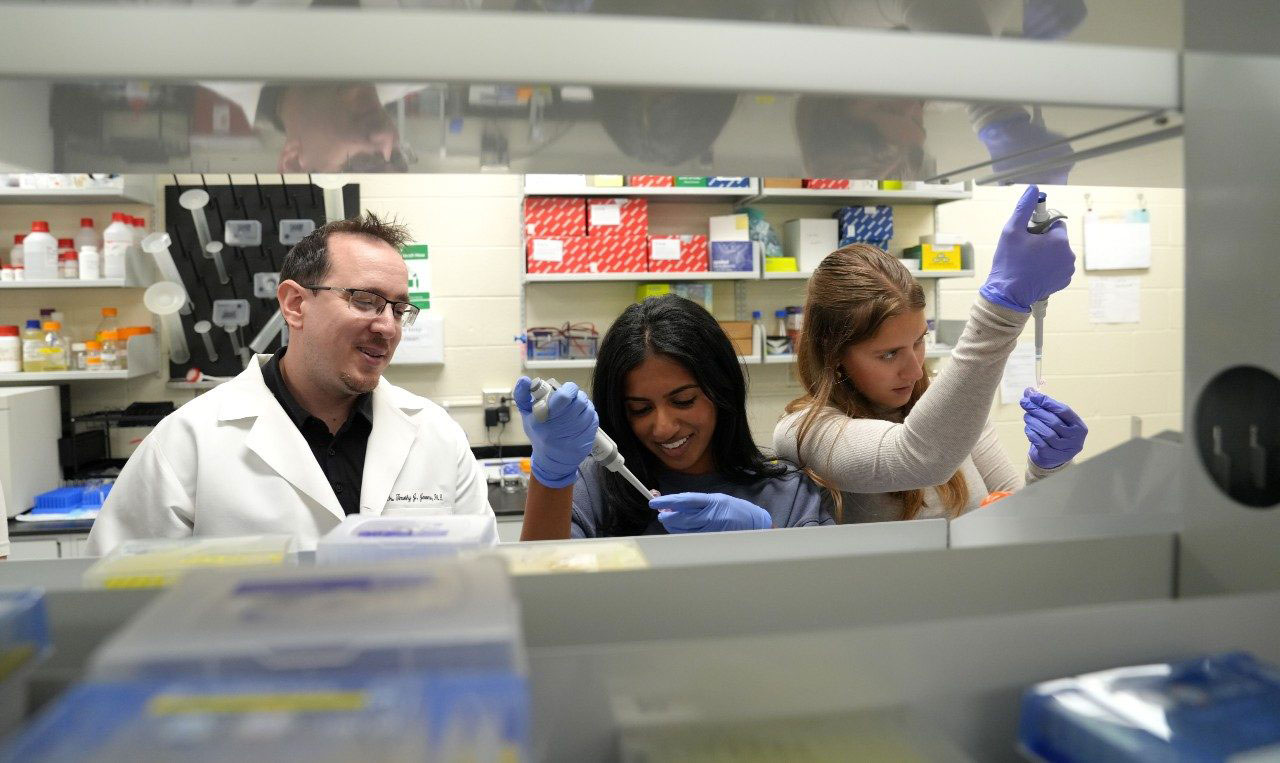
In two related studies, Timothy Jarome, an associate professor in the College of Agriculture and Life Sciences’ School of Animal Sciences, and his graduate students used advanced gene-editing techniques to address these age-related molecular shifts and boost memory performance in older subjects. The experiments were carried out on rats, which are commonly used to model how memory is affected by aging.
“Memory loss affects more than a third of people over 70, and it’s a major risk factor for Alzheimer’s disease,” said Jarome, who also holds an appointment in the School of Neuroscience. “This work shows that memory decline is linked to specific molecular changes that can be targeted and studied. If we can understand what’s driving it at the molecular level, we can start to understand what goes wrong in dementia and eventually use that knowledge to guide new approaches to treatment.”
Targeting memory loss in two key brain regions
In the first study, published in the journal Neuroscience and led by Timothy Jarome and doctoral student Yeeun Bae, the researchers explored a mechanism known as K63 polyubiquitination. This molecular process works like a tagging system that signals proteins in the brain on how to act. When operating properly, it supports communication between brain cells and aids in memory formation.
The team discovered that aging interferes with this process in two key regions of the brain. In the hippocampus, the area responsible for forming and recalling memories, K63 polyubiquitination levels rise with age. By using the CRISPR-dCas13 RNA editing system to lower those levels, the researchers successfully enhanced memory performance in older rats.
In the amygdala, which is important for emotional memory, the researchers noted that K63 polyubiquitination declines with age. By reducing it even further, they were able to boost memory in older rats.
“Together, these findings reveal the important functions of K63 polyubiquitination in the brain’s aging process,” Jarome said. “In both regions, adjusting this one molecular process helped improve memory.”
Reactivating a gene that supports memory
A second study, published in the Brain Research Bulletin and led by Jarome with doctoral student Shannon Kincaid, focused on IGF2, a growth-factor gene that supports memory formation. As the brain ages, IGF2 activity drops as the gene becomes chemically silenced in the hippocampus.
“IGF2 is one of a small number of genes in our DNA that’s imprinted, which means it’s expressed from only one parental copy,” Jarome said. “When that single copy starts to shut down with age, you lose its benefit.”
The researchers found that this silencing happens through DNA methylation, a natural process in which chemical tags accumulate on the gene and switch it off. Using a precise gene-editing tool, CRISPR-dCas9, they removed those tags and reactivated the gene. The result was better memory in older rats.
“We essentially turned the gene back on,” Jarome said. “When we did that, the older animals performed much better. Middle-aged animals that didn’t yet have memory problems weren’t affected, which tells us timing matters. You have to intervene when things start to go wrong.”
Together, the two studies show that memory loss is not caused by a single molecule or pathway and that multiple molecular systems likely contribute to how the brain ages.
“We tend to look at one molecule at a time, but the reality is that many things are happening at once,” he said. “If we want to understand why memory declines with age or why we develop Alzheimer’s disease, we have to look at the broader picture.”
Collaborative, graduate-led research
Both studies were driven by graduate researchers in Jarome’s lab and supported through collaborations with scientists at Rosalind Franklin University, Indiana University, and Penn State. Yeeun Bae, who completed her doctoral work with Jarome in the School of Animal Sciences, led the study on K63 polyubiquitination. Shannon Kincaid, a doctoral student in the same program, led the study on IGF2.
“These projects represent the kind of graduate-led, collaborative research that defines our work,” Jarome said. “Our students are deeply involved in designing experiments, analyzing data, and helping shape the scientific questions we pursue.”
The research was supported by the National Institutes of Health and the American Federation for Aging Research.
“Everyone has some memory decline as they get older,” he said. “But when it becomes abnormal, the risk for Alzheimer’s disease rises. What we’re learning is that some of those changes happening at a molecular level can be corrected — and that gives us a path forward to potential treatments.”
References: “Age-related dysregulation of proteasome-independent K63 polyubiquitination in the hippocampus and amygdala” by Yeeun Bae, Harshini Venkat, Natalie Preveza, W.Keith Ray, Richard F. Helm and Timothy J. Jarome, 14 June 2025, Neuroscience.
DOI: 10.1016/j.neuroscience.2025.06.032
“Increased DNA methylation of Igf2 in the male hippocampus regulates age-related deficits in synaptic plasticity and memory” by Shannon Kincaid, Courtney P. Stickling, Kayla Farrell, Yeeun Bae, Morgan B. Patrick, Gitali Bhanot, Adam Cummings, Jennifer Abraham, Abby Alisesky, Nicole Ferrara, J. Amiel Rosenkranz and Timothy J. Jarome, 11 August 2025, Brain Research Bulletin.
DOI: 10.1016/j.brainresbull.2025.111509
Never miss a breakthrough: Join the SciTechDaily newsletter.
Follow us on Google and Google News.
2 Comments
“some of those changes happening at a molecular level can be corrected — and that gives us a path forward to potential treatments.”
Can these changes be easily corrected? Not so sure. CRISPR gene editing is not an easy therapy. I think it may be years of studying brain circuitry at a molecular level before we get a solution that is effective, that most people can afford and that has few unintended effects. Just not in my lifetime.
About the time my own prematurely deceased mother entered assisted living with dementia, ca. 1990, I obtained food allergy testing of her and found she had several sensitivities. Since then, I’ve determined on my own that mother’s (my) kind of very, very mild food allergy reactions can cause mild inflammation and that added MSG (US FDA approved for expanded use as an ‘alleged’ “flavor enhancer” in 1980) can extend and/or intensify those brief (about six to twelve hours) and practically harmless individual allergy reactions to turn them chronic and potentially deadly dangerous long-term (months, myself, to decades, most others it seems; many individual variables). Now we have two and a half generations (not years; not decades) of young Americans who’ve been ingesting added MSG all of their lives, many with their parents preceding them. Genetic damage? Why not try to prevent it in favor of refolding naturally aging proteins? For more information about why added MSG (minimally) should be permanently banned from the commercial food supply: https://odysee.com/@charlesgshaver:d?view=about