
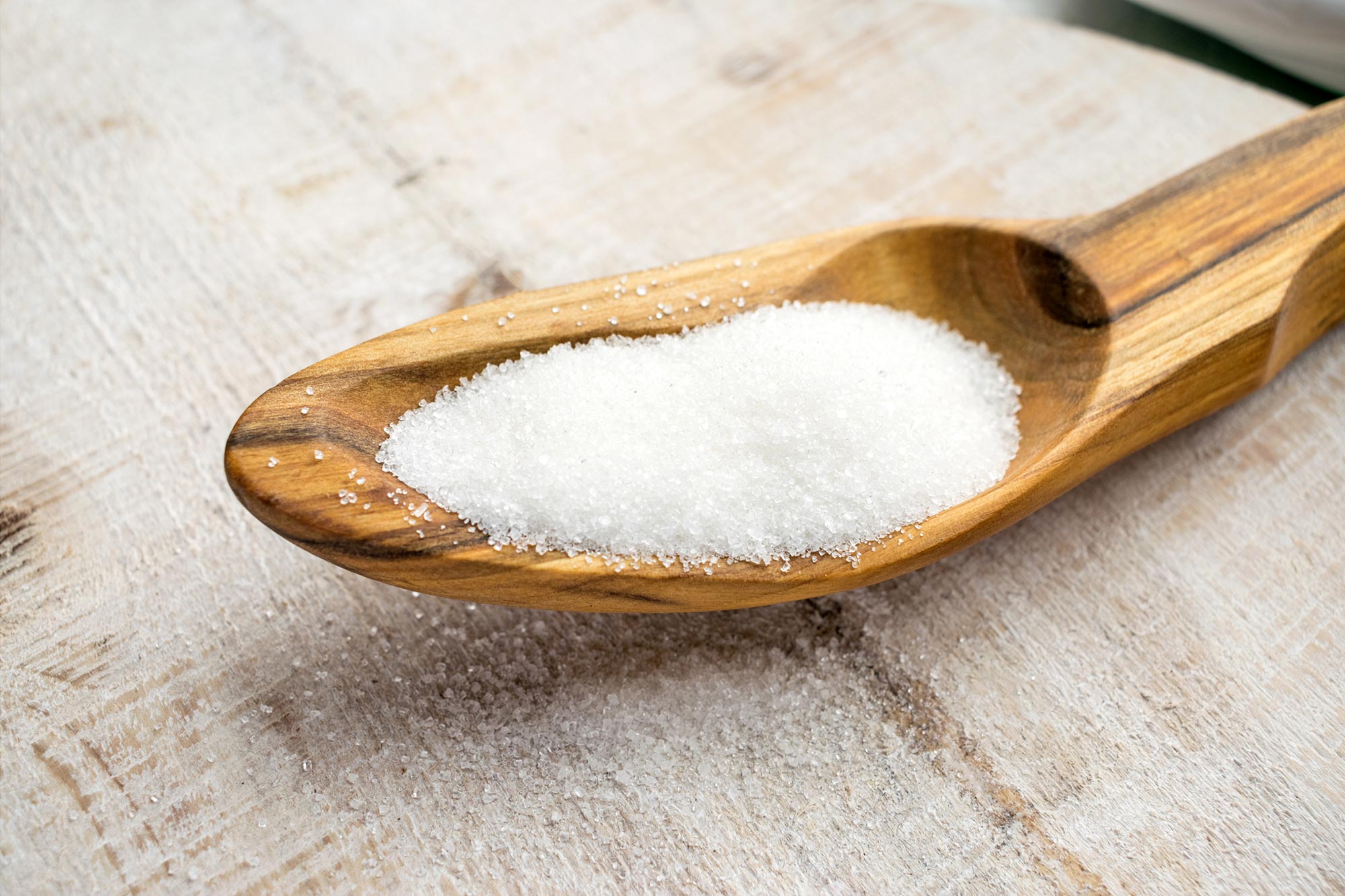
New research reveals that sorbitol, a common sugar alcohol used in “low-calorie” foods, can behave much like fructose once inside the body, potentially contributing to liver strain and metabolic dysfunction.
Sweeteners such as aspartame, found in Equal packets, sucralose (Splenda), and various sugar alcohols are often viewed as better choices than foods containing refined sugar (glucose).
However, new research is beginning to question that belief. Recent findings show that the sugar alcohol sorbitol may not be as harmless as many assumed.
A study published in Science Signaling adds to ongoing work from the laboratory of Gary Patti at Washington University in St. Louis, which has been investigating how fructose affects the liver and other parts of the body.
Patti, the Michael and Tana Powell Professor of Chemistry in Arts & Sciences and a professor of genetics and medicine at WashU Medicine, has previously shown that fructose processed in the liver can be used by cancer cells to fuel their growth. Earlier studies have also linked fructose to steatotic liver disease, a condition that affects about 30% of adults worldwide.
Sorbitol as a Stealth Source of Fructose
One of the most unexpected results from the new research is the discovery that sorbitol is “one transformation away from fructose,” which allows it to trigger similar biological responses, according to Patti.
Experiments in zebrafish revealed that sorbitol, which appears in “low-calorie” candies and gum and occurs naturally in stone fruits, can be produced by enzymes in the gut and later converted into fructose once it reaches the liver.
The research team found that the body can reach fructose through many different metabolic pathways. These routes can vary based on how much sorbitol and glucose a person consumes, as well as the specific mix of bacteria living in the gut.
For starters, although most of the research on sorbitol metabolism has focused on its production due to glucose overload in pathological settings such as diabetes, sorbitol can be naturally produced in the gut from glucose after eating, Patti said.
The enzyme that produces sorbitol has a low affinity for glucose, so glucose levels must be high for it to take effect. That is why sorbitol production has primarily been associated with diabetes, where blood glucose levels can become elevated. But, even in healthy settings, glucose levels in the gut become high enough after feeding to drive sorbitol production within the intestine, according to the team’s zebrafish experiments.
“It can be produced in the body at significant levels,” said Patti. “But if you have the right bacteria, turns out, it doesn’t matter.”
Sorbitol-degrading Aeromonas bacterial strains convert the sugar alcohol into a harmless bacterial byproduct.
“However, if you don’t have the right bacteria, that’s when it becomes problematic. Because in those conditions, sorbitol doesn’t get degraded and as a result, it is passed on to the liver,” he said.
When Sorbitol Overwhelms the System
Once in the liver, it is converted to a derivative of fructose. It’s important to determine if alternative sweeteners are providing a healthy alternative to table sugar since people with diabetes and other metabolic disorders may be relying on them as “sugar-free” products.
Gut bacteria do a good job of clearing sorbitol when it is present at modest levels, such as those found in fruit. But problems arise when sorbitol quantities become higher than what gut bacteria can degrade. This can occur when excessive amounts of glucose are consumed in the diet, which lead to high levels of glucose-derived sorbitol, or when dietary sorbitol itself is too high.
Dietary Complexity and Future Research
The more glucose and sorbitol consumed, the more likely it is that even if someone has the friendly bacteria that clear it, those gut microbes may be overwhelmed with the task.
Avoiding both sugar and alternative sweeteners is increasingly complicated, as many foods are packed with multiple varieties of all the above. Patti was bemused to discover his own favorite protein bar was chock full of sorbitol.
The lab will need to do more research to understand the specific mechanisms for how bacteria clear sorbitol, but the basic idea that these sugar alcohols, called polyols, are harmlessly expelled may not hold true.
“We do absolutely see that sorbitol given to animals ends up in tissues all over the body,” he said.
Bottom line: it’s becoming more apparent that “there is no free lunch” when trying to find sugar alternatives, with many roads leading to liver dysfunction.
Reference: “Intestine-derived sorbitol drives steatotic liver disease in the absence of gut bacteria” by Madelyn M. Jackstadt, Ronald Fowle-Grider, Mun-Gu Song, Matthew H. Ward, Madison Barr, Kevin Cho, Hector H. Palacios, Samuel Klein, Leah P. Shriver and Gary J. Patti, 28 October 2025, Science Signaling.
DOI: 10.1126/scisignal.adt3549
This work was supported by the National Institutes of Health, grants R35ES028365 (G.J.P.) and P30DK056341 (S.K.).
Never miss a breakthrough: Join the SciTechDaily newsletter.
Follow us on Google and Google News.
37 Comments
Use only natural substitutes. No chemical
what do you mean ? sugar is natural. everything is chemicals and natural doesn’t mean safer. that said, I’d bet good money that ZORE sugar substitutions are better than just using sugar in a normal manner
zero sugar substitute*
I’d like to know how pure monk fruit powder factors in to this study, if it does.
Sugar is far from natural, unless you get sugar in the raw. Sugar is processed to look white, that’s not natural. Stevia, monk fruit, coconut sugars are way better than any artificial sweetener or “sugar”. White sugar also feeds cancer cells.
Why lump other sweeteners in with sorbitol? None of the major artificial sweeteners use sorbitol.
Refined sugar is sucrose not glucose. Sucrose is half fructose and half glucose when digested. Also sorbitol is very poorly absorbed by your gut. Table sugar give vastly more fructose than sorbitol could .the writer of this article knows nothing of carbohydrate metabolism or nutrition. Is there no peer review of these crazy articles????
No, there isn’t, because this is a pop-science blog, not a peer-reviewed journal. They’re after clicks for ad revenue, not accuracy.
Sugar is far from natural, unless you get sugar in the raw. Sugar is processed to look white, that’s not natural. Stevia, monk fruit, coconut sugars are way better than any artificial sweetener or “sugar”. White sugar also feeds cancer cells.
What about erythritol?
Sorbitol is not in sucralose. Your first sentence is confusing. Why are you even mentioning Splenda when the article is about sorbitol?
This article is very confusing. Sucralose can destroy mental cognition; my mother’s went down to 20% on Aspartame, and by the time I got her onto Slpenda, she only came back to 80%. I only use Splenda, and suffer no ill effects to this day (20 years later.)
Misleading title based on a conditional association with an association in an animal model
T2DM and metabolic disease is itself a high risk factor for a variety of diseases including kidney and cardiovascular disease. Being of normal weight where your fat free mass is somewhere between 75 to 87 % (depending on sex and pregnancy status, other health conditions) of total body mass helps protect you from many of the disease states worsened by t2DM. Therefore. Losing weight to reach this health level and maintining it is paramount to investing in one’s own health. If people replace sugar sweetened beverages or deserts with sugar substituted products that are a net lower calorie helps people achieve that goal, then these food additives are a tool for weight loss and maintenance. This article both fails to provide a risk benefit analysis for people looking to lose or maintain weight with sugar substitutes and broadly generalizes the findings of an animal model to humans with no significant link between the animal study and the human biochemical and pragmatic reality.
Artificial sweeteners cause me to have an allergic reaction-almost immediately itching and significant pain the next day.
Artificial sweeteners still raise my blood sugar. I notice aching feeling at liver location.
Cause those are chemicals. Natural sugars like stevia, monk fruit or coconut sugars won’t give you a bad reaction.
ALL SUGARS ARE CHEMICALS, whether “natural” or man-made. Monosaccharides, disaccharides and polysaccharides, all water soluble carbohydrates which your body enzymes break down into glucose/fructose.
This is absorbed into your bloodstream, which triggers the release of insulin, and dopamine for your brain satisfaction.
“Natural” means nothing. It’s not the chemical origin, it’s the quantity you ingest that causes the trouble: obesity, insulin resistance, fatty liver, heart disease, and inflammation.
Not once does the article mention High Fructose Corn Syrup.
There is a lot of if, could, maybe -in this article, and they used Zebra fish? This seems a little disingenuous, perhaps the sugar industry is funding the study?
I have been drinking crystal lite for years because I am diabetic. You mean I could possibly I could be in trouble for doing that. You know the way the world is going and my age and my body the pain I’m not going to worry about it I don’t consume anything else with artificial sweetener it gives me diarrhea
You should lose weight.
Gee! Why didn’t I think of that? 🤔
Bingo!
If it’s artificial, it’s not good for us. Consuming natural products is always the way to go. I use stevia & many say it leaves an after taste or tastes weird. You have to decide what’s important. Your health is, so tasting a little different is okay with me. I don’t want to put anything artificial in my body.
7 months ago I cut all sugar from my diet
As of today I have lost 59 lbs and feel great.i replaced the sugar with stevia. I do not notice any after taste and enjoy the sweet taste very much.
Well it’s obvious put some on the ground and watch what the ants do they will not go near it like its poison that’s why I never consume that stuff I prefer honey over that stuff and highly processed sugar cane
My sentiments exactly! So many disconnects in their line of reasoning. Don’t see how they are reaching their conclusions with the very information contained in their article!
Sorbitol – anything with ‘itol’ – gives ya the runs. – Splenda gives the runs.
Aspartame, is two amino acids, Phenylalanine and Aspartic Acid are sweet to the tongue and are in every protein you eat – eggs, dairy, meats – they are essential amino acids (stuff you must eat) – therefore are safe. Phenylalanine is used to make Melanin (skin color) and Tyrosine which is then used for your main neurotransmitter. Helps you think and feel good. Adding the main precursor for neurotransmitter is not ok for epileptics however.
Stevia is a plant used as a sweetener for the last few centuries in Japan – it is ground up plant leaves, is not fattening and perfectly safe.
So Aspartame and Stevia – are perfectly fine –
Ok what about Stevia and monk fruit extract?
Sorbitol is not in sucralose. Your first sentence is confusing. Why are you even mentioning Splenda when the article is about sorbitol?
Fish?
First time I’ve seen fish claimed to be an analog for humans. Why not mice, which are known to be a good anal9g.
Speaking from experience, mice are a terrible medical analog to humans. Mice are used in studies because they are cheap, readily available and you can put a lot into an animal room. Because they don’t correspond to human results, that’s why researchers have to move on to other animal models.
Studies are paid for. The key to the argument is who paid for the study and what was there motive. With studies they can pick and choose the findings to dictate the naritive. Such as when fat was bad and seed oils were good because they are from plants . Sorry but that was B’s and we now know this as with the bogus science against the Carnavore lifestyle harming the famers it’s the farmers against Carnavore. Don’t confuse farming with ranching here. B just my 2 cents
Sorbitol is supposedly dangerous because in some cases, if you have too much of it, it can be converted into fructose in the liver. The unspoken implication here is that you should avoid these sugar free alternatives. The most common place where this debate really takes place is in the field of diet soda, where this information feels especially misleading. “No, don’t drink that diet soda, it has a chance of turning into scary dangerous fructose in your liver! instead, try this normal soda, made with high fructose corn syrup. it’s way more natural and totally safe i promise”
Splenda never gave me any “runs”, lol. Maybe you were just sensitive to it. I did switch to Stevia/Truvia since it tastes better, but I don’t mind using Splenda.
The rule of thumb should be: if it only has a lab name, it’s bad for you.
Misleading title based on a conditional association with an association in an animal model
T2DM and metabolic disease is itself a high risk factor for a variety of diseases including kidney and cardiovascular disease. Being of normal weight where your fat free mass is somewhere between 75 to 87 % (depending on sex and pregnancy status, other health conditions) of total body mass helps protect you from many of the disease states worsened by t2DM. Therefore. Losing weight to reach this health level and maintining it is paramount to investing in one’s own health. If people replace sugar sweetened beverages or deserts with sugar substituted products that are a net lower calorie helps people achieve that goal, then these food additives are a tool for weight loss and maintenance. This article both fails to provide a risk benefit analysis for people looking to lose or maintain weight with sugar substitutes and broadly generalizes the findings of an animal model to humans with no significant link between the animal study and the human biochemical and pragmatic reality.