
Replication is a cornerstone of science, yet even in the natural sciences, attempts to reproduce results do not always succeed.
Quantum computing promises machines that can solve certain problems far beyond today’s computers, but it faces a stubborn obstacle: quantum information is extremely fragile. One proposed solution is topological quantum computing, a still hypothetical approach that aims to store and process quantum information in a way that is naturally protected from many kinds of errors. That idea has helped drive intense interest in “topological” effects that might appear in tiny superconducting or semiconducting devices.
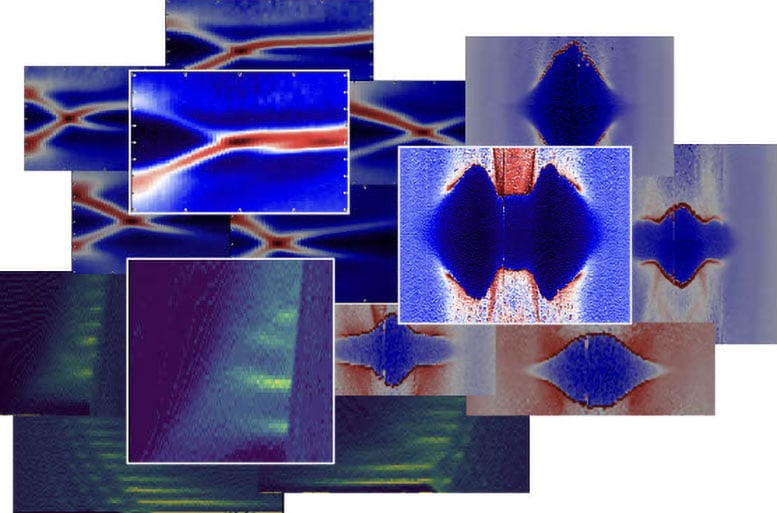
A research team led by Sergey Frolov, a physics professor at the University of Pittsburgh, together with collaborators from Minnesota and Grenoble, conducted a series of replication studies in this field. Their work reexamined experiments that claimed to observe topological effects in nanoscale devices, findings that had been described as meaningful progress toward topological quantum computing.
Replication Studies Challenge Earlier Claims
Across their replication efforts, the researchers consistently found that data resembling those earlier claims could be explained in other, more ordinary ways. Even though the original studies had been framed as advances for quantum computing and published in leading scientific journals, the follow-up papers that tested those claims struggled to get through editors at the same journals.
The reasons offered included the idea that replications were not considered novel, and that after a couple of years the field had moved on. The team countered that careful replications take significant time and effort, particularly when experiments require specialized equipment and major resources, and that work with important implications should not become outdated within just a few years.
A Combined Paper and Two Main Goals
To make the case more clearly, the scientists combined several replication attempts in topological quantum computing into one paper. They had two main goals. First, they wanted to show that even striking signals that appear to match a major breakthrough can arise from other causes, especially when larger and more complete datasets are examined. Second, they proposed changes to research and peer review that could make experimental conclusions more dependable, including sharing more of the underlying data and openly discussing alternative explanations.
The broader concern connects to how progress often happens in condensed matter physics. Theory and experiment can reinforce each other and accelerate discovery, but experiments shaped by strong theoretical expectations can also be vulnerable to confirmation bias.
In their analysis, Frolov and colleagues reviewed four cases in topological physics where the hunt for a single decisive experimental marker, described as “the smoking gun,” contributed to mistaken conclusions. They argue that researchers should explore parameter space more exhaustively, release comprehensive datasets, and be transparent about the total volume of measurements so that apparent “smoking gun” signals can be evaluated against competing explanations.
Acceptance of these points did not come quickly. The paper spent a record two years in peer and editorial review after being submitted in September 2023.
Reference: “Data sharing helps avoid “smoking gun” claims of topological milestones” by S. M. Frolov, P. Zhang, B. Zhang, Y. Jiang, S. Byard, S. R. Mudi, J. Chen, A.-H. Chen, M. Hocevar, M. Gupta, C. Riggert and V. S. Pribiag, 8 January 2026, Science.
DOI: 10.1126/science.adk9181
Funding: Basic Energy Sciences, U.S. National Science Foundation, U.S. National Science Foundation, France National Research Agency, Office of Naval Research, Army Research Office, Centre National de la Recherche Scientifique
Never miss a breakthrough: Join the SciTechDaily newsletter.
Follow us on Google and Google News.
5 Comments
I’m not sure there is any reason to want quantum computers. When we have really fast computers, will it become impossible to check them for errors?
You’re right. I’ve always been in favor of Steve Jobs’ mother, when she famously asked him “why would anyone need a computer on their home?” (paraphrasing). And remember when the Television was invented? Nothing but brain rot and trouble ahead. When I was your age, I was perfectly fine walking to school and playing stickball in the empty lot behind my house. Now you got all these young whippersnappers with the MTv and the weed. I need a nap. Humbug!
You’re right. I’ve always been in favor of Steve Jobs’ mother, when she famously asked him “why would anyone need a computer on their home?” (paraphrasing). And remember when the Television was invented? Nothing but brain rot and trouble ahead. When I was your age, I was perfectly fine walking to school and playing stickball in the empty lot behind my house. Now you got all these young whippersnappers with the MTv and the weed. I need a nap. Humbug!
It’s the difference between analogue and digital, an abacus and a calculator, but taken up a notch.
People want to record the processing.. process, but quantum information is fragile, once data is read it is deleted.
People are slow, ordinary computers are fast enough. If we want to make proper use of quantum computers, we should be using binary computers to prepare the code that needs to be executed for the quantum state and then the results output back into binary.
If people want to record the process itself in case there’s errors, then each qubit needs to output results not in one direction but two.
I assume you’d almost need oscillating paired qubits (quantum entanglement lol?) so that one is recording the state of the other, in super simple terms electricity + qubit + empty qubit -> output to binary + output to empty qubit + newly emptied qubit. The directional switches are then flipped.
Damned if I know how they’re going to do that but I’d say if they could, sure it means twice the qubits but you have it doing what you want it to do, qubits that can handle being read because its pair retains the previous state.
It’s not about errors. Quantum computers could potentially solve some problems and questions it would take our fastest computers millions to billions of years to solve. Google has already shown proof of concept. Currently, the errors are a major obstacle with quantum computers.