
Ancient Mass Extinction Was Preceded by a Drop in a Crucial Trace Element
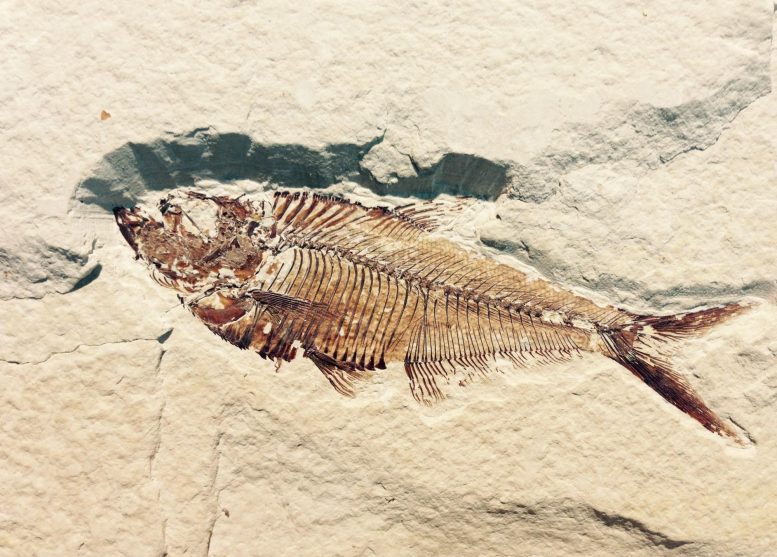
According to a recent study from Florida State University, a major extinction event around 183 million years ago was preceded by a fall in the element molybdenum across Earth’s oceans.
The decline shows that significantly more organic carbon was buried in the extinction event than had been previously believed, and it may have contributed to the mass extinction, which resulted in the loss of up to 90% of species in the oceans. The findings were recently published in the journal AGU Advances.
“This research tells us more about what was happening with molybdenum during this extinction event, but we also take it a step further,” said Jeremy Owens, an associate professor in FSU’s Department of Earth, Ocean and Atmospheric Science and a paper co-author. “Our findings help us understand how much carbon was cycling through the system, and it’s much larger than previously thought — potentially on the scale of modern atmospheric and oceanic increases due to human activities.”
Previous research has shown that molybdenum levels fell throughout the main phase of the ancient mass extinction, but it was not clear how widespread the drop was, when it began, or how long it lasted.
Evidence from Ancient Oceans
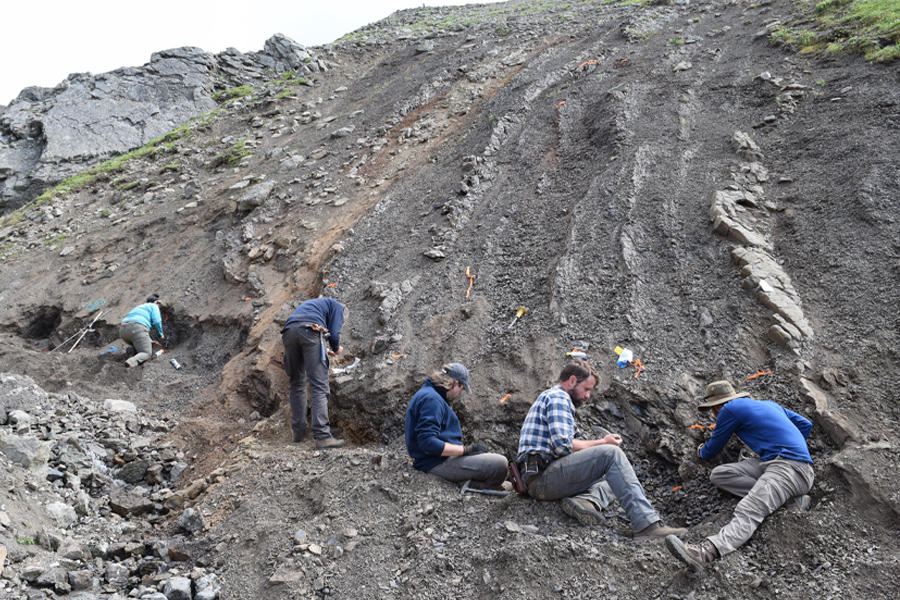
In order to answer those questions, the scientists examined rocks from three locations in Alberta, Canada, which had formerly been a part of a large ocean that encircled the ancient continent of Pangea. Because the site was linked to the global ocean, the researchers could infer conditions across the entire globe instead of only a particular basin.
They discovered new estimates for the start and duration of molybdenum decline, as well as the first phase of deoxygenation. Their study revealed that the decline began around one million years before the extinction and lasted almost two million years in total, which is far longer than experts had previously estimated.
Revising Carbon Cycle Estimates
The decrease in molybdenum also implies a massive increase in organic carbon burial in the ocean that may have been several times larger than previous calculations. Those calculations were based on estimations of carbon dioxide released from volcanic activity, implying that carbon dioxide release from volcanoes was actually much higher, which would be necessary to balance global carbon reservoirs.
Just like 183 million years ago, more and more carbon dioxide is being added to the Earth system today, which could reduce marine trace metals such as molybdenum that many organisms rely on for survival as the oceans lose oxygen and bury more organic carbon. After the ancient extinction event, global conditions gradually became more hospitable to life, but that process took hundreds of thousands of years.
“The uniqueness of the study sites has allowed us to take a deep look into how the chemistry of the global ocean changed across millions of years, which reconciles much of the current scientific debates that are focused on the local versus global aspects of this time interval,” said Theodore Them, a former postdoctoral fellow at FSU who is now an assistant professor at the College of Charleston.
Reference: “Reduced Marine Molybdenum Inventory Related to Enhanced Organic Carbon Burial and an Expansion of Reducing Environments in the Toarcian (Early Jurassic) Oceans” by T. R. Them II, J. D. Owens, S. M. Marroquín, A. H. Caruthers, J. P. Trabucho Alexandre and B. C. Gill, 22 November 2022, AGU Advances.
DOI: 10.1029/2022AV000671
The study was funded by the National Science Foundation, NASA, and the Sloan Foundation.
Never miss a breakthrough: Join the SciTechDaily newsletter.
Follow us on Google and Google News.
13 Comments
“… potentially on the scale of modern atmospheric and oceanic increases due to human activities.”
The uncertainty in the modern ocean/atmosphere exchange flux alone is larger than the human production of CO2 from fossil fuels.
If one’s basic assumptions are false, there is no reasonable expectation of the conclusions of a hypothesis being correct.
While actual climate researchers are working to improve our understanding of the processes and magnitudes of the Earth’s carbon budget, malicious science deniers, and purveyors of misinformation have set about to cause confusion.
Clyde Spencer has made a bold claim that, “the uncertainty in the modern ocean/atmosphere exchange flux alone is larger than the human production of CO2 from fossil fuels.”, but this was simply stated without reference to any reliable scientific source. In the current age of anti-science denialism, this makes it suspect and likely unreliable. To me, it didn’t even sound plausible, but I’m not one to rely on unknown sources, like Clyde Spencer, not to claim they are wrong w/o justification.
With a few minutes of internet searching, I came up with numbers that, to say the least, are incompatible with Mr. Spencer’s claim:
“Currently about 29 billion (thousand million) tonnes of CO2 are being added to the atmosphere each year due to fossil fuel burning and deforestation and the oceans are removing about 7 billion tonnes.”, (Source: https://niwa.co.nz/oceans/ocean-atmosphere-interactions/dynamics-of-ocean-atmosphere-exchange ). This imbalance is, of course, the major reason why we are seeing a net accumulation of CO2 in the atmosphere, which is the major driver of AGW.
There is a valid role for skepticism in assessing scientific conclusions. Spreading misinformation, and willfully undermining trust in scientific research IS NOT a valid role, and is extremely harmful.
Cite credible sources, or keep your anti-science claims to yourself.
“… it may have contributed to the mass extinction, which resulted in the loss of up to 90% of species in the oceans.”
I don’t bother to remember the changing dates for the various extinction events. However, the 90% claim sounded familiar and I thought that they were talking about the Great Dying at the end of the Permian. Encyclopedia Britannica says that 85-95% of oceanic species became extinct at that time.
However, after reading the link, it seems that they are referring to the Early Jurassic Toarcian Oceanic Anoxic Event. After reading the linked article, I cannot find the claim quoted above. Although, a global search for “90” does show up several times as the reduction in molybdenum content during the anoxic event.
Clyde Spencer wrote: “I don’t bother to remember the changing dates for the various extinction events.”
Well, then I guess that would disqualify you from any valid claims to having reliable knowledge about the subject. Thank you, at least, for being so forthright.
Real science is about sorting out these kinds of details, and supporting claims with demonstrable, verifiable facts. If you are unfamiliar with the scientific process, who or what (aside from Dunning and Kruger) gives you the standing to hold forth on complex scientific conclusions?
Did you bother to look up the original paper in the scientific literature? You might find some additional details there.
What’s the name of this extinction, isn’t that important to mention? Was it called the Pernian mass extinction?
Lol. If may might could estimates believed. All words of charlatans.
I believe researchers are ensuring huge grants by making making up catastrophe stories by making up new co2 estimates. The process of the scientific method has been corrupted by greed
Since several of these mass extinction events are believed by many to have occurred in Earth’s history, Darwinian evolution is absolutely essential to explain repopulation of abandoned ecological niches. Another possibility that does not require Darwinism is that mass extinctions are not as common as we are led to believe. When a theory is inadequate for explaining events, one of three choices are available: (1) modify the theory to suit the facts, (2) restrict the theory’s application or (3) discard the theory in favor of a better one. I suggest that Darwinism has outlived its usefulness and now bears a closer resemblance to religion.
It is always possible that there have been many mass extinctions, but classical Darwinism allows for repopulation of a depleted area by interbreeding and to a very tiny extent by genetic mutation. This would rapidly result in a devastated area becoming quite quickly re-invested with animal and vegetable life. In the event that 90% of living species were wiped out due to some cataclysm, the reinhabitation could be delayed for millions of years and unfortunately, Darwinism insists that an existing population will continue to breed and continuously develop it’s own tolerance to adverse conditions. However, a total lack of existing species means that Darwin’s projected possibilities would simply not work. A second mass extinction event even millions of years later would reduce the gene pool even further, most likely resulting in near sterility. Darwin’s special dissertation could not take these events into account because of lack of evidence. I believe that the theory was adjusted to fit with observation at the time and that now, the opposite is happening. We should perhaps re-examine Darwinism.
Sounds like science is proving the Bible eventide you look.A mass extinction caused by a worldwide flood.If these so-called educated folks would read there bibles they wouldn’t be wasting our taxes paying for such foolish research.
Biblical events proves this. it’s not been millions of years either.
Interesting, a sudden 90% reduction in carbon would fit with mass burial of vegetation by a world wide flood – now the coal / oil / gas deposits we recover for fuel
I wish the Bible bashers would make their minds up. The other week one said the other world began in 4004 BC now it’s the Great Flood was 183 million years ago. Why can’t they stay in their weird little world and shut the **** up talking testicles.
In the article it says for the amount of molybdenum loss, there would have to twice as much co2 in the atmosphere as previously thought. Which means current climate models are twice as wrong.