
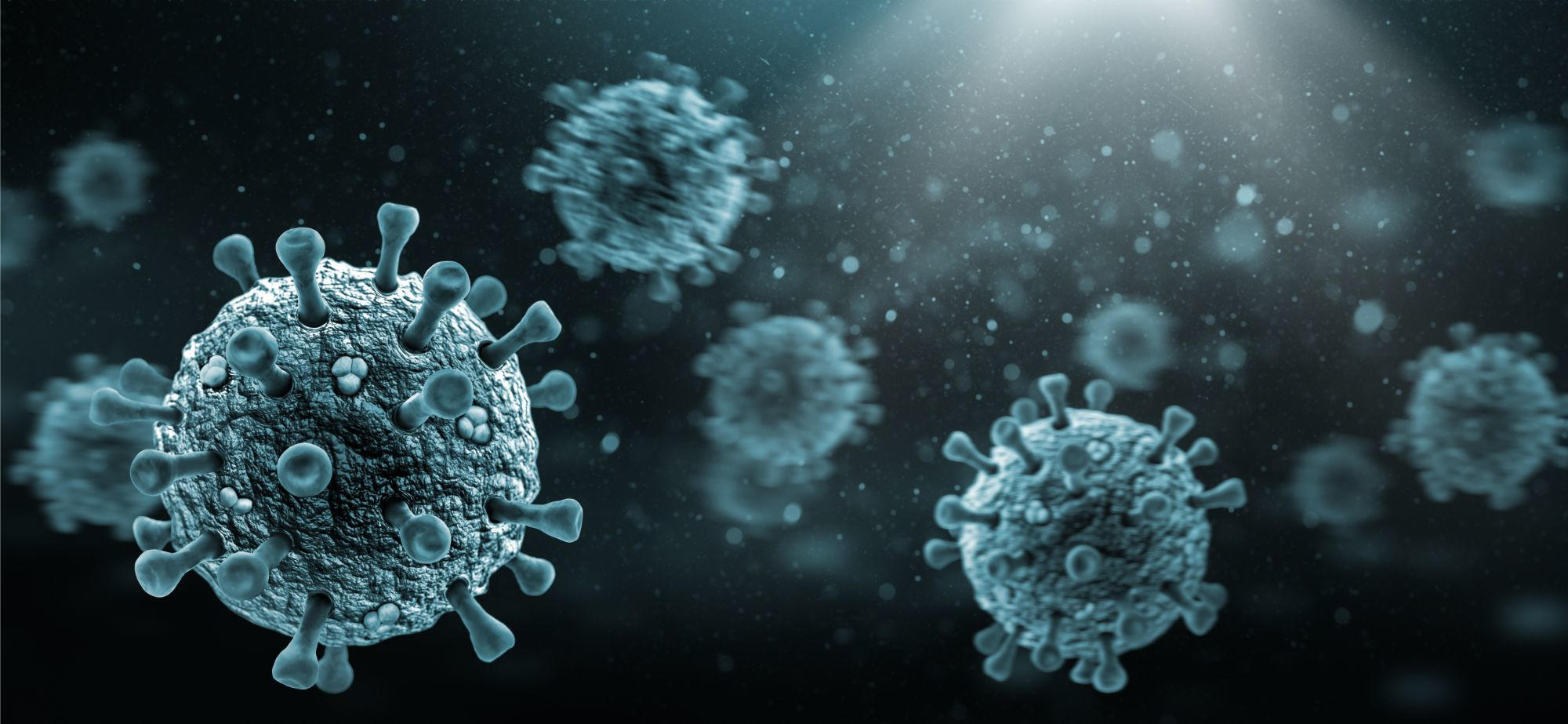
Suddenly they appear and — like the SARS-CoV-2 coronavirus — can trigger major epidemics: Viruses that nobody had on their radar. They are not really new, but they have changed genetically. New genetic analyses by an international team of researchers suggest that the genetic material exchange between different virus species can create new pathogens with significantly altered, and potentially more threatening, characteristics. The large-scale study was led by virologists from the German Cancer Research Center (DKFZ).
“Using a new computer-assisted analysis method, we discovered 40 previously unknown nidoviruses in various vertebrates from fish to rodents, including 13 coronaviruses,” reports DKFZ group leader Stefan Seitz. With the help of high-performance computers, the research team, which also includes Chris Lauber’s working group from the Helmholtz Center for Infection Research in Hanover, has sifted through almost 300,000 data sets. According to virologist Seitz, the fact that we can now analyze such huge amounts of data in one go opens up completely new perspectives.
Virus research is still in its relative infancy. Only a fraction of all viruses occurring in nature are known, especially those that cause diseases in humans, domestic animals and crops. The new method therefore promises a quantum leap in knowledge with regard to the natural virus reservoir. Stefan Seitz and his colleagues sent genetic data from vertebrates stored in scientific databases through their high-performance computers with new questions. They searched for virus-infected animals in order to obtain and study viral genetic material on a large scale. The main focus was on so-called nidoviruses, which include the coronavirus family.
Discovery and Analysis of Nidoviruses
Nidoviruses, whose genetic material consists of RNA (ribonucleic acid), are widespread in vertebrates. This species-rich group of viruses has some common characteristics that distinguish them from all other RNA viruses and document their relationship. Otherwise, however, nidoviruses are very different from each other, i.e. in terms of the size of their genome.
One discovery is particularly interesting with regard to the emergence of new viruses: In host animals that are simultaneously infected with different viruses, a recombination of viral genes can occur during virus replication. “Apparently, the nidoviruses we discovered in fish frequently exchange genetic material between different virus species, even across family boundaries,” says Stefan Seitz. And when distant relatives “crossbreed”, this can lead to the emergence of viruses with completely new properties. According to Seitz, such evolutionary leaps can affect the aggressiveness and dangerousness of the viruses, but also their attachment to certain host animals.
“A genetic exchange, as we have found in fish viruses, will probably also occur in mammalian viruses,” explains Stefan Seitz. Bats, which — like shrews — are often infected with a large number of different viruses, are considered a true melting pot. The SARS-CoV-2 coronavirus probably also developed in bats and jumped from there to humans.
After gene exchange between nidoviruses, the spike protein with which the viruses dock onto their host cells often changes. Chris Lauber, first author of the study, was able to show this by means of family tree analyses. Modifying this anchor molecule can significantly change the properties of the viruses to their advantage — by increasing their infectiousness or enabling them to switch hosts. A change of host, especially from animals to humans, can greatly facilitate the spread of the virus, as the corona pandemic has emphatically demonstrated. Viral “game changers” can suddenly appear at any time, becoming a massive threat and — if push comes to shove — triggering a pandemic. The starting point can be a single double-infected host animal.
The new high-performance computer process could help to prevent the spread of new viruses. It enables a systematic search for virus variants that are potentially dangerous for humans, explains Stefan Seitz. And the DKFZ researcher sees another important possible application with regard to his special field of research, virus-associated carcinogenesis: “I could imagine that we could use the new High Performance Computing (HPC) to systematically examine cancer patients or immunocompromised people for viruses. We know that cancer can be triggered by viruses, the best-known example being human papillomaviruses. But we are probably only seeing the tip of the iceberg so far. The HPC method offers the opportunity to track down viruses that, previously undetected, nestle in the human organism and increase the risk of malignant tumors.”
Reference: “Deep mining of the Sequence Read Archive reveals major genetic innovations in coronaviruses and other nidoviruses of aquatic vertebrates” by Chris Lauber, Xiaoyu Zhang, Josef Vaas, Franziska Klingler, Pascal Mutz, Arseny Dubin, Thomas Pietschmann, Olivia Roth, Benjamin W. Neuman, Alexander E. Gorbalenya, Ralf Bartenschlager and Stefan Seitz, 22 April 2024, PLOS Pathogens.
DOI: 10.1371/journal.ppat.1012163
Never miss a breakthrough: Join the SciTechDaily newsletter.
Follow us on Google and Google News.
1 Comment
Uncovered? You mean created.