
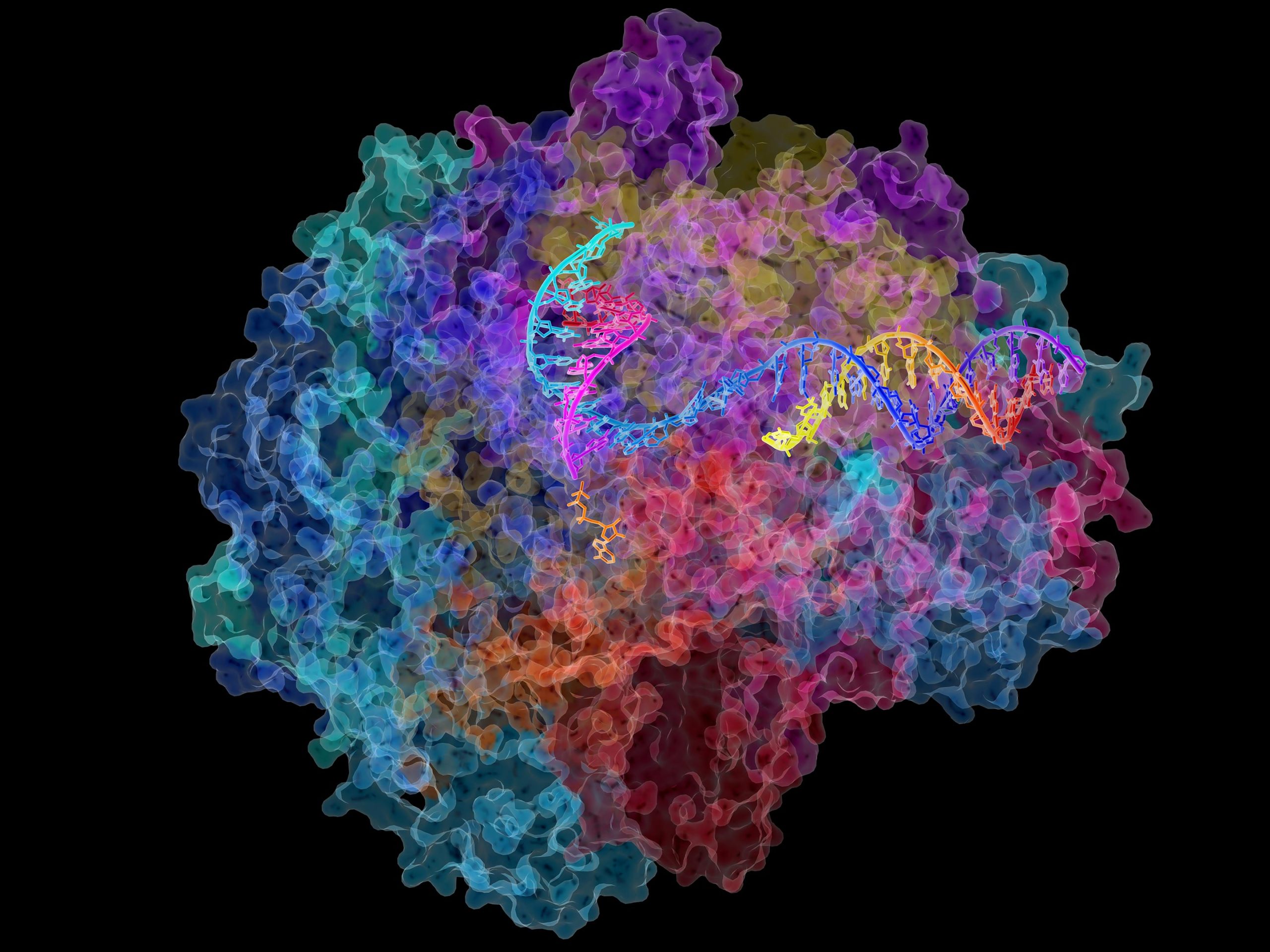
Researchers have found an ancient protein fold that might explain how life’s basic building blocks became the complex systems we see today.
This long-lost structure could help solve mysteries about early life and evolution.
Discovery of a Lost Protein Fold
Two RIKEN biologists have uncovered a previously unknown protein fold through lab experiments, offering fresh insights into the early evolution of life on Earth. This protein fold, completely absent in modern proteins, could fill a critical gap in our understanding of molecular evolution.
Proteins that drive essential biological processes, such as gene expression and protein production, rely on various structural folds called β-barrel folds. However, the evolutionary pathways connecting these folds have remained unclear—until now.
Through simulations, the researchers identified a likely ancient folding topology, named the double-zeta β-barrel (DZBB). This discovery sheds light on how complex biomolecular machines may have evolved from simpler precursors, offering a new perspective on the origins of life’s molecular complexity.
Insights Into Protein Evolution
“The discovery of this missing-link protein fold helps us understand the evolutionary relationship between many different proteins in a much simpler way than we had expected,” explains Shunsuke Tagami of the RIKEN Center for Biosystems Dynamics Research (BDR).
DZBB resembles a compact cylinder made up of interlocking protein strands. The ancient, origami-like structure can transform into other key protein shapes with just a few tweaks, Tagami and BDR colleague Sota Yagi found. These DZBB assemblies serve as a versatile foundation for molecular evolution.
Using synthetic biology techniques in the lab, the pair traced the progression of these ancient protein folds. They started with a fold found in DNA and RNA polymerases—enzymes responsible for genome replication and gene transcription. And they showed that, through simple and feasible mutation steps, they might have evolved into the folds found in modern ribosomal proteins, which are essential for synthesizing proteins in cells.

Challenges of AI in Protein Research
This evolutionary progression required an intermediary structure, DZBB, which could only be uncovered experimentally—it couldn’t be predicted through computational methods, even using the latest machine-learning algorithms. This underscores the limitations of current artificial intelligence (AI) models in identifying such complex protein structures.
“Because AI gives answers strongly influenced by the training dataset, experimental validation remains essential to make truly unexpected discoveries,” says Tagami.
Implications of the DZBB Discovery
The results may help solve a long-standing mystery about how primordial proteins evolved to manage genetic processes. DZBB’s metamorphic nature, which allows it to adopt multiple stable forms under different conditions, may have allowed molecular machinery in early life to rapidly diversify—much like animal species during the Cambrian explosion.
The findings also raise an intriguing question: if DZBB was so critical to enabling the rise of molecular machines that govern the flow of genetic information within cells, then why is the folding topology no longer seen today?
“DZBB may have been a temporary protein form that existed only during an evolutionary transition between ancient simple forms,” says Tagami.
Reference: “An ancestral fold reveals the evolutionary link between RNA polymerase and ribosomal proteins” by Sota Yagi, and Shunsuke Tagami, 18 July 2024, Nature Communications.
DOI: 10.1038/s41467-024-50013-9
Never miss a breakthrough: Join the SciTechDaily newsletter.
Follow us on Google and Google News.
1 Comment
God started life on earth read you bible ??