
Global Warming Amplifiers and Their Risks
Twenty-seven global warming accelerators known as amplifying feedback loops, including some that the researchers say may not be fully accounted for in climate models, have been identified by an international collaboration led by Oregon State University (OSU) scientists.
They note that the findings, published today in the journal One Earth, add urgency to the need to respond to the climate crisis and provide a roadmap for policymakers aiming to avert the most severe consequences of a warming planet.
In climate science, amplifying feedback loops are situations where a climate-caused alteration can trigger a process that causes even more warming, which in turn intensifies the alteration. An example would be warming in the Arctic, leading to melting sea ice, which results in further warming because sea water absorbs rather than reflects solar radiation.
OSU College of Forestry postdoctoral scholar Christopher Wolf and distinguished professor William Ripple led the study, which in all looked at 41 climate change feedbacks.
“Many of the feedback loops we examined significantly increase warming because of their connection to greenhouse gas emissions,” Wolf said. “To the best of our knowledge, this is the most extensive list available of climate feedback loops, and not all of them are fully considered in climate models. What’s urgently needed is more research and modeling and an accelerated cutback of emissions.”
The paper makes two calls to action for “immediate and massive” emissions reductions:
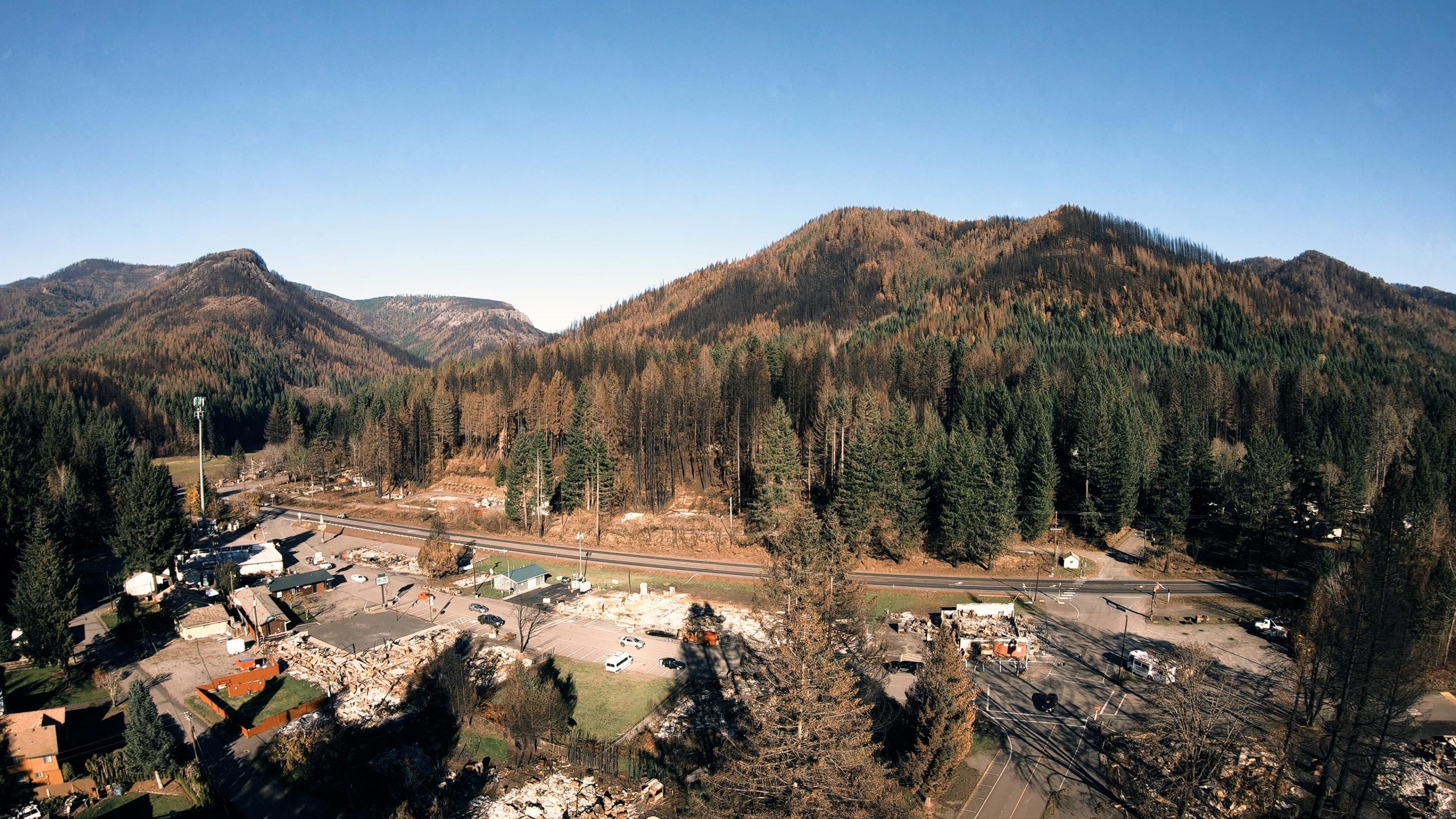
- Minimize short-term warming given that “climate disasters” in the form of wildfires, coastal flooding, permafrost thaw, intense storms, and other extreme weather are already occurring.
- Mitigate the possible major threats looming from climate tipping points that are drawing ever-closer due to the prevalence of the many amplifying feedback loops. A tipping point is a threshold after which a change in a component of the climate system becomes self-perpetuating.
Transformative Changes for Mitigating Climate Impacts
“Transformative, socially just changes in global energy and transportation, short-lived air pollution, food production, nature preservation and the international economy, together with population policies based on education and equality, are needed to meet these challenges in both the short and long term,” Ripple said. “It’s too late to fully prevent the pain of climate change, but if we take meaningful steps soon while prioritizing human basic needs and social justice, it could still be possible to limit the harm.”
Ripple, Wolf and co-authors from the University of Exeter, the Potsdam Institute for Climate Impact Research, the Woodwell Climate Research Center and Terrestrial Ecosystems Research Associates considered both biological and physical feedbacks. Biological feedbacks include forest dieback, soil carbon loss, and wildfire; physical feedbacks involve changes such as reduced snow cover, increased Antarctic rainfall and shrinking arctic sea ice.
Even comparatively modest warming is expected to heighten the likelihood that the Earth will cross various tipping points, the researchers say, causing big changes in the planet’s climate system and potentially strengthening the amplifying feedbacks.
“Climate models may be underestimating the acceleration in global temperature change because they aren’t fully considering this large and related set of amplifying feedback loops,” Wolf said. “The accuracy of climate models is crucial as they help guide mitigation efforts by telling policymakers about the expected effects of human-caused greenhouse gas emissions. While recent climate models do a much better job of incorporating diverse feedback loops, more progress is needed.”
Warnings from Rising Emissions and Feedback Interactions
Emissions have risen substantially over the last century, the researchers note, despite several decades of warnings that they should be significantly curbed. The scientists say interactions among feedback loops could cause a permanent shift away from the Earth’s current climate state to one that threatens the survival of many humans and other life forms.
“In the worst case, if amplifying feedbacks are strong enough, the result is likely tragic climate change that’s moved beyond anything humans can control,” Ripple said. “We need a rapid transition toward integrated Earth system science because the climate can only be fully understood by considering the functioning and state of all Earth systems together. This will require large-scale collaboration, and the result would provide better information for policymakers.”
In addition to the 27 amplifying climate feedbacks the scientists studied were seven that are characterized as dampening – they act to stabilize the climate system. An example is carbon dioxide fertilization, where rising concentrations of atmospheric CO2 lead to increasing carbon uptake by vegetation.
The effects of the remaining seven feedbacks, including increased atmospheric dust and reduced ocean stability, are not yet known.
For more on this research, see Action Required on Many Dangerous Climate Feedback Loops.
Reference: “Scientists warn of many dangerous climate feedback loops” by William J. Ripple, Christopher Wolf, Timothy M. Lenton, Jillian W. Gregg, Susan M. Natali, Philip B. Duffy, Johan Rockström and Hans Joachim Schellnhuber, 17 February 2023, One Earth.
DOI: 10.1016/j.oneear.2023.01.004
The paper in One Earth has a corresponding website that features more about climate feedback loops, including infographics and interactive animations.
Never miss a breakthrough: Join the SciTechDaily newsletter.
Follow us on Google and Google News.
2 Comments
“… leading to melting sea ice, which results in further warming because sea water absorbs rather than reflects solar radiation.”
This is a common misconception that is often stated by people who should know better. Snow, and to a lesser extent ice, are diffuse reflectors that reflect light strongly in all directions. Thus, snow looks bright no matter what the position of the observer. However, water is a specular reflector, like a mirror. That means the light reflected off of water has the same angle with respect to the surface as the incident light ray(s). The proportion of light reflected is strongly controlled by the angle of incidence. At the Equator, with the sun high in the sky, the reflectance is only about about 2%.
However, in the Arctic, the sun is NEVER directly overhead. One has to be looking towards the sun, and at the same angle as the angle of incidence, to see the reflected light. Hence, the misconception that the water is black and is an absorber. When the angle of incidence is over about 30 deg, the reflectance starts to increase; at about 66.5 deg (the latitude of the Arctic Circle) the reflectance is increasing rapidly and is about 10% at noon at the Equinox; it is 100% at the North Pole! The reflectance is always 100% at the terminator, if the reflecting surface is water. For nominally half the year there is NO sunlight to be reflected above the Arctic circle. So, overall, the warming impact with the loss of snow and ice is overstated considerably.
https://wattsupwiththat.com/2016/09/12/why-albedo-is-the-wrong-measure-of-reflectivity-for-modeling-climate/
“Climate models may be underestimating the acceleration in global temperature change because they aren’t fully considering this large and related set of amplifying feedback loops,”
What is important is what measurements are recording, not what predictions from models, known to be over estimating future temperatures consistently, are suggesting.