
Close Menu
    Facebook X (Twitter) Instagram
    SciTechDaily
    • Biology
    • Chemistry
    • Earth
    • Health
    • Physics
    • Science
    • Space
    • Technology
    Facebook X (Twitter) Pinterest YouTube RSS
    SciTechDaily
    Home»Science»Secrets of the Sunken Bridge: Unveiling Early Human Settlements
    Science

    Secrets of the Sunken Bridge: Unveiling Early Human Settlements

    By University of South FloridaAugust 30, 2024No Comments4 Mins Read
    Facebook Twitter Pinterest Telegram LinkedIn WhatsApp Email Reddit
    Share
    Facebook Twitter LinkedIn Pinterest Telegram Email Reddit
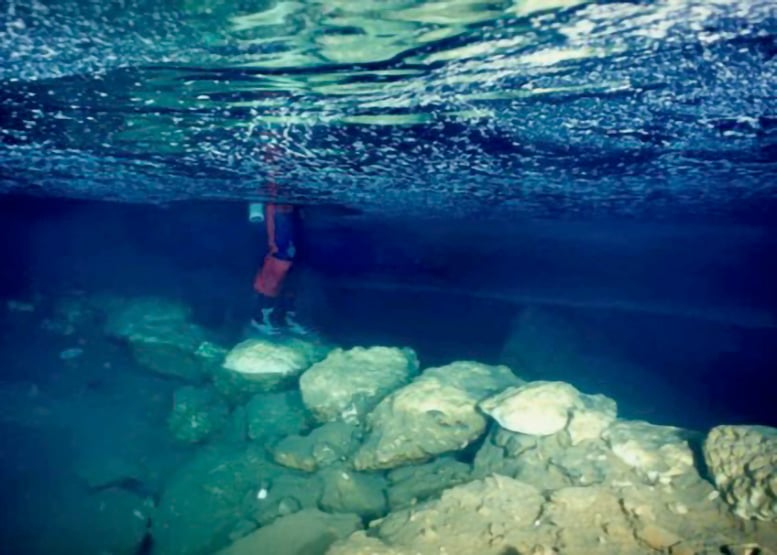
    Submerged Stone Bridge From Genovesa Cave
    View of the submerged stone bridge from Genovesa Cave, Mallorca, Spain. Credit: R. Landreth

    A new study shows humans arrived in the western Mediterranean much earlier than previously believed.

    Led by a University of South Florid geologist, a team of researchers examined a submerged 25-foot bridge to tackle a long-lasting archaeological controversy: When humans settled on the islands in the western Mediterranean. Their findings narrow a historical gap between the settlement timelines of the eastern and western Mediterranean regions.

    New Insights Into Western Mediterranean Settlements

    A new study led by the University of South Florida (USF) has shed light on the human colonization of the western Mediterranean, revealing that humans settled there much earlier than previously believed. This research, detailed in a paper published today (August 30) in the journal Communications Earth & Environment, challenges long-held assumptions and narrows the gap between the settlement timelines of islands throughout the Mediterranean region.

    Reconstructing early human colonization on Mediterranean islands is challenging due to limited archaeological evidence. By studying a 25-foot submerged bridge, an interdisciplinary research team – led by USF geology Professor Bogdan Onac – was able to provide compelling evidence of earlier human activity inside Genovesa Cave, located in the Spanish island of Mallorca.
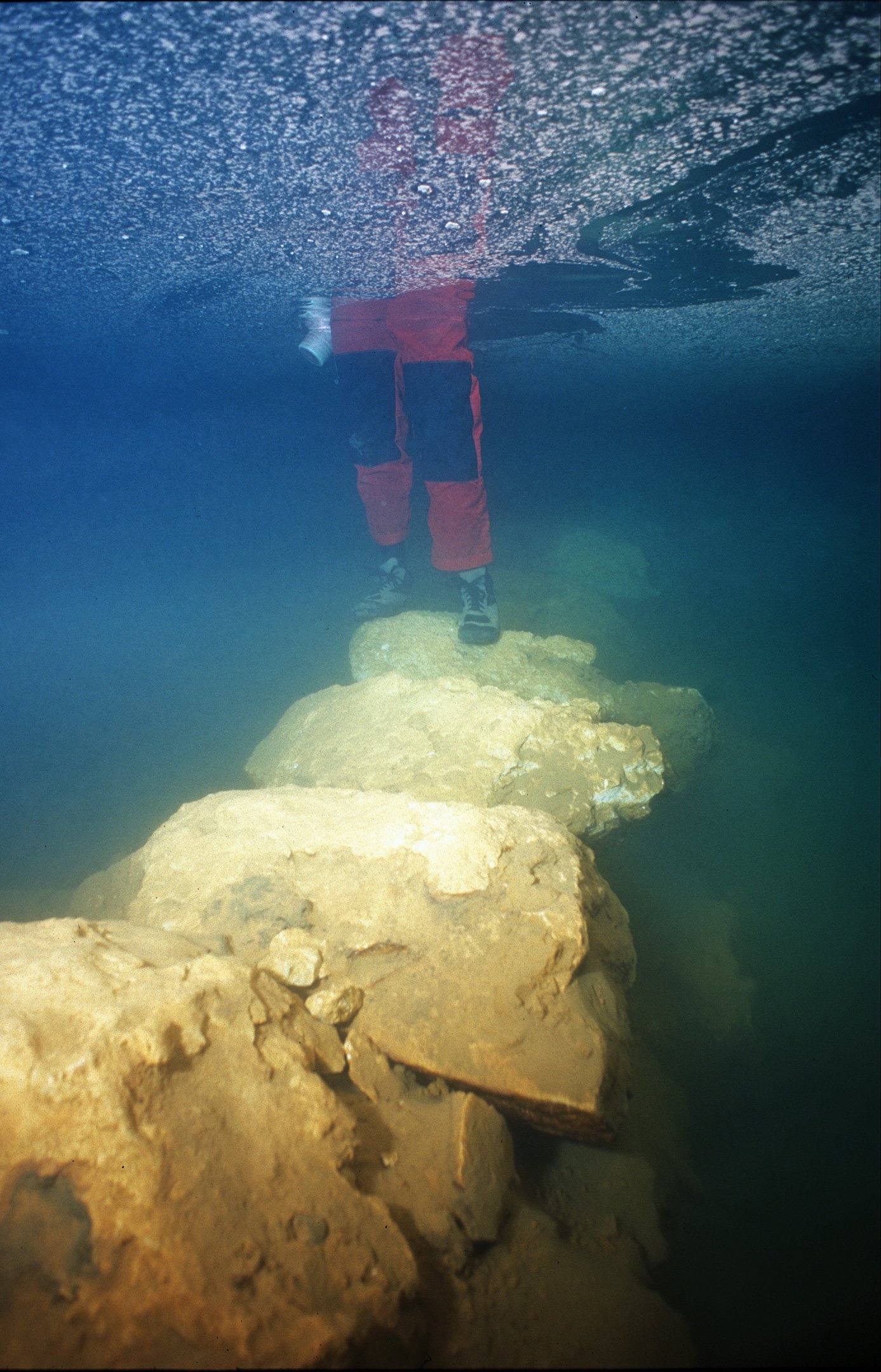
    Submerged Stone Bridge From Genovesa Cave Close Up
    Close-up view of the submerged stone bridge from Genovesa Cave, Mallorca, Spain. Credit: R. Landreth

    Archaeological Innovations in Mallorca

    “The presence of this submerged bridge and other artifacts indicates a sophisticated level of activity, implying that early settlers recognized the cave’s water resources and strategically built infrastructure to navigate it,” Onac said.

    The cave, located near Mallorca’s coast, has passages now flooded due to rising sea levels, with distinct calcite encrustations forming during periods of high sea level. These formations, along with a light-colored band on the submerged bridge, serve as proxies for precisely tracking historical sea-level changes and dating the bridge’s construction.
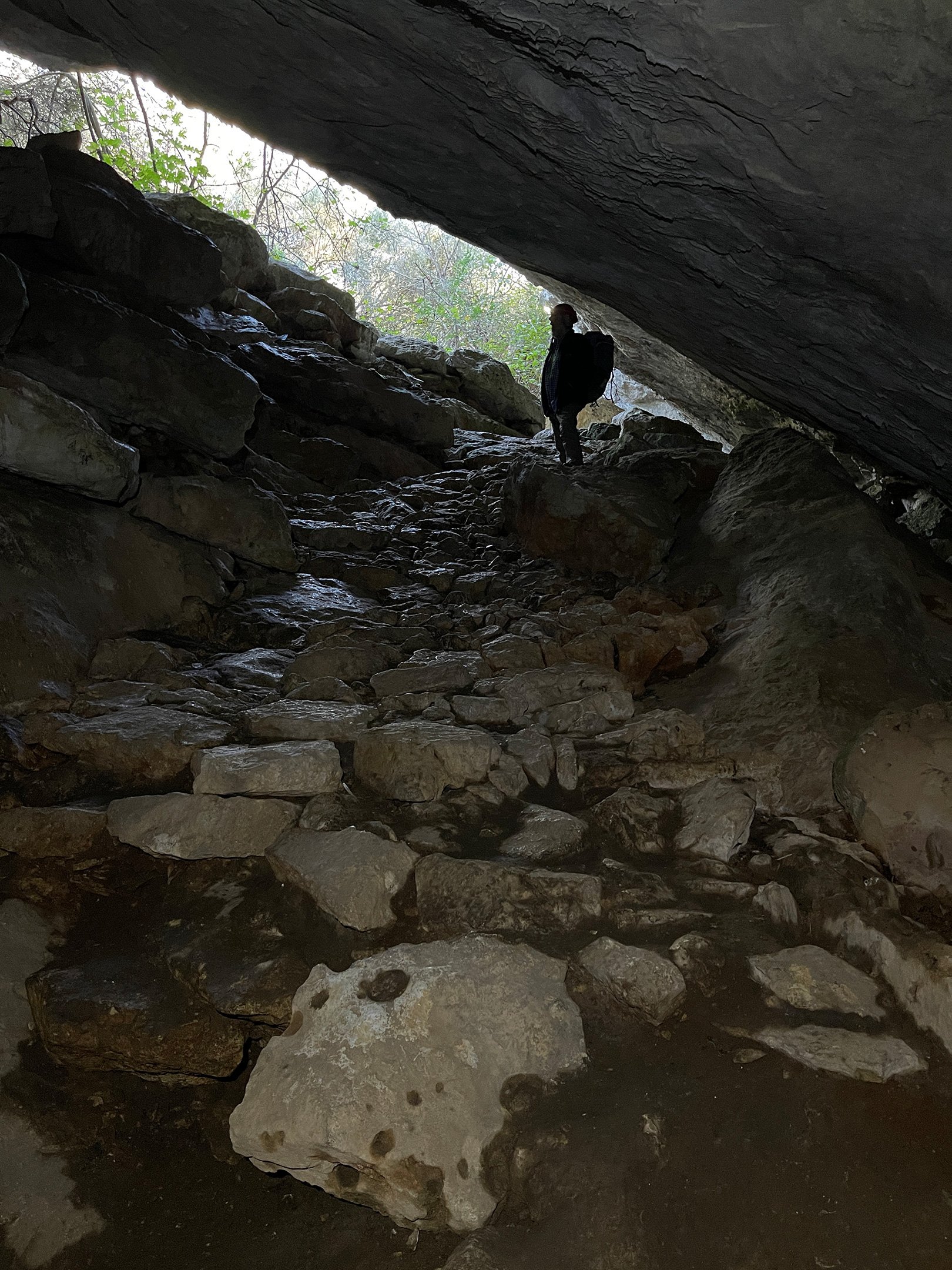
    Stone Path Connecting Genovesa Cave Entrance
    Stone path connecting the entrance in Genovesa Cave, Mallorca, Spain, and its subterranean lake across which the bridge was constructed. Credit: B. Onac

    Bridging Historical Gaps

    Mallorca, despite being the sixth largest island in the Mediterranean, was among the last to be colonized. Previous research suggested human presence as far back as 9,000 years, but inconsistencies and poor preservation of the radiocarbon-dated material, such as nearby bones and pottery, led to doubts about these findings. Newer studies have used charcoal, ash and bones found on the island to create a timeline of human settlement about 4,400 years ago. This aligns the timeline of human presence with significant environmental events, such as the extinction of the goat-antelope genus Myotragus balearicus.

    By analyzing overgrowths of minerals on the bridge and the elevation of a coloration band on the bridge, Onac and the team discovered the bridge was constructed nearly 6,000 years ago, more than two thousand years older than the previous estimation – narrowing the timeline gap between eastern and western Mediterranean settlements.
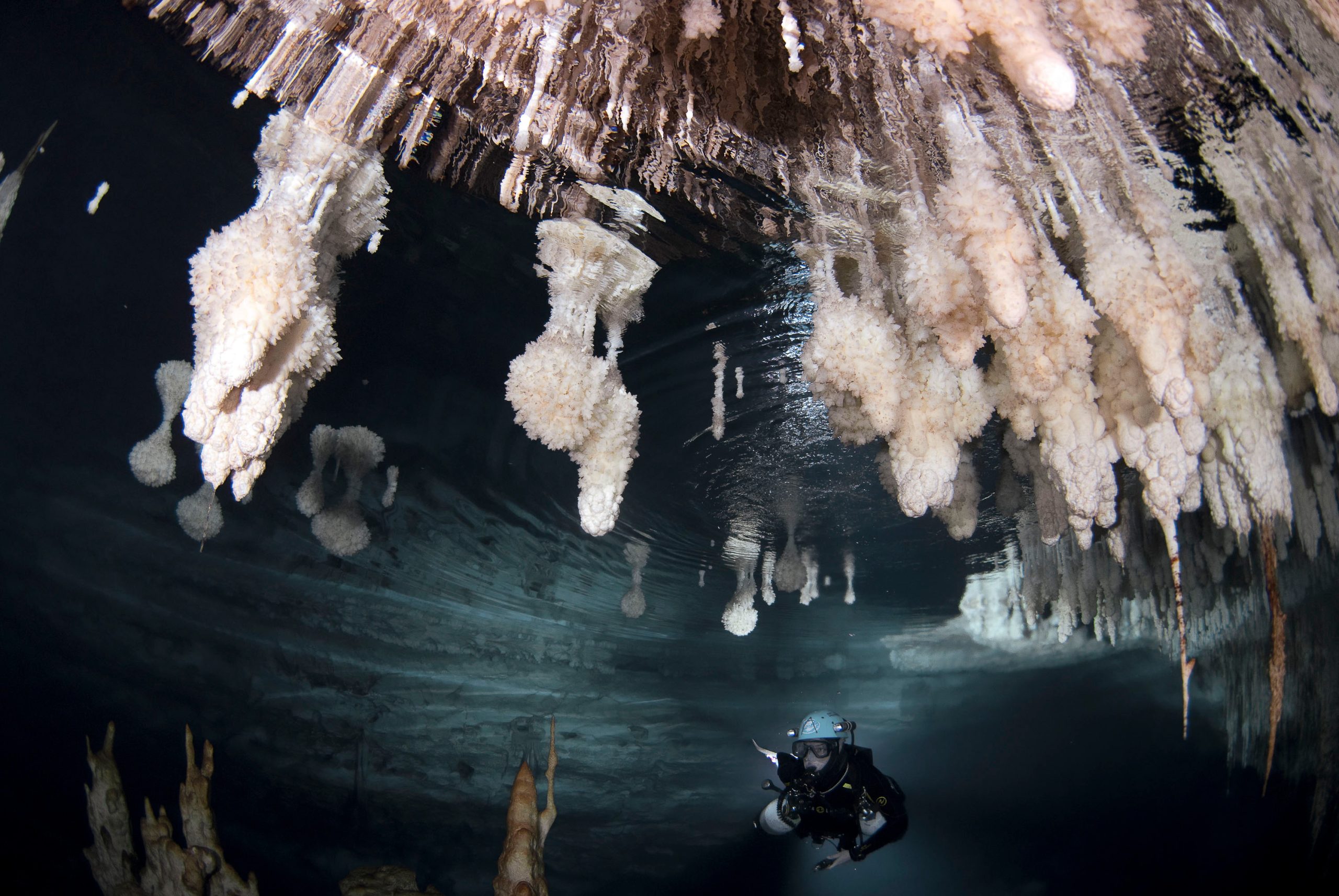
    Phreatic Overgrowths on Speleothems Drac Cave
    Phreatic overgrowths on speleothems grow exactly at sea level, pictured above the diver in the Galeria de les Delícies in Drac Cave, Mallorca, Spain, offering a more accurate reconstruction of past sea level history. Note the submerged stalagmites that grew when sea level was much lower. Credit: M.À. Perelló

    Interdisciplinary Contributions to History

    “This research underscores the importance of interdisciplinary collaboration in uncovering historical truths and advancing our understanding of human history,” Onac said.

    This study was supported by several National Science Foundation grants and involved extensive fieldwork, including underwater exploration and precise dating techniques. Onac will continue exploring cave systems, some of which have deposits that formed millions of years ago, so he can identify preindustrial sea levels and examine the impact of modern greenhouse warming on sea-level rise.

    Reference: “Submerged bridge constructed at least 5600 years ago indicates early human arrival in Mallorca, Spain” by Bogdan P. Onac, Victor J. Polyak, Jerry X. Mitrovica, Joaquín Ginés, Francesc Gràcia, Joan J. Fornós, Angel Ginés and Yemane Asmerom, 30 August 2024, Communications Earth & Environment.
    DOI: 10.1038/s43247-024-01584-4

    This research was done in collaboration with Harvard University, the University of New Mexico, and the University of Balearic Islands.

    Never miss a breakthrough: Join the SciTechDaily newsletter.
    Follow us on Google and Google News.

    Anthropology Archaeology Geology University of South Florida
    Share. Facebook Twitter Pinterest LinkedIn Email Reddit

    Related Articles

    New Research Challenges Long-Held Assumptions About the Origins of Mesopotamian Civilization

    Norway’s Violent Past: New Study Reveals Shocking Rates of Viking Age Conflict

    Dark Earth Deciphered: Ancient Amazonians Intentionally Created Fertile “Dark Earth”

    Fossil Footprints Reveal Humans Inhabited North America Over 21,000 Years Ago

    Crystals Reveal Early Humans in the Kalahari 105,000 Years Ago Were As Innovative as Their Coastal Neighbors

    Defining Moment in Human Evolution: Turbulent Era Sparked Leap in Human Behavior, Technology 320,000 Years Ago

    Our Early Ancestors May Have Boiled Their Food in Hot Springs Long Before Learning to Control Fire

    Million-Year-Old Ash in South African Cave Yields Evidence of Cooking

    Humans Implicated in Africa’s Deforestation 3,000 Years Ago

    Leave A Reply Cancel Reply

    • Facebook
    • Twitter
    • Pinterest
    • YouTube

    Don't Miss a Discovery

    Subscribe for the Latest in Science & Tech!

    Trending News

    The Universe Is Expanding Too Fast and Scientists Can’t Explain Why

    “Like Liquid Metal”: Scientists Create Strange Shape-Shifting Material

    Early Warning Signals of Esophageal Cancer May Be Hiding in Plain Sight

    Common Blood Pressure Drug Shows Surprising Power Against Deadly Antibiotic-Resistant Superbug

    Scientists Uncover Dangerous Connection Between Serotonin and Heart Valve Disease

    Scientists Discover a “Protector” Protein That Could Help Reverse Hair Loss

    Bone-Strengthening Discovery Could Reverse Osteoporosis

    Scientists Uncover Hidden Trigger Behind Stem Cell Aging

    Follow SciTechDaily
    • Facebook
    • Twitter
    • YouTube
    • Pinterest
    • Newsletter
    • RSS
    SciTech News
    • Biology News
    • Chemistry News
    • Earth News
    • Health News
    • Physics News
    • Science News
    • Space News
    • Technology News
    Recent Posts
    • Scientists Overcome Major Quantum Bottleneck, Potentially Transforming Teleportation and Computing
    • Quantum Physics’ Strangest Problem May Hold the Key to Time Itself
    • Scientists Create “Liquid Gears” That Spin Without Touching
    • The Simple Habit That Could Help Prevent Cancer
    • Forgotten Medicinal Plant Shows Promise in Fighting Dangerous Superbugs
    Copyright © 1998 - 2026 SciTechDaily. All Rights Reserved.
    • Science News
    • About
    • Contact
    • Editorial Board
    • Privacy Policy
    • Terms of Use

    Type above and press Enter to search. Press Esc to cancel.