
Close Menu
    Facebook X (Twitter) Instagram
    SciTechDaily
    • Biology
    • Chemistry
    • Earth
    • Health
    • Physics
    • Science
    • Space
    • Technology
    Facebook X (Twitter) Pinterest YouTube RSS
    SciTechDaily
    Home»Science»Fossil Footprints Reveal Humans Inhabited North America Over 21,000 Years Ago
    Science

    Fossil Footprints Reveal Humans Inhabited North America Over 21,000 Years Ago

    By American Association for the Advancement of Science (AAAS)September 29, 2021No Comments3 Mins Read
    Facebook Twitter Pinterest Telegram LinkedIn WhatsApp Email Reddit
    Share
    Facebook Twitter LinkedIn Pinterest Telegram Email Reddit
    Footprints White Sands National Park
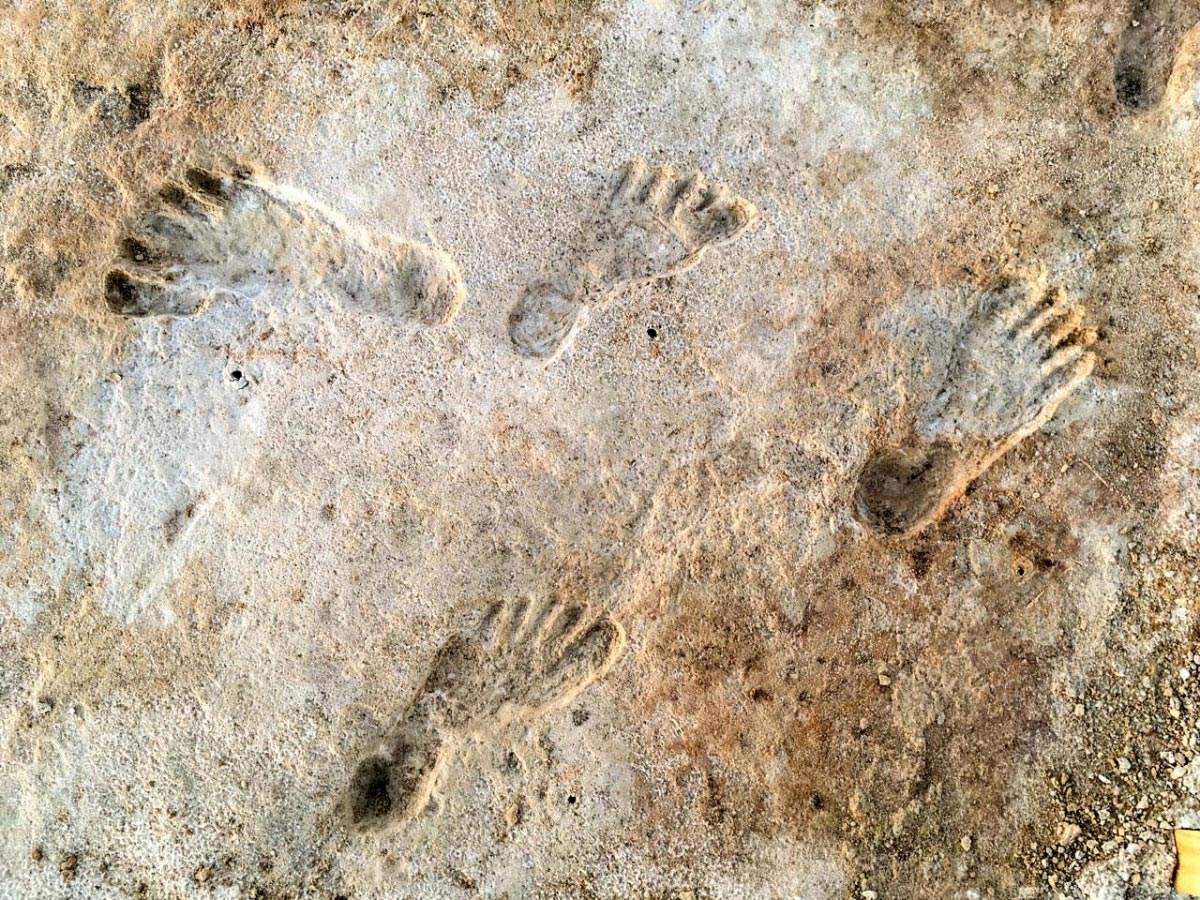
    Footprints found at White Sands National Park in New Mexico, providing the earliest evidence of human activity in the Americas. Credit: Cornell University

    Footprints found in New Mexico confirm human presence in North America 23,000 years ago.

    Newly discovered fossil human footprints embedded in an ancient lakebed show that humans inhabited North America during the Last Glacial Maximum (LGM), occupying the region of what is now White Sands National Park in New Mexico, United States, between 23 and 21 thousand years ago.

    Not only do the findings provide definitive evidence on the early antiquity of the colonization of the New World, they also indicate that humans were present in southern North America before the glacial advances of the LGM prevented human migration from Asia.

    Despite nearly a century of research, the details concerning the migration of the first humans into the Americas and their impact on the Pleistocene landscape remain poorly understood, and the earliest archaeological evidence for the settlement of the region is often highly controversial.

    Challenging Conventional Migration Models

    Current estimates for the timing of these first occupants range from ~13,000 years ago to more than 20,000 years ago. However, in most cases, the timeline of human expansion into North America is largely constrained by the viability of the currently recognized migration routes from Asia – an inland ice-free corridor through western Canada and/or a Pacific coastal route – which would have likely been closed or difficult to traverse during the LGM.

    Matthew Bennett and colleagues report the discovery of a sequence of in situ human footprints on surfaces dating to between ~23,000 and 21,000 years ago and reveal nearly 2,000 years of human occupation in North America during the height of the LGM. Unlike cultural artifacts or other evidence of human activity, which can have uncertain provenance, footprints have a primary depositional context, fixed on the imprinted surface, and represent a discrete moment in time.

    According to Bennett et al., further analyses of the tracks suggest that most were made by teenagers and children; larger adult footprints are much less frequent.

    For more on this discovery, read Ancient Footprints Provide Evidence of Human Activity in the Americas Thousands of Years Earlier Than Thought.

    Reference: “Evidence of humans in North America during the Last Glacial Maximum” by Matthew R. Bennett, David Bustos, Jeffrey S. Pigati, Kathleen B. Springer, Thomas M. Urban, Vance T. Holliday, Sally C. Reynolds, Marcin Budka, Jeffrey S. Honke, Adam M. Hudson, Brendan Fenerty, Clare Connelly, Patrick J. Martinez, Vincent L. Santucci and Daniel Odess, 24 September 2021, Science.
    DOI: 10.1126/science.abg7586

    Never miss a breakthrough: Join the SciTechDaily newsletter.
    Follow us on Google and Google News.

    American Association for the Advancement of Science Anthropology Archaeology Fossils Geology
    Share. Facebook Twitter Pinterest LinkedIn Email Reddit

    Related Articles

    Defining Moment in Human Evolution: Turbulent Era Sparked Leap in Human Behavior, Technology 320,000 Years Ago

    Our Early Ancestors May Have Boiled Their Food in Hot Springs Long Before Learning to Control Fire

    New View of Human Evolution Unearthed by Rare 10 Million-Year-Old Fossil [Video]

    When Did Animals Leave Their First Footprint on Earth?

    Paleontologists Provide New Perspective on Triassic Period, Emergence of Dinosaurs

    Anthropologists Shed New Light on Prehistoric Human Migration

    Scientists Identify a Mineral Signature for Finding Burgess Shale-Type Fossils

    400,000 Year Old Fossil Helps Shed New Light on Human Evolution

    Humans Implicated in Africa’s Deforestation 3,000 Years Ago

    Leave A Reply Cancel Reply

    • Facebook
    • Twitter
    • Pinterest
    • YouTube

    Don't Miss a Discovery

    Subscribe for the Latest in Science & Tech!

    Trending News

    Millions Take These IBS Drugs, But a New Study Finds Serious Risks

    Scientists Unlock Hidden Secrets of 2,300-Year-Old Mummies Using Cutting-Edge CT Scanner

    Bread Might Be Making You Gain Weight Even Without Eating More Calories

    Scientists Discover Massive Magma Reservoir Beneath Tuscany

    Europe’s Most Active Volcano Just Got Stranger – Here’s Why Scientists Are Rethinking It

    Alzheimer’s Symptoms May Start Outside the Brain, Study Finds

    Millions Take This Popular Supplement – Scientists Discover a Concerning Link to Heart Failure

    The Universe Is Expanding Too Fast and Scientists Can’t Explain Why

    Follow SciTechDaily
    • Facebook
    • Twitter
    • YouTube
    • Pinterest
    • Newsletter
    • RSS
    SciTech News
    • Biology News
    • Chemistry News
    • Earth News
    • Health News
    • Physics News
    • Science News
    • Space News
    • Technology News
    Recent Posts
    • U.S. Waste Holds $5.7 Billion Worth of Crop Nutrients
    • Scientists Say a Hidden Structure May Exist Inside Earth’s Core
    • Doctors Surprised by the Power of a Simple Drug Against Colon Cancer
    • Why Popular Diabetes Drugs Like Ozempic Don’t Work for Everyone: The “Genetic Glitch”
    • Scientists Create Improved Insulin Cells That Reverse Diabetes in Mice
    Copyright © 1998 - 2026 SciTechDaily. All Rights Reserved.
    • Science News
    • About
    • Contact
    • Editorial Board
    • Privacy Policy
    • Terms of Use

    Type above and press Enter to search. Press Esc to cancel.