
Close Menu
    Facebook X (Twitter) Instagram
    SciTechDaily
    • Biology
    • Chemistry
    • Earth
    • Health
    • Physics
    • Science
    • Space
    • Technology
    Facebook X (Twitter) Pinterest YouTube RSS
    SciTechDaily
    Home»Space»See Earth and Venus in the Martian Sky as Viewed by NASA’s Mars Curiosity Rover
    Space

    See Earth and Venus in the Martian Sky as Viewed by NASA’s Mars Curiosity Rover

    By Jet Propulsion LaboratoryJune 16, 20201 Comment3 Mins Read
    Facebook Twitter Pinterest Telegram LinkedIn WhatsApp Email Reddit
    Share
    Facebook Twitter LinkedIn Pinterest Telegram Email Reddit
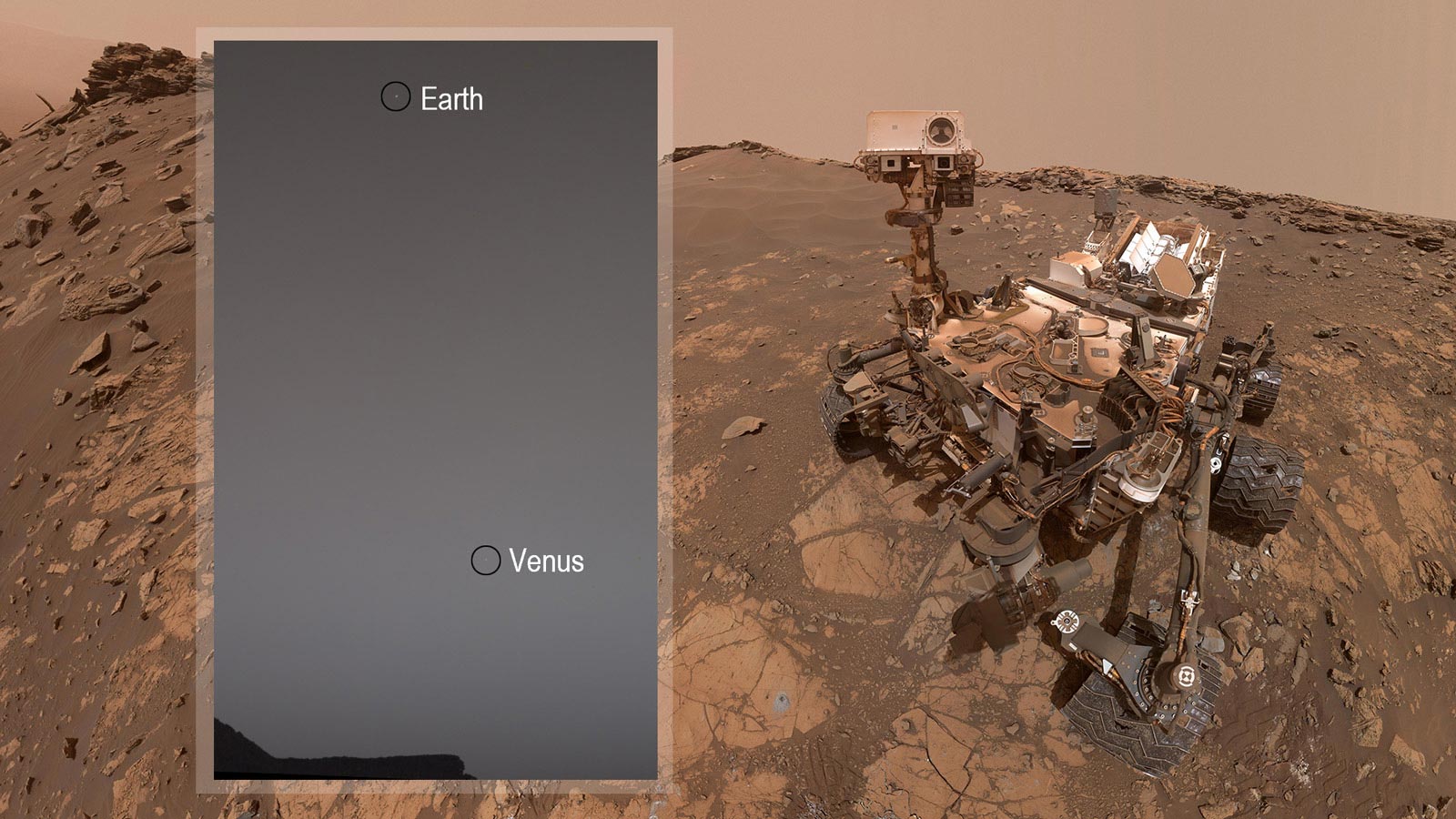
    Mars Curiosity Rover Finds Earth and Venus
    Two images of the night sky were combined to show Earth and Venus as seen by NASA’s Curiosity Mars rover on June 5, 2020, the mission’s 2,784th Martian day, or sol. The planets appear as pinpoints of light owing to a combination of distance and dust in the air. Mars’ Tower Butte is visible at bottom. Credit: NASA/JPL-Caltech

    This new portrait of the Red Planet’s neighbors was taken during a time when there’s more dust in the air on Mars.
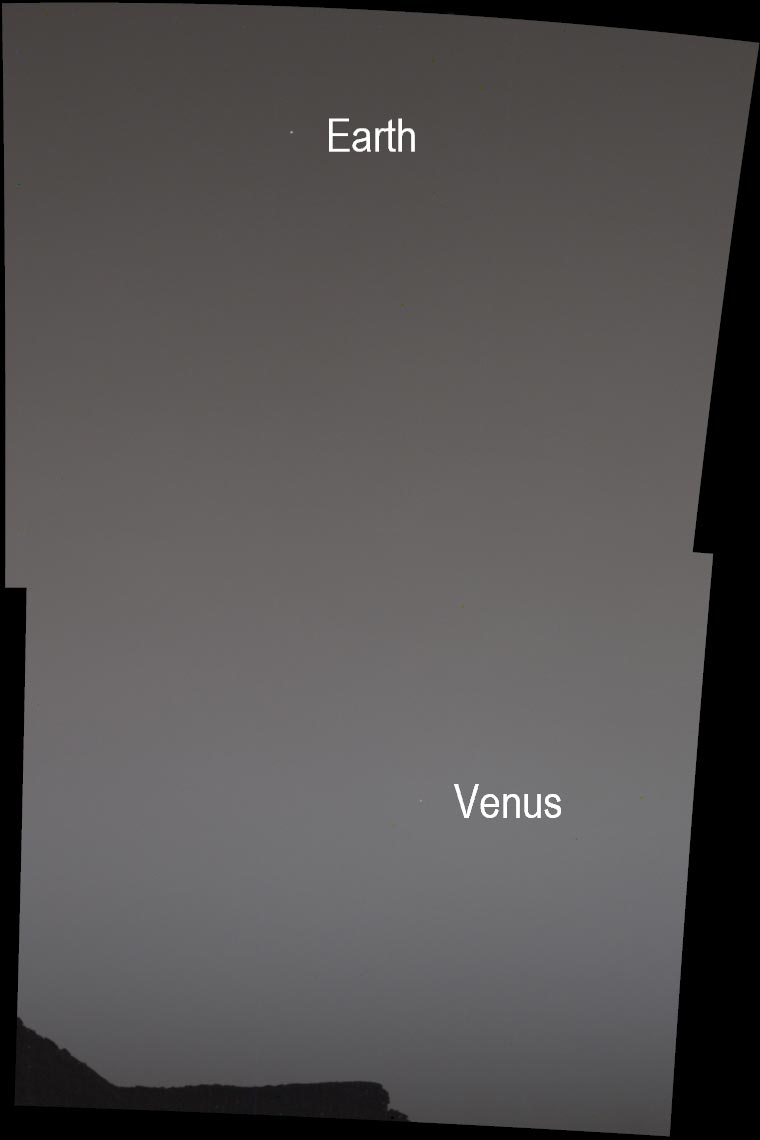
    Earth and Venus in the Martian Sky
    Two images of the night sky were combined to show Earth and Venus as seen by the Mast Camera aboard NASA’s Curiosity Mars rover on June 5, 2020, the 2,784th Martian day, or sol, of the mission. Both planets appear as mere pinpoints of light owing to a combination of distance and dust in the air; they would normally look like bright stars.
    A feature called Tower Butte is just visible at the bottom of the image, part of the clay-bearing region that Curiosity has been exploring since early 2019. Credit: NASA/JPL-Caltech

    NASA’s Curiosity Mars rover occasionally stops to stargaze. Recently, it captured a shot of Earth and Venus in the Red Planet’s night sky.

    Curiosity aimed its Mast Camera, or Mastcam, at the heavens about 75 minutes after sunset on June 5, 2020, the 2,784th Martian day, or sol, of the mission. A two-image twilight panorama reveals Earth in one frame and Venus in the other. Both planets appear as mere pinpoints of light, owing to a combination of distance and dust in the air; they would normally look like very bright stars.

    The brief photo session was partly to gauge the twilight brightness: During this time of year on Mars, there’s more dust in the air to reflect sunlight, making it particularly bright, said Mastcam co-investigator Mark Lemmon of the Space Science Institute in Boulder, Colorado.

    “Even moderately bright stars were not visible when this image of Venus was taken,” Lemmon said. “Earth also has bright twilights after some large volcanic eruptions.”

    When Curiosity’s Mastcam imaged Earth and its Moon in 2014, the color and brightness of the sky were significantly different than from these most recent images because of all the high-altitude dust in the Martian air right now.

    At the bottom of the new images is the top of a rock feature called Tower Butte in the “clay-bearing unit,” which Curiosity has been exploring for more than a year. Since landing in 2012, the rover has captured blue Martian sunsets and passing asteroids as well as Mercury and Mars’ two moons, Phobos and Deimos, transiting across the Sun.

    Never miss a breakthrough: Join the SciTechDaily newsletter.
    Follow us on Google and Google News.

    Astronomy Curiosity Rover JPL Mars NASA Popular Venus
    Share. Facebook Twitter Pinterest LinkedIn Email Reddit

    Related Articles

    NASA’s Curiosity Rover Drills and Collects First Martian Bedrock Sample

    Mineralogy of Martian Soil Is Similar to Soils of Volcanic Origin in Hawaii

    Curiosity Prepares to Take Its First Scoop of Soil for Analysis

    Curiosity Finds Ancient Streambed on Mars

    NASA’s Curiosity Readies for First Drive on Mars

    Curiosity’s ChemCam Laser Analyzes Its First Martian Rock

    Color HiRISE Image of Curiosity Rover on Mars

    Curiosity’s First Color Image of Mars

    Mission Engineers Prepare for Curiosity’s Landing on Mars

    1 Comment

    1. John-Paul Hunt on June 16, 2020 9:50 am

      Zooms in with ai software and hardware seeing it it’s up close and personal with better camera and video recording software and hardware and storage.

      Reply
    Leave A Reply Cancel Reply

    • Facebook
    • Twitter
    • Pinterest
    • YouTube

    Don't Miss a Discovery

    Subscribe for the Latest in Science & Tech!

    Trending News

    Largest-Ever Study Finds Medicinal Cannabis Ineffective for Anxiety, Depression, PTSD

    250-Million-Year-Old Egg Solves One of Evolution’s Biggest Mysteries

    Living With Roommates Might Be Changing Your Gut Microbiome Without You Knowing

    Century-Old Cleaning Chemical Linked to 500% Increased Risk of Parkinson’s Disease

    What if Your Memories Never Happened? Physicists Take a New Look at the Boltzmann Brain Paradox

    One of the Universe’s Largest Stars May Be Getting Ready To Explode

    Scientists Discover Enzyme That Could Supercharge Ozempic-Like Weight Loss Drugs

    Popular Sweetener Linked to DNA Damage – “It’s Something You Should Not Be Eating”

    Follow SciTechDaily
    • Facebook
    • Twitter
    • YouTube
    • Pinterest
    • Newsletter
    • RSS
    SciTech News
    • Biology News
    • Chemistry News
    • Earth News
    • Health News
    • Physics News
    • Science News
    • Space News
    • Technology News
    Recent Posts
    • Challenging the Narrative: New Study Shows U.S. Life Expectancy Is Rising Across All States
    • Mystery Illness Kills 5 in Burundi As Doctors Scramble for Answers
    • Bone-Strengthening Discovery Could Reverse Osteoporosis
    • The Most Elusive Number in Physics Just Got Even More Mysterious
    • Scientists Uncover Hidden Trigger Behind Stem Cell Aging
    Copyright © 1998 - 2026 SciTechDaily. All Rights Reserved.
    • Science News
    • About
    • Contact
    • Editorial Board
    • Privacy Policy
    • Terms of Use

    Type above and press Enter to search. Press Esc to cancel.