
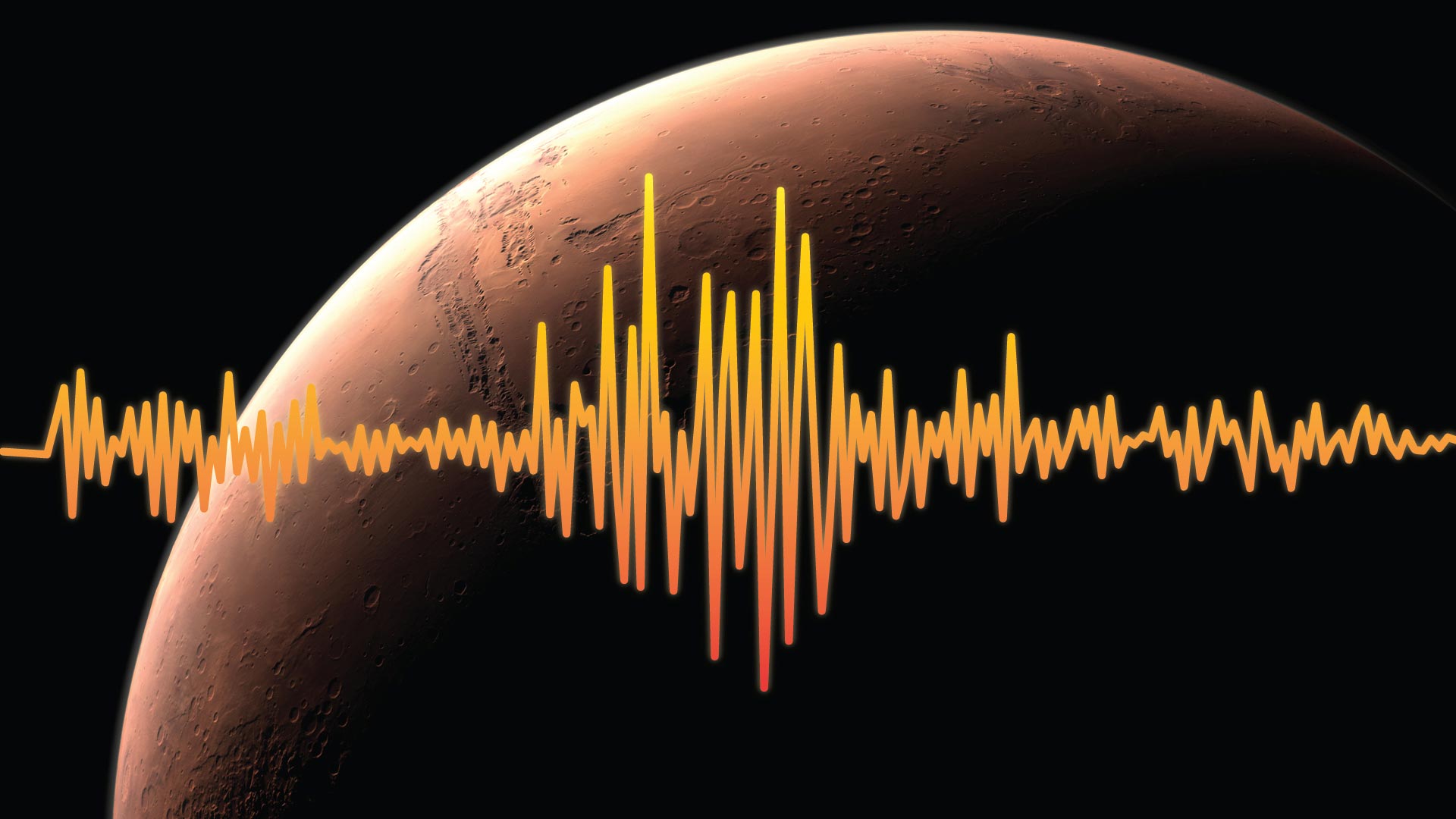
InSight’s SEIS instrument has detected over 500 marsquakes, exposing Mars as seismically active, with most tremors stemming from the Cerberus Fossae region. These quakes reveal surprising crustal behavior and hint at ongoing tectonic evolution.
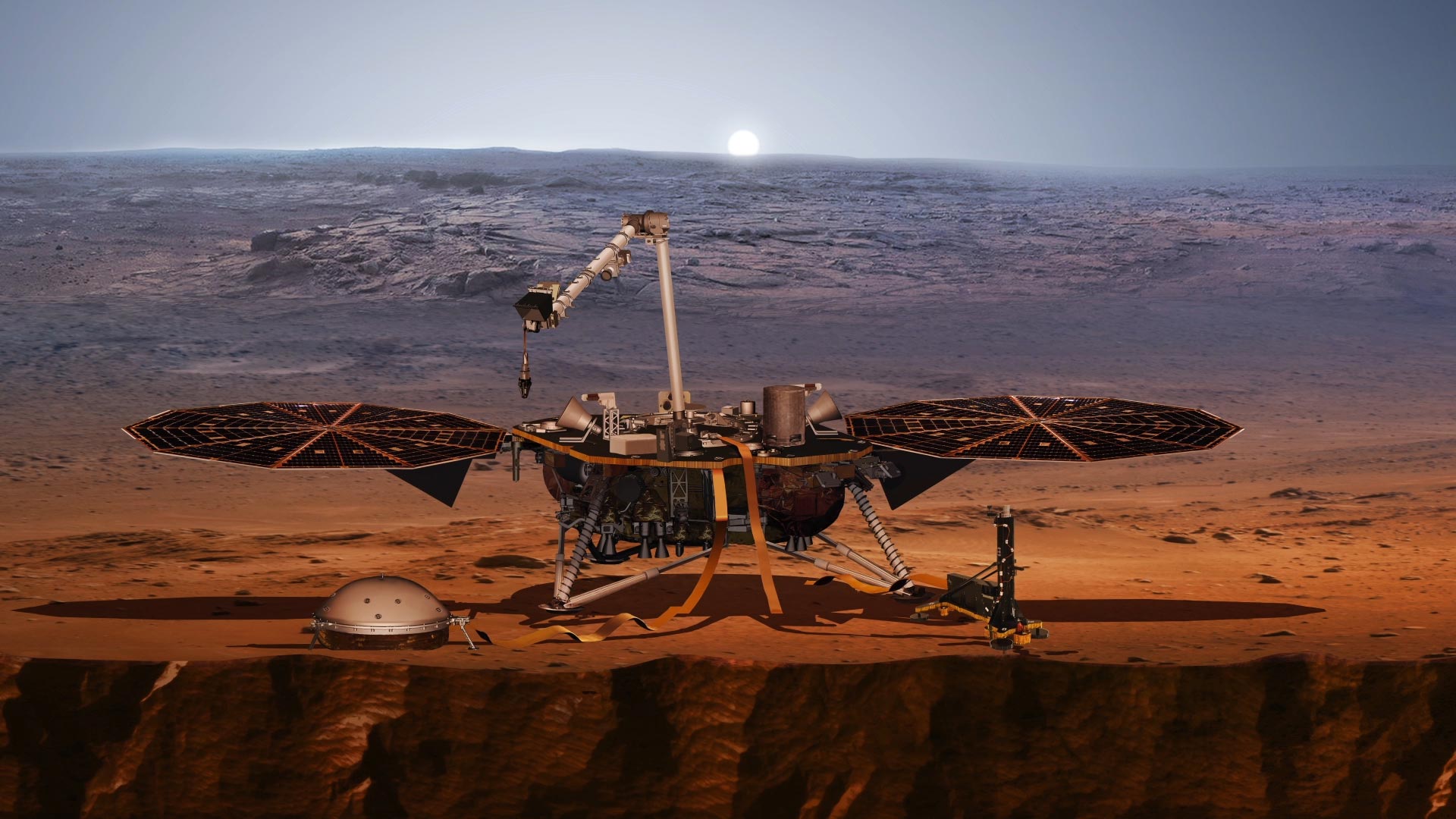
The SEIS seismometer package from the Mars InSight lander has collected its first continuous Martian year of data, revealing some surprises among the more than 500 marsquakes detected so far.
At the Seismological Society of America (SSA)’s 2021 Annual Meeting, Savas Ceylan of ETH Zürich discussed some of the findings from The Marsquake Service, the part of the InSight ground team that detects marsquakes and curates the planet’s seismicity catalog.
Marsquakes differ from earthquakes in a number of ways, Ceylan explained. To begin with, they are much smaller than earthquakes, with the largest event recorded at teleseismic distances around magnitude 3.6. SEIS is able to detect these small events because the background seismic noise on Mars can be much lower than on Earth, without the constant tremor produced by ocean waves.
Nighttime Silence Boosts Sensitivity
“For much of a Martian year, from around sunset until early hours, the Martian atmosphere becomes very quiet, so there is no local noise either,” he said. “Additionally, our sensors are optimized and shielded for operating under severe Martian conditions, such as extremely low temperatures and the extreme diurnal temperature fluctuations on the red planet.”
Two Types of Marsquakes Identified
Marsquakes also come in two distinct varieties: low-frequency events with seismic waves propagating at various depths in the planet’s mantle, and high-frequency events with waves that appear to propagate through the crust. “In terms of how the seismic energy decays over time, the low-frequency events appear to be more like earthquakes” in which the shaking dies away relatively quickly, Ceylan said, “while the high-frequency events are resembling moonquakes” in persisting for longer periods.
The vast majority of the events are high-frequency and occur at hundreds of kilometers of distance from the lander. “It is not quite clear to us how these events could be confined to only high frequency energy while they occur at such large distances,” he said. “On top of that, the frequency of those events seems to vary over the Martian year, which is a pattern that we do not know at all from Earth.”
Only a handful of marsquakes have clear seismic phase arrivals–the order in which the different types of seismic waves arrive at a location–which allows researchers to calculate the direction and distance the waves come from. All these marsquakes originate from a sunken area of the surface called Cerberus Fossae, about 1800 kilometers away from the InSight Lander.
Origins of Martian Tectonic Activity
Cerberus Fossae is one of the youngest geological structures on Mars, and may have formed from extensional faulting or subsidence due to dike emplacement. Recent studies suggest extension mechanism may be the source of the Cerberus Fossae quakes, Ceylan noted, “however, we have a long way in front of us to be able to explain the main tectonic mechanisms behind these quakes.”
The biggest challenge for The Marsquake Service and InSight science team has been “adapting to unexpected signals in the data from a new planet,” Ceylan said.
Although there were significant efforts to shield SEIS from non-seismic noise by covering it and placing it directly on the Martian surface, its data are still contaminated by weather and lander noise.
“We needed to understand the noise on Mars from scratch, discover how our seismometers behave, how the atmosphere of Mars affects seismic recordings, and find alternative methods to interpret the data properly,” said Ceylan.
Building a Reliable Seismic Catalog
It took the Service a while to be “confident in identifying the different event types,” he added, “discriminating these weak signals from the rich and varied background noise, and being able to characterize these novel signals in a systematic manner to provide a self-consistent catalog.”
The InSight seismicity catalog and data are released to the public via IPG Paris, IRIS, and PDS on a three month schedule, with three month data delay.
Never miss a breakthrough: Join the SciTechDaily newsletter.
Follow us on Google and Google News.