
Close Menu
    Facebook X (Twitter) Instagram
    SciTechDaily
    • Biology
    • Chemistry
    • Earth
    • Health
    • Physics
    • Science
    • Space
    • Technology
    Facebook X (Twitter) Pinterest YouTube RSS
    SciTechDaily
    Home»Space»Sensing the Moon: Ion Trap Mass Spectrometer
    Space

    Sensing the Moon: Ion Trap Mass Spectrometer

    By European Space Agency (ESA)August 27, 2020No Comments3 Mins Read
    Facebook Twitter Pinterest Telegram LinkedIn WhatsApp Email Reddit
    Share
    Facebook Twitter LinkedIn Pinterest Telegram Email Reddit
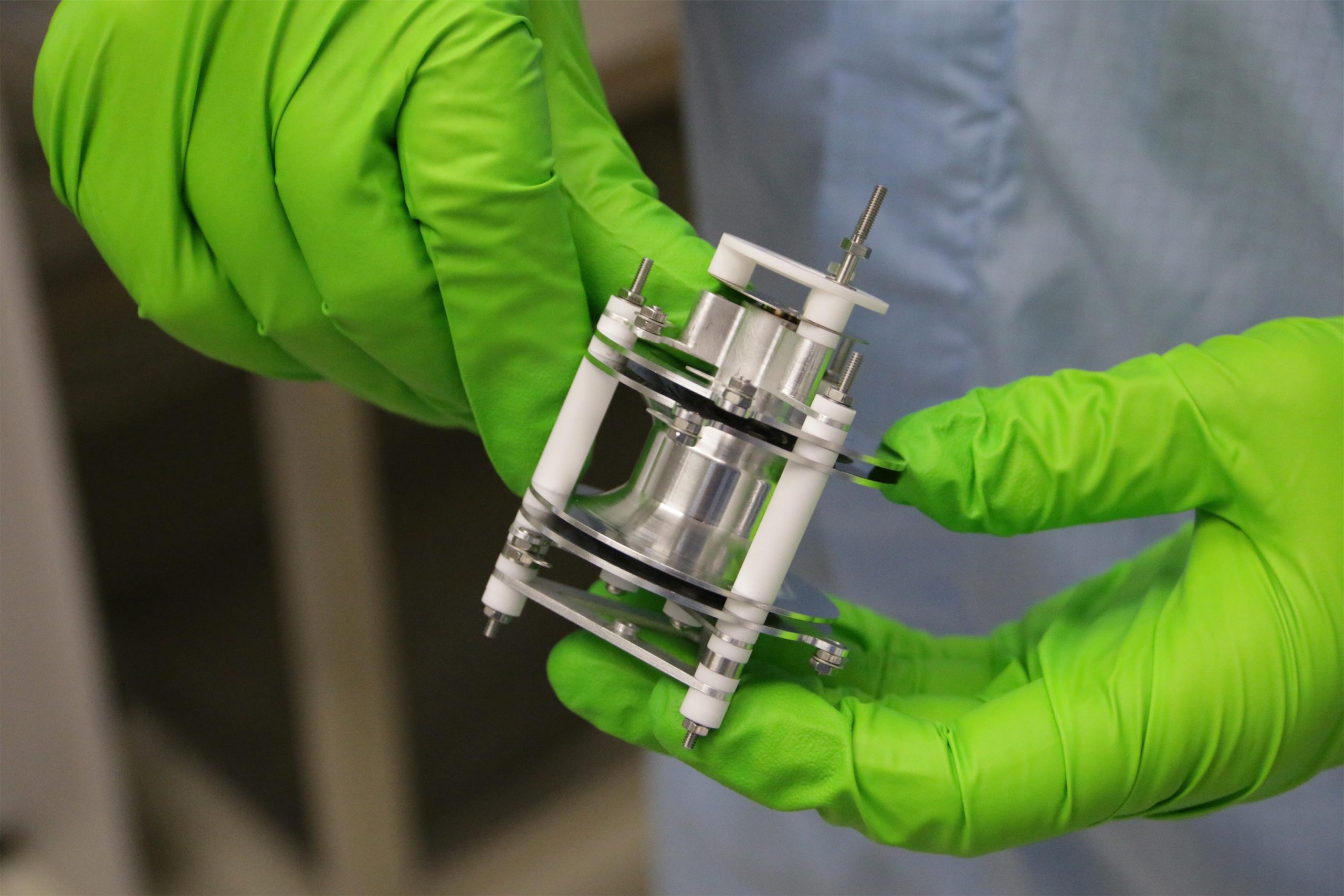
    Ion Trap Mass Spectrometer
    The Ion Trap Mass Spectrometer (ITMS) imaged here is a part of the Exospheric Mass Spectrometer (EMS) instrument that will detect lunar volatiles from both the extremely thin atmosphere of the Moon and from the lunar soil. Credit: The Open University

    A new sensor to identify lunar volatiles is being assembled in a clean room at The Open University, UK ahead of some exciting missions to the Moon.

    The Ion Trap Mass Spectrometer (ITMS) imaged above is part of an instrument that will detect lunar volatiles from both the extremely thin atmosphere of the Moon and from the lunar soil.

    Its name is the Exospheric Mass Spectrometer (EMS), a key element of NASA’s Astrobotic mission that will fly to the Valles Mortis region of the Moon in 2021.

    The sensor is also part of ESA’s Prospect mission to study lunar water ice on board the Russian Luna-27 lander, set for launch in 2025. The platform will sample potential resources on the Moon to prepare technologies for future sustainable exploration.

    Developed by scientists at The Open University under an ESA contract, ITMS is based on an ‘ion trap’, an ingenious device that allows researchers to identify and quantify sample atoms and molecules through a technique known as mass spectrometry.

    Lunar molecules entering the sensor are bombarded by electrons emitted by a heated wire to create ions. The resulting ions are stored within an electric field formed by a set of precisely-shaped electrodes. The ions are then released from this ‘trap’ in order of increasing mass/charge ratio into the detector that identifies and quantifies their chemical makeup.

    In order to perform these sensitive measurements, the sensor must be assembled and kept in extremely clean conditions.

    Scientists at Open University are excited about the science they hope to get from those lunar missions.

    “For the first time we can measure how, and in what forms, water is distributed across, above and below the surface.  We can test theories of how the Moon got its water. And we can assess the availability of water ice and other resources for supporting future human presence on the Moon,” explains Simeon Barber, EMS science lead at Open University.

    “We expect more flight opportunities for lunar exploration missions in the future, and this project is in many ways a pathfinder for fast track payload developments,” says Roland Trautner, who manages the developments on the ESA side.

    Never miss a breakthrough: Join the SciTechDaily newsletter.
    Follow us on Google and Google News.

    European Space Agency Moon
    Share. Facebook Twitter Pinterest LinkedIn Email Reddit

    Related Articles

    Building a Moon Base Using Astronaut Waste in Lunar Concrete

    Lunar Gateway Orbital Outpost Experiment Will Monitor Radiation in Deep Space

    Mining the Moon: Preparing a Lunar Drill and Sample Analysis Package

    NELIOTA Project Views Flashes of Light Across the Surface of the Moon

    Moon Bricks Will Pave the Way for Human Space Exploration

    Can Lunar Dust Jeopardise Human Health?

    Moon Village – How to Build a Permanent Base Station on the Moon

    New Mosiac of the Moon’s South Pole

    Weather Satellite Captures Image of “Blue” Moon

    Leave A Reply Cancel Reply

    • Facebook
    • Twitter
    • Pinterest
    • YouTube

    Don't Miss a Discovery

    Subscribe for the Latest in Science & Tech!

    Trending News

    Scientists Discover How Coffee Impacts Memory, Mood, and Gut Health

    Why Did the Neanderthals Disappear? Scientists Reveal Humans Had a Hidden Advantage

    Physicists Propose Strange Experiment Where Time Goes Quantum

    Magnesium Magic: New Drug Melts Fat Even on a High-Fat, High-Sugar Diet

    Weight-Loss Drugs Like Ozempic May Come With an Unexpected Cost

    Mezcal “Worm” in a Bottle Mystery: DNA Testing Reveals a Surprise

    New Research Reveals That Your Morning Coffee Activates an Ancient Longevity Switch

    This Is What Makes You Irresistible to Mosquitoes

    Follow SciTechDaily
    • Facebook
    • Twitter
    • YouTube
    • Pinterest
    • Newsletter
    • RSS
    SciTech News
    • Biology News
    • Chemistry News
    • Earth News
    • Health News
    • Physics News
    • Science News
    • Space News
    • Technology News
    Recent Posts
    • Harvard Scientists Reveal Secret Structure Behind How You Smell
    • Scientists Just Discovered the Hidden Trick That Keeps Your Cells Alive
    • This Simple Movement Could Be Secretly Cleaning Your Brain
    • Male Birth Control Breakthrough: Scientists Find Way To Turn Sperm Production Off and Back On
    • A Common Vitamin Could Hold the Key to Treating Fatty Liver Disease
    Copyright © 1998 - 2026 SciTechDaily. All Rights Reserved.
    • Science News
    • About
    • Contact
    • Editorial Board
    • Privacy Policy
    • Terms of Use

    Type above and press Enter to search. Press Esc to cancel.