
Close Menu
    Facebook X (Twitter) Instagram
    SciTechDaily
    • Biology
    • Chemistry
    • Earth
    • Health
    • Physics
    • Science
    • Space
    • Technology
    Facebook X (Twitter) Pinterest YouTube RSS
    SciTechDaily
    Home»Chemistry»Shape and Dynamic Nature of Carbon-Based Molecules Are Different Than Scientists Thought
    Chemistry

    Shape and Dynamic Nature of Carbon-Based Molecules Are Different Than Scientists Thought

    By Durham UniversityMarch 13, 2023No Comments3 Mins Read
    Facebook Twitter Pinterest Telegram LinkedIn WhatsApp Email Reddit
    Share
    Facebook Twitter LinkedIn Pinterest Telegram Email Reddit
    Shape and Dynamic Nature of Molecules
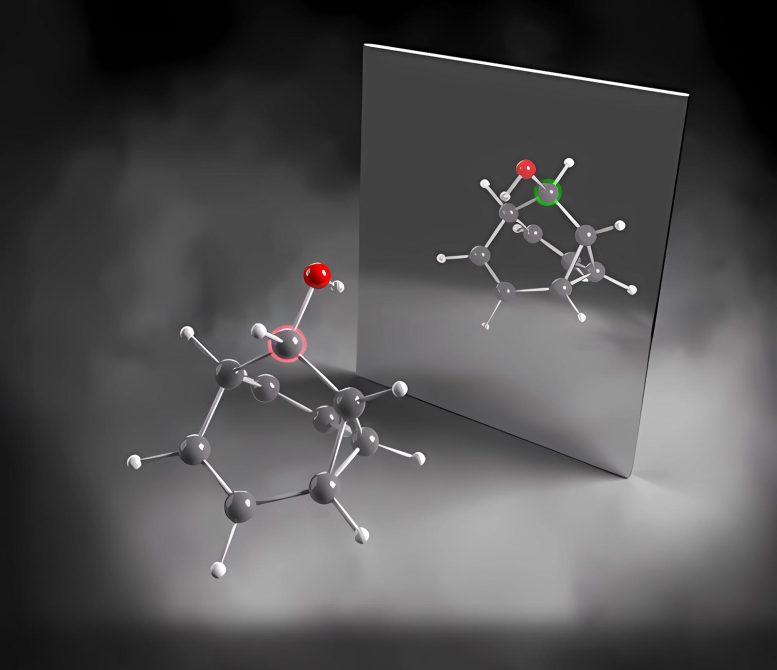
    In a recent study, scientists have shown that carbon-based molecules possess significantly greater dynamism than previously believed. Credit: Durham University

    Researchers at Durham and York universities have discovered that carbon-based molecules can be dynamic, overturning the long-held belief that their chiral forms are rigid.

    Scientists have demonstrated in a new study that carbon-based molecules can be much more dynamic than previously thought.

    When a carbon atom forms four bonds to different groups, the molecule can exist in two mirror-image forms. These mirror-image forms are vital in medicine because they have different biological activities.

    Usually, it is impossible to interconvert between these ‘enantiomers’ because to do so would require a bond to be broken, a process that needs too much energy.

    The researchers from Durham University and the University of York demonstrated that if the chiral center was part of a dynamic molecular cage structure, then a simple rearrangement of the cage could lead to the inversion of the mirror image form of the molecule.


    An animation by @SciCommStudios showing the dynamic inversion of sp3-C stereochemistry in fluxional barbaralane and their metal complexes.

    In this way, carbon-based stereochemistry, which is normally considered to be fixed and rigid, became dynamic, fluxional, and responsive – a new paradigm in carbon-centered chirality.

    The findings will be published today (March 13, 2023) in the journal Nature Chemistry.

    The molecular cage has nine carbons atoms in its structure, which are held together by a pair of carbon–carbon double bonds and a three-membered cyclopropane ring. This combination of bonds allows some of the bonds in the structure to trade places with one another spontaneously.

    Rapid and Adaptive Structural Changes

    Project lead investigator, Dr. Aisha Bismillah of Durham University, said: “Our dynamic carbon cages change their shape extremely quickly. They hop back and forth between their mirror-image structures millions of times a second. Seeing them adapt to match changes in their environment is truly remarkable.”

    Further to uncovering this unique dynamic form of stereochemical interconversion, the researchers demonstrated that the preferences of the cage could be transmitted to nearby metal centers, opening the possibility that this type of responsive chirality might find uses in catalysis, and the synthesis of chiral molecules for biomedical applications.

    Reflecting on the way in which these results overturn established ideas, Dr. Paul McGonigal of University of York, said: “The way our dynamic carbon cage interacts with other molecules and ions is fascinating. The cage adapts, giving the mirror-image structure with the ‘best fit’.

    “We hope, in due course that this intriguing bonding concept will be found to apply in other contexts, and potentially used to underpin new applications for more dynamic molecular materials.”

    Reference: “Control of dynamic sp3-C stereochemistry” by Aisha N. Bismillah, Toby G. Johnson, Burhan A. Hussein, Andrew T. Turley, Promeet K. Saha, Ho Chi Wong, Juan A. Anguilar, Dmitry S. Yufit and Paul R. McGonigal, 13 March 2023, Nature Chemistry.
    DOI: 10.1038/s41557-023-01156-7

    The research has been funded by the Engineering and Physical Sciences Research Council (EPSRC) and Leverhulme Trust.

    Never miss a breakthrough: Join the SciTechDaily newsletter.
    Follow us on Google and Google News.

    Durham University Molecules
    Share. Facebook Twitter Pinterest LinkedIn Email Reddit

    Related Articles

    Yale Chemists Synthesize Elusive Anticancer Molecules

    Peeling Back the Chemical Unknown: Scientists Are on the Hunt for the Other 99 Percent

    Astonishing – Scientists Develop Artificial Molecules That Behave Like Real Ones

    Scientists Unravel the Formation of Classic Soccer Ball-Shaped Molecules

    Scientists Structurally Analyze Highly Reactive Anionic Pt(0) Complexes for the First Time

    “Mirror-Image” Molecules Open the Door to Better Cancer Treatments

    “Unprecedented” Control – Scientists Twist Chemical Bonds Beyond Their Limits

    MIT Researchers Propose a New Way To Create Synthesizable Molecules

    Robotic Platform Powered by AI Automates Molecule Production

    Leave A Reply Cancel Reply

    • Facebook
    • Twitter
    • Pinterest
    • YouTube

    Don't Miss a Discovery

    Subscribe for the Latest in Science & Tech!

    Trending News

    Even Occasional Binge Drinking May Triple Liver Damage Risk

    Liftoff! NASA’s Artemis II Launch Sends Astronauts Around the Moon for First Time in 50 Years

    Scientists Discover New Way To Eliminate “Zombie Cells” Driving Aging

    This New Quantum Theory Could Change Everything We Know About the Big Bang

    This One Vitamin May Help Protect Your Brain From Dementia Years Later

    Stopping Weight-Loss Drugs Like Ozempic Can Quickly Erase Heart Benefits

    A 500-Million-Year-Old Surprise Is Forcing Scientists to Rethink Spider Evolution

    Coffee and Blood Pressure: What You Need To Know Before Your Next Cup

    Follow SciTechDaily
    • Facebook
    • Twitter
    • YouTube
    • Pinterest
    • Newsletter
    • RSS
    SciTech News
    • Biology News
    • Chemistry News
    • Earth News
    • Health News
    • Physics News
    • Science News
    • Space News
    • Technology News
    Recent Posts
    • A Strange Quantum Effect Could Power Future Electronics Without Batteries
    • This Breakthrough Solar Panel Generates Power From Both Sunlight and Raindrops
    • Greenland’s Ice Is Melting Faster Than Ever, and Scientists Are Alarmed
    • NASA Artemis II Nears Dramatic Moon Flyby With Record-Breaking Moment Ahead
    • Scientists Uncover New Metabolic Effects Beyond Weight Loss of Mounjaro
    Copyright © 1998 - 2026 SciTechDaily. All Rights Reserved.
    • Science News
    • About
    • Contact
    • Editorial Board
    • Privacy Policy
    • Terms of Use

    Type above and press Enter to search. Press Esc to cancel.