
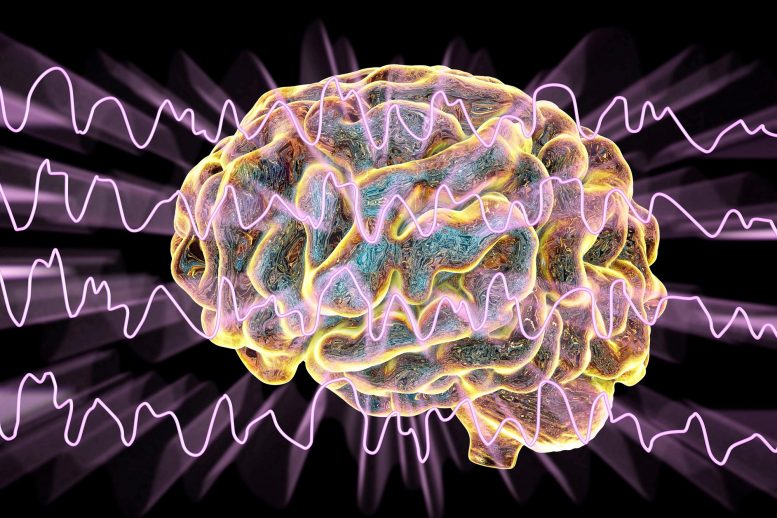
Scientists have discovered that measuring brainwaves produced during REM sleep can predict whether a patient will respond to treatment for depression. This enables patients to switch to a new treatment rather than continue the ineffective treatment (and the depression) for weeks without knowing the outcome.
As study leader, Dr. Thorsten Mikoteit said, “In real terms, it means that patients, often in the depths of despair, might not need to wait weeks to see if their therapy is working before modifying their treatment.” This work is presented at the ECNP Congress.
Around 7% of adults suffer from depression (also known as MDD, Major Depression Disorder) in any one year. It’s a huge health burden, costing economies hundreds of billions of Euros/dollars each year. Around 27m European and 17m Americans suffer from MDD every year.
The standard treatment is antidepressants, normally Selective Serotonin Reuptake Inhibitors (SSRI’s), such as Prozac and Fluoxetine. However, these can take weeks or months to show an effect, meaning that patients often have to face the depth of their depression for several weeks before even knowing if the treatment they are taking will work. Around 50% of sufferers don’t respond to initial antidepressant treatment, which means that after four weeks of ineffective treatment, doctors have to change treatment strategy, and again have to wait for response for another four weeks. Being able to predict the response as early as after one week of treatment would be of huge benefit to depressed patients, and would shorten the treatment response time.
A team led by Dr. Thorsten Mikoteit, of the University of Basel, has conducted a randomized controlled trial on 37 patients with Major Depression. All were treated with antidepressants, but 15 were assigned to the control group, while the remaining 22 had their details given to the psychiatrist in charge of treatment. All then had their brainwaves monitored during REM* sleep (technically, this was a measurement of prefrontal theta cordance in REM sleep). The psychiatrists in charge of the treatment group patients were under instructions to interpret the brainwaves to see if the treatment was working, and if not to change the treatment. The overall aim was to see a 50% reduction in symptoms of depression, measured by the standard Hamilton Depression Rating Scale.
Doctors tested patients as early as one week after starting treatment, to see if the brainwaves indicated that the antidepressant treatment was likely to work. Those patients who were unlikely to have successful treatment were immediately switched to a different treatment. After 5 weeks it was found that 87.5% of these patients had an improved response, as opposed to just 20% in the control group.
Thorsten Mikoteit said:
“This is a pilot study, but nevertheless it shows fairly significant improvements. We have been able to show that by predicting the non-response to antidepressants we were able to adapt the treatment strategy more or less immediately: this enables us to significantly shorten the average duration between the start of antidepressant treatment and response, which is vital, especially for seriously depressed patients.
It needs to be repeated with a larger group of patients to make sure that the results are consistent. Patients need to be in a situation where their REM sleep can be monitored, so this requires more care than just giving the pill and waiting to see what happens. This means that the treatment monitoring will be more expensive, although we anticipate that will be offset by being able to give the right treatment much earlier. We are working on ways of streamlining this.
What it does mean is that we may be able to treat the most at-risk patients, for example those at risk of suicide, much quicker than we can currently do. If this is confirmed to be effective, it will save lives”
Commenting, Professor Catherine Harmer, University of Oxford and ECNP Executive Committee member, said:
“Most of the time, patients need to wait for around 4 weeks before they can tell if they are responding to a particular antidepressant or not. This is a hugely disabling and lengthy process and often a different treatment then needs to be started. The study results presented by Mikoteit are interesting and suggest that it may be possible to tell if a treatment is working much more quickly – even after a week of treatment – by using a physiological measure of response (REM sleeping pattern). If this is replicated in larger, blinded study then it would have enormous implications for the future treatment of individuals with depression.”
Professor Harmer was not involved in this work, it is an independent comment.
*REM sleep is “Rapid Eye Movement” sleep. This is a normal period of sleep when one’s eyes move rapidly from side to side. People tend to dream more during REM sleep.
Never miss a breakthrough: Join the SciTechDaily newsletter.
Follow us on Google and Google News.