
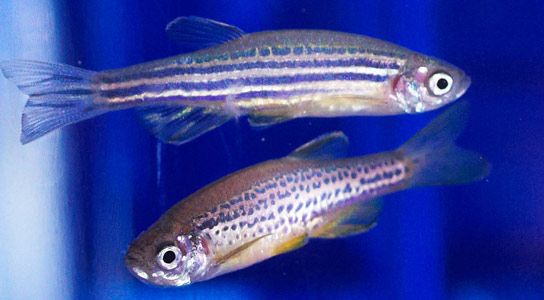
A newly published study from the Max Planck Institute details how interferon gamma plays a key role in the development of blood stem cells during the early phase of embryonic development.
In the early stage of embryonic development, stem cells with defined tasks, including blood-forming stem cells, gradually emerge. Scientists from the Max Planck Institute for Heart and Lung Research in Bad Nauheim have now discovered how blood stem cells in the embryo arise: interferon gamma, a molecule that is normally involved in inflammatory processes, also plays a key role in the development of this cell type during the early phase of embryonic development. In the future, this knowledge could significantly improve the laboratory production of such blood stem cells.
Stem cells replace dead cells and thus maintain the function of the body’s organs. They are also essential for regenerating organs damaged by disease. Blood-forming stem cells are a special case: As most blood cells have a relatively short lifespan, blood stem cells have to generate replacement cells continuously, even in the healthy organism.
Up to now it was known that blood stem cells emerge in the early stages of embryonic development from blood vessel cells. However, the molecular mechanisms underlying the process were largely unexplained. A working group headed by Didier Stainier at the Max Planck Institute for Heart and Lung Research has now found that interferon gamma, a signaling molecule normally involved in inflammation and infection, also plays a key role in the formation of blood stem cells in embryos.
In the study performed on zebrafish, the scientists in Bad Nauheim genetically modified animals so that the embryos produced increased amounts of interferon gamma from a specific point in time. “We found that such animals with overexpression of interferon gamma produce more blood stem cells,” says Suphansa Sawamiphak, first author of the study. Conversely, the number of blood stem cells was found to be significantly reduced in embryos in which the receptor for interferon was switched off. “Another important finding of our study is that interferon doesn’t accelerate cell division of existing blood cells, but instead stimulates the development of stem cells from blood-vessel cells,” according to Sawamiphak.
In further experiments, the researchers were able to establish a link between the effect of interferon gamma on the formation of blood stem cells and other known factors. “Interferon gamma does not act independently but is part of a chain of signals. Our data suggests that flowing blood, in concert with a regulatory element known as the NOTCH signaling pathway, triggers the production of interferon. This in turn stimulates stem cell production,” explains Sawamiphak.
The recently elucidated mechanism came as a surprise to the scientists: “In the adult body, interferon gamma has the opposite effect, since it appears to have a negative impact on blood stem cells during an infection or inflammatory reaction,” says Didier Stainier, Director at the Max Planck Institute. One explanation for this apparent contradiction could be that, in the course of evolution, this fundamental mechanism has been recruited in the adult body for a different purpose.
The results of the study could prove valuable for future stem cell research: “To date, blood stem cells have been produced in the laboratory from embryonic stem cells or other stem cells by means of elaborate procedures, sometimes with very low yields. Our study could help optimize current cell-differentiation procedures,” says Stainier. The goal is to facilitate access to blood stem cells and simplify their production.
Reference: “Interferon Gamma Signaling Positively Regulates Hematopoietic Stem Cell Emergence” by Suphansa Sawamiphak, Zacharias Kontarakis and Didier Y.R. Stainier, 8 December 2014, Developmental Cell.
DOI: 10.1016/j.devcel.2014.11.007
Never miss a breakthrough: Join the SciTechDaily newsletter.
Follow us on Google and Google News.