
Researchers at the SLAC National Accelerator Laboratory are set to test an experiment that mimics what happens when incredibly energetic particles hit our atmosphere.
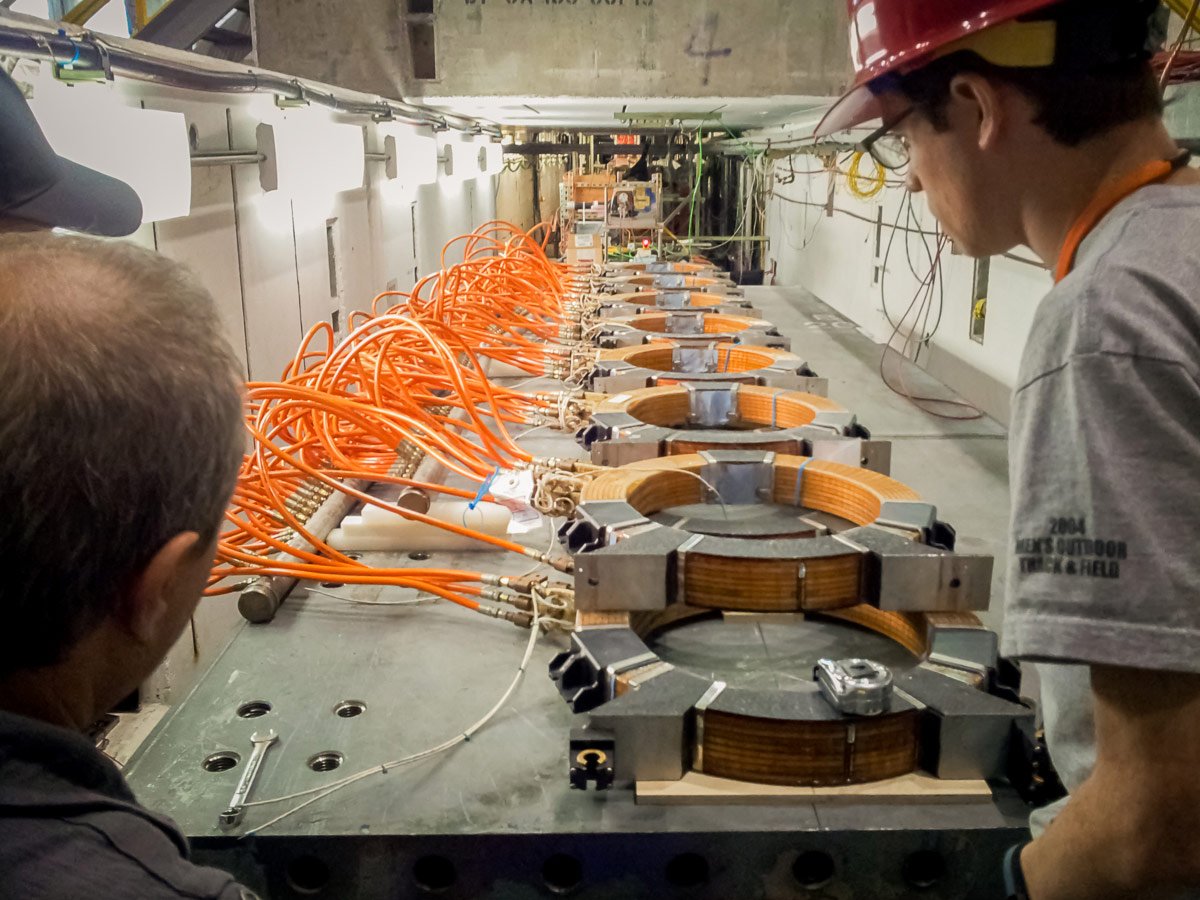
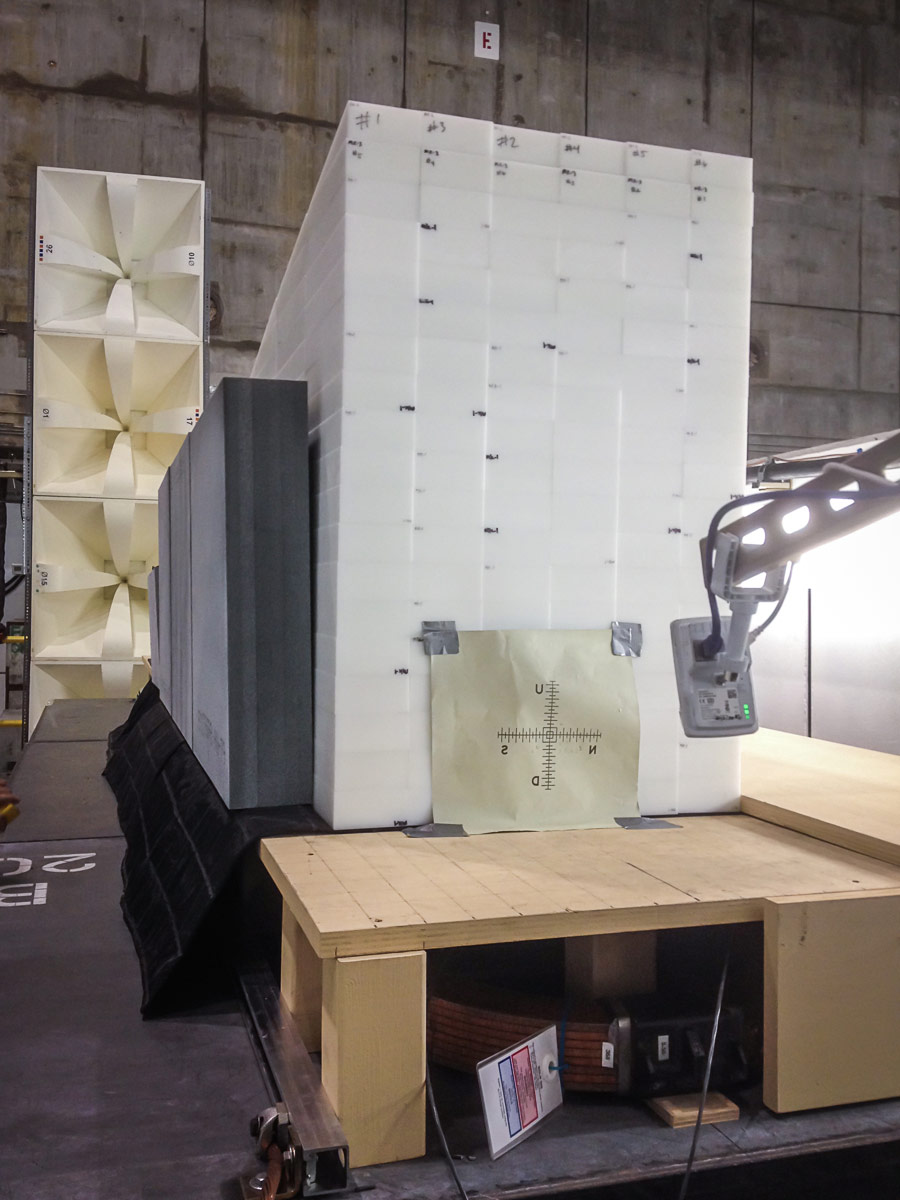
In a SLAC test facility, scientists have set the stage for an experiment that mimics what happens when incredibly energetic particles hit our atmosphere. The players include the lab’s historic linear accelerator, a 13-foot-long, 3-D jigsaw puzzle built from 3,000 pounds of white plastic blocks, giant radio antennas that once floated over Antarctica, and powerful magnetic coils, two of which recently made a cameo appearance on The Big Bang Theory.
While the experiment is part of ANITA, the Antarctic Impulse Transient Antenna project that has been sending balloon-borne instruments into the upper atmosphere since 2006, the results could benefit a broad range of other experiments.
“We’re looking for the cosmic particle accelerators responsible for the most energetic particles ever detected,” said Konstantin Belov, a research physicist from the University of California Los Angeles and principal investigator of the experiment at SLAC. These tiny particles, called ultra-high-energy cosmic rays, originate far beyond the borders of our galaxy, but can – and have – hit Earth’s atmosphere with as much energy as a baseball traveling at 60 mph.
“These particles are far more powerful than anything created in an accelerator built by humans,” said Belov. “And since they’re too powerful to be deflected by the magnetic fields of any galaxies or even galaxy clusters they pass, they should point directly back to their origin.” That could be a giant black hole at the heart of a primordial galaxy or an even more exotic phenomenon such as a magnetic monopole or cosmic string, he said.
Setting the Scene
This is not the first time SLAC has had a role in ANITA – in 2006 SLAC and ANITA scientists used a 10-ton block of ice to create a mini-Antarctic that enabled them to verify that the signals they were after could be detected and that their antennas would do the job.
This time, the researchers are simulating what happens when an ultra-high-energy cosmic ray particle slams into the upper atmosphere, collides with a random air molecule, and produces an “air shower” – a cascade of secondary particles and different types of radiation that shower down toward the ground.
In past forays into the upper atmosphere in 2006 and 2008, ANITA has sought a specific type of ultra-high-energy particle: neutrinos. Neutrinos are not the only possible culprits, though; many other types of particles could be at the heart of these powerhouse rays, including protons, heavier nuclei, and even photons. That’s one of the mysteries the researchers seek to solve.
Now the team is proposing to expand their net by using radio waves emitted by air showers to reconstruct the showers of particles pouring through the atmosphere.
Cast and Crew
First, though, said Belov, they need to check the scientific models behind computer simulations that predict the radio pulses the showers should emit, and make sure they agree with observations.
That’s where the magnets, plastic blocks, radio antennas, and accelerated electrons in SLAC’s End Station Test Beam Facility come in. The researchers are using them to create artificial air showers that can be compared to simulated air showers built from their theoretical models.
Electrons accelerated to high speeds in the linac play the role of secondary particles in an air shower. The plastic blocks are stand-ins for the Earth’s atmosphere, and a series of magnetic coils simulates the Earth’s magnetic field.
As the electrons hit the plastic in this magnetic field, they give off radio waves, which are measured by antennas located several feet away on the far wall.
Belov said results look good so far, with the radio waves they’re detecting following theoretical models. He said he appreciates the hard work and enthusiasm shown by staff physicists and accelerator operators as they helped turn the facility into the set for this unusual experiment.
“When we turned on the magnets we saw a beautiful signal,” he said, “in perfect agreement with what we predicted. And this is not just for ANITA. Ground-based arrays of radio detectors can also take advantage of it to study ultra-high-energy particles.”
Stellar Performance
Belov cautioned that there’s still some work to do before researchers will be able to use radio waves to completely map air showers, but they’ve made a very good start, and he hopes the ANITA flight scheduled for the next Antarctic summer can take advantage of the method.
In fact, he said, the team at SLAC has yet to hit the most difficult part of their experiment.
“We’ll need to find enough people to take it all apart,” he said. Belov knows a performance isn’t really over until you strike the stage.
Never miss a breakthrough: Join the SciTechDaily newsletter.
Follow us on Google and Google News.