

A new study reveals that social media and digital dating platforms significantly impact young adults’ decisions about choosing life partners, leading to confusion and potential changes in relationship dynamics and evolutionary mating behaviors.
A recent sociological study reveals that the majority of young adults surveyed feel uncertain about their dating options. Preliminary analysis indicates that over half of these young individuals experience confusion when choosing life partners, with women more likely than men to report this uncertainty.
Due to the pervasiveness of social media and digital dating in everyday lives, humans are now exposed to many more potential mates than ever before, but the availability of popular dating apps and ease of photo enhancement can distort the reality of the available pool of dating candidates.
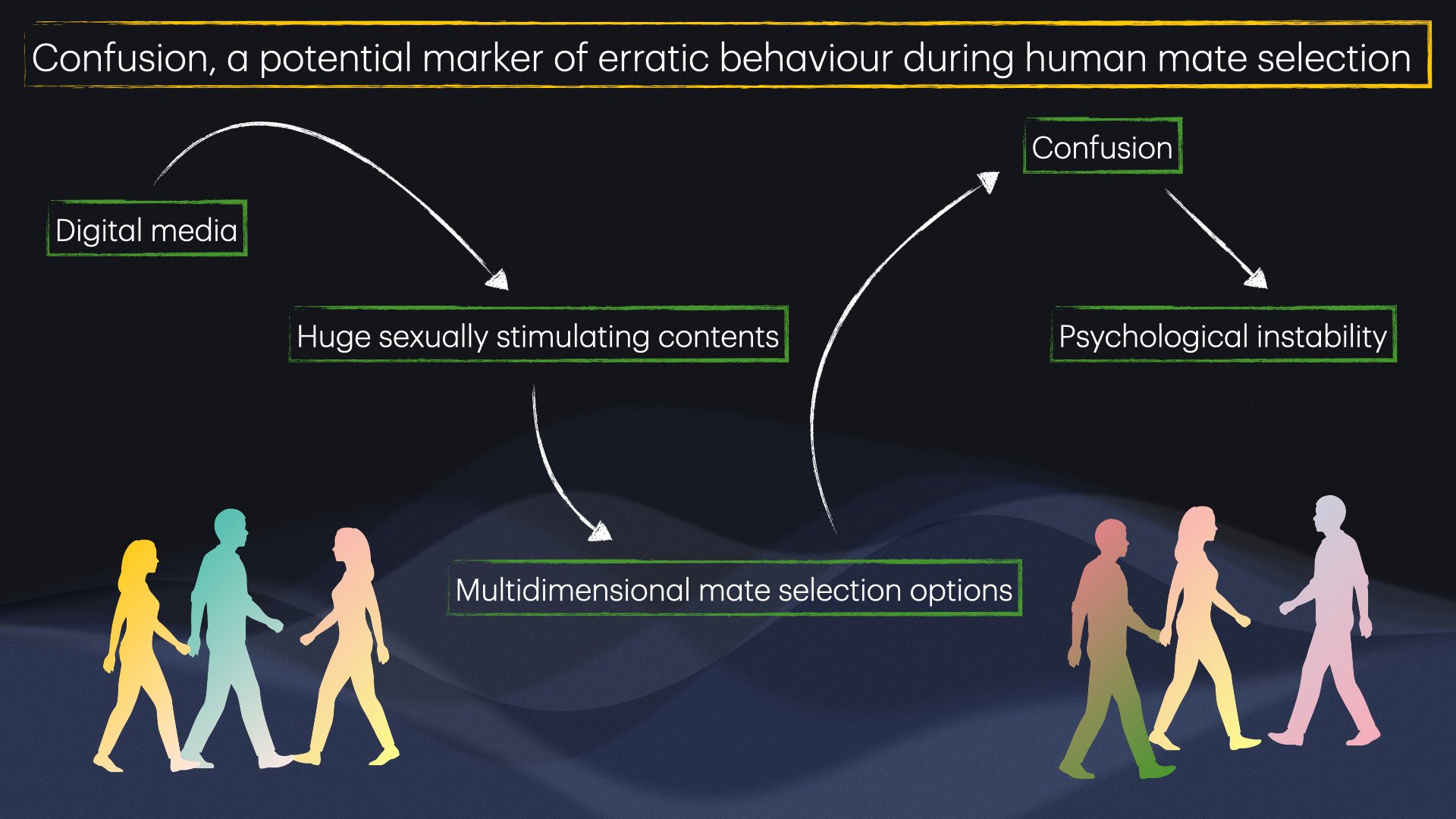
“Human mate selection is a complicated psychological process, which is effectively influenced by multiple societal factors including appearance, personality, and financial situation,” says Chayan Munshi, Founder and Executive Director of the Ethophilia Research Foundation in Santiniketan, India. “More recently, this has become significantly influenced by social media where constant exposure to sexually stimulating or attractive content creates certain perceptions of reality in the young mindset, which ultimately creates confusion in terms of selecting potential mating partners.”
Observational Studies and Questionnaires
The Ethophilia Research Foundation is a research group focused on behavioral biology research and public health, who has recently started to investigate how the digitalization of society is regulating human behavior. “This project started with an extensive observation of human behavioral patterns regarding partner choice,” says Mr. Munshi. “This observational study was followed by direct interactions with a young population using an open questionnaire.”
The preliminary results of this ongoing project come from a survey of young adults in India, with most respondents being between 18 and 30 years old. Further analysis of the results is underway, with an expanded survey in preparation to include more specific lines of inquiry.
The questionnaire included questions related to romantic partner selection, such as “Do you feel confused when selecting a life partner?”, “What are your criteria for selecting a life partner?”, “Do you still look for other partners if you are already in a stable relationship?” and “Do you like to switch to a ‘better option’ when selecting a life partner?”.
These initial results show that the perception of potential mate availability may be skewing how people judge their life partner options, even while in existing relationships. “For instance, impulsiveness is significantly exhibited, and there is a decrease in in-person social interactions,” says Mr Munshi. “This is exposing confusion while people search for a mating partner and can manifest complexities in maintaining a relationship.”
Mr Munshi expects that this ongoing research will help to build a better understanding of how mate selection is evolving in humans. “Our hypothesis strongly indicates that the ‘pleasure index’ or ‘adrenaline rush’ of relationships is taking more prime importance in the younger generation over long-term stability,” he says. “It is alarming that impulsiveness or confusion can lead to instability in the human relation-maintaining behavior, which is actually affecting the normal social behavior in humans.”
“The pattern now is notable enough to indicate that this might modify the social norms of partner choice behavior in young humans, which might have a significant effect on the brain-behavior circuit,” says Mr Munshi. “In the long run, this may eventually alter the fundamental protocol of evolutionary mating strategies.”
Meeting: SEB Annual Conference 2024
Never miss a breakthrough: Join the SciTechDaily newsletter.
Follow us on Google and Google News.
1 Comment
Too many fish in the sea? Pretend that there are far less!