
Close Menu
    Facebook X (Twitter) Instagram
    SciTechDaily
    • Biology
    • Chemistry
    • Earth
    • Health
    • Physics
    • Science
    • Space
    • Technology
    Facebook X (Twitter) Pinterest YouTube RSS
    SciTechDaily
    Home»Space»SOFIA Reveals How Magnetic Fields Help Feed a Supermassive Black Hole
    Space

    SOFIA Reveals How Magnetic Fields Help Feed a Supermassive Black Hole

    By Anashe Bandari, NASAFebruary 23, 2022No Comments4 Mins Read
    Facebook Twitter Pinterest Telegram LinkedIn WhatsApp Email Reddit
    Share
    Facebook Twitter LinkedIn Pinterest Telegram Email Reddit
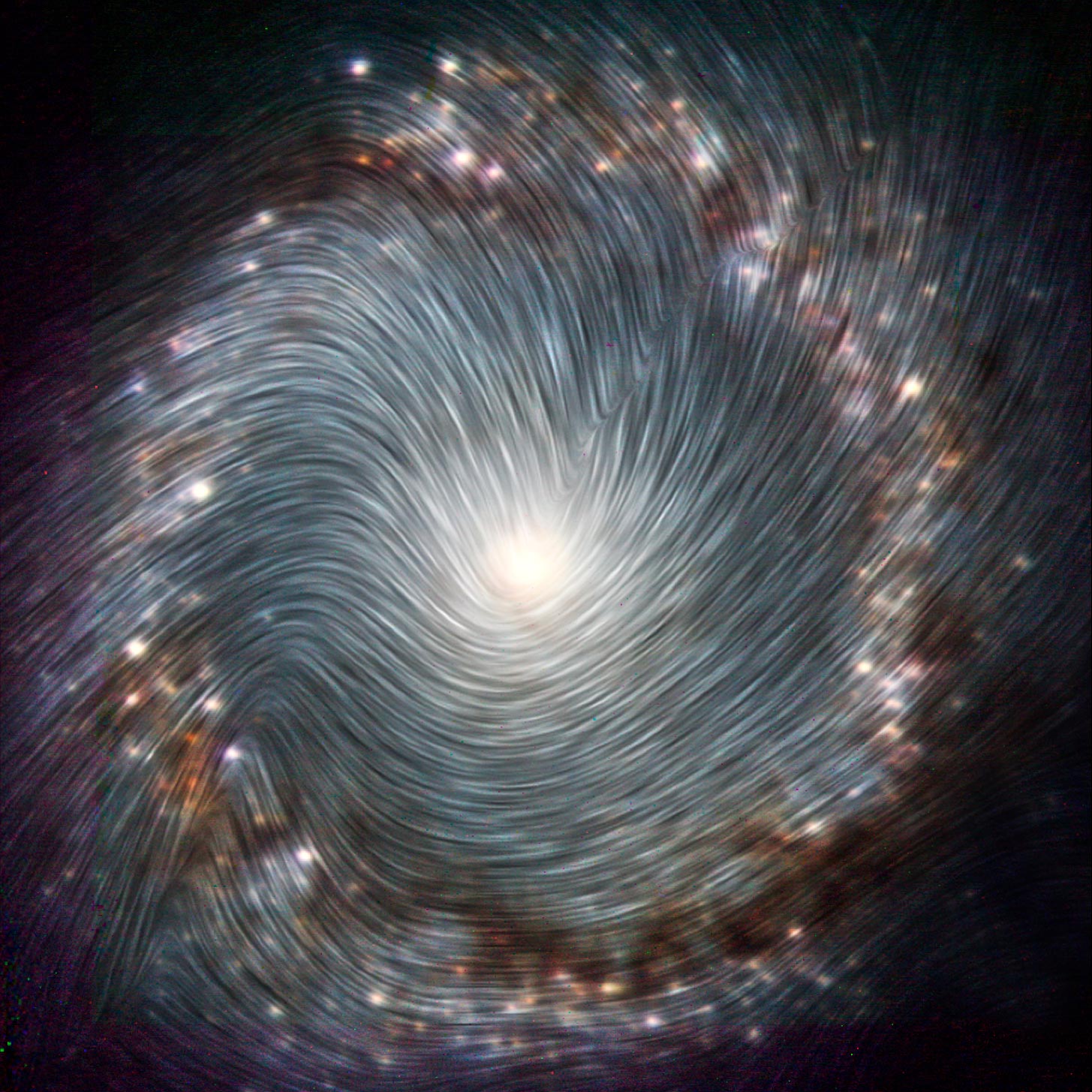
    NGC 1097 Magnetic Field
    Spiral galaxy NGC 1097 magnetic field

    SOFIA observations show that magnetic fields assist gravity in delivering material to black holes, contributing to a galaxy’s death.

    A black hole at the center of a galaxy plays a role in the galaxy’s death, eating up their surrounding dust and gas and not leaving enough matter behind for new stars to form. Gravity alone, however, is not strong enough to account for all this material transfer on its own.

    Theories have proposed that magnetic fields could be helping gravity in feeding black holes, spooning matter in their direction. With the help of observations from the Stratospheric Observatory for Infrared Astronomy, or SOFIA, these theories have now been confirmed. By mapping out the shape of the magnetic fields in the central region of NGC 1097, a spiral galaxy, researchers discovered the magnetic fields assist in directing dust and gas toward the supermassive black hole at the galaxy’s center.
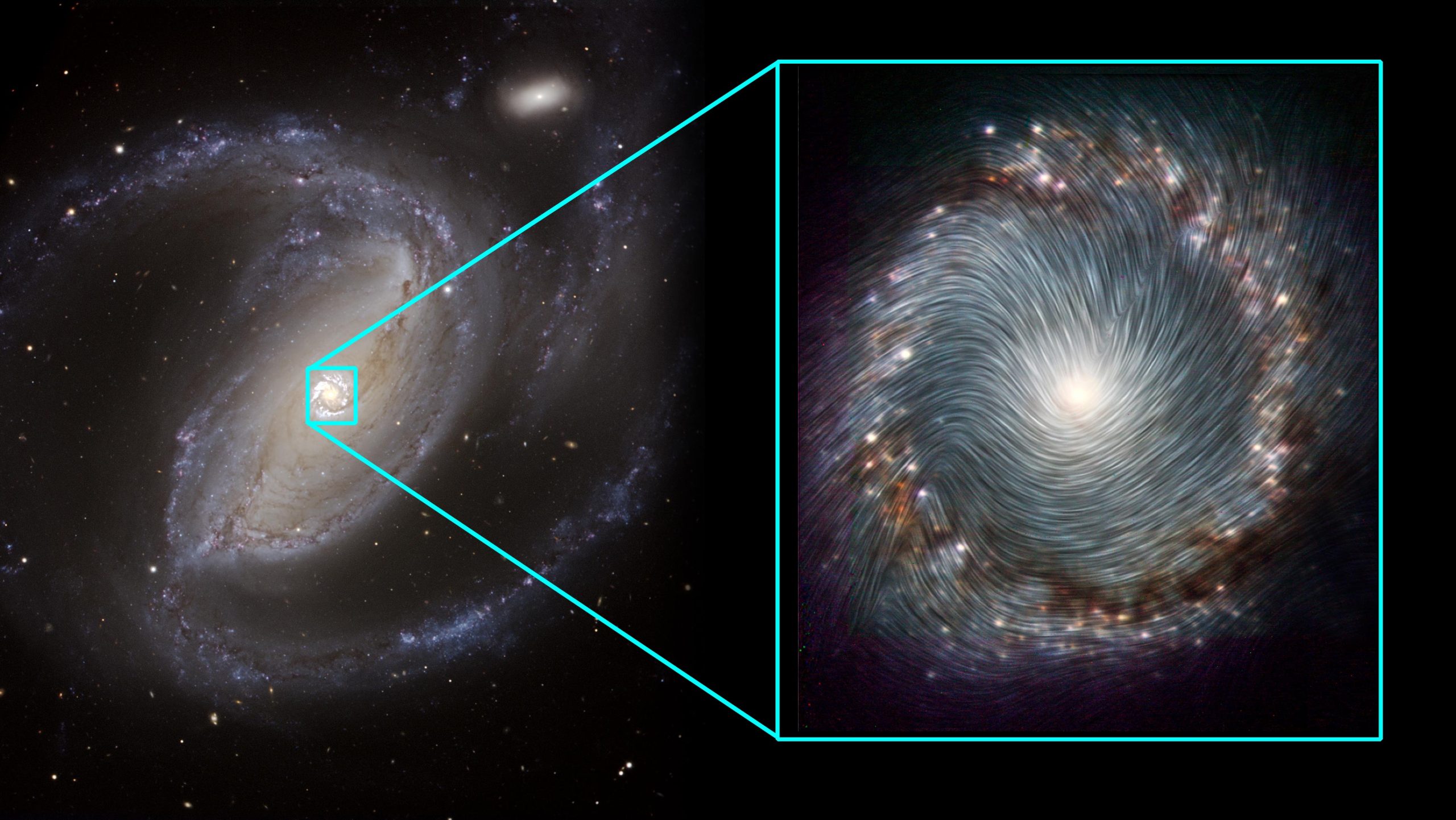
    Spiral Galaxy NGC 1097 Magnetic Field
    Gas streams outside and within the starburst ring (colorscale) of the spiral galaxy NGC 1097 follow the magnetic field, feeding the supermassive black hole with matter from the galaxy. Credit: NGC 1097: ESO/Prieto et al. (colorscale)

    “We can, for the first time, analyze the effect of the magnetic field in the gas flows toward [the central] star-forming regions using SOFIA and the galaxy’s center using radio polarimetric observations,” said Enrique Lopez-Rodriguez, lead author on the recent paper describing NGC 1097’s magnetic fields that was published in The Astrophysical Journal.

    NGC 1097 has a region of intense star formation toward its center, known as a starburst ring. Because looking at magnetic fields in very dense areas is one of SOFIA’s strengths, Lopez-Rodriguez and his team used SOFIA to probe the dense regions merging into the starburst ring. This was complemented by radio polarimetric observations within the starburst ring, a different type of astronomical observation better suited for studying sparse regions.

    The researchers found a striking difference in the morphology of the magnetic fields between the two regions. The SOFIA observations show the magnetic field feeding matter into the starburst ring, while the radio polarimetric observations show the magnetic field spiraling into the galaxy’s center, feeding the supermassive black hole.
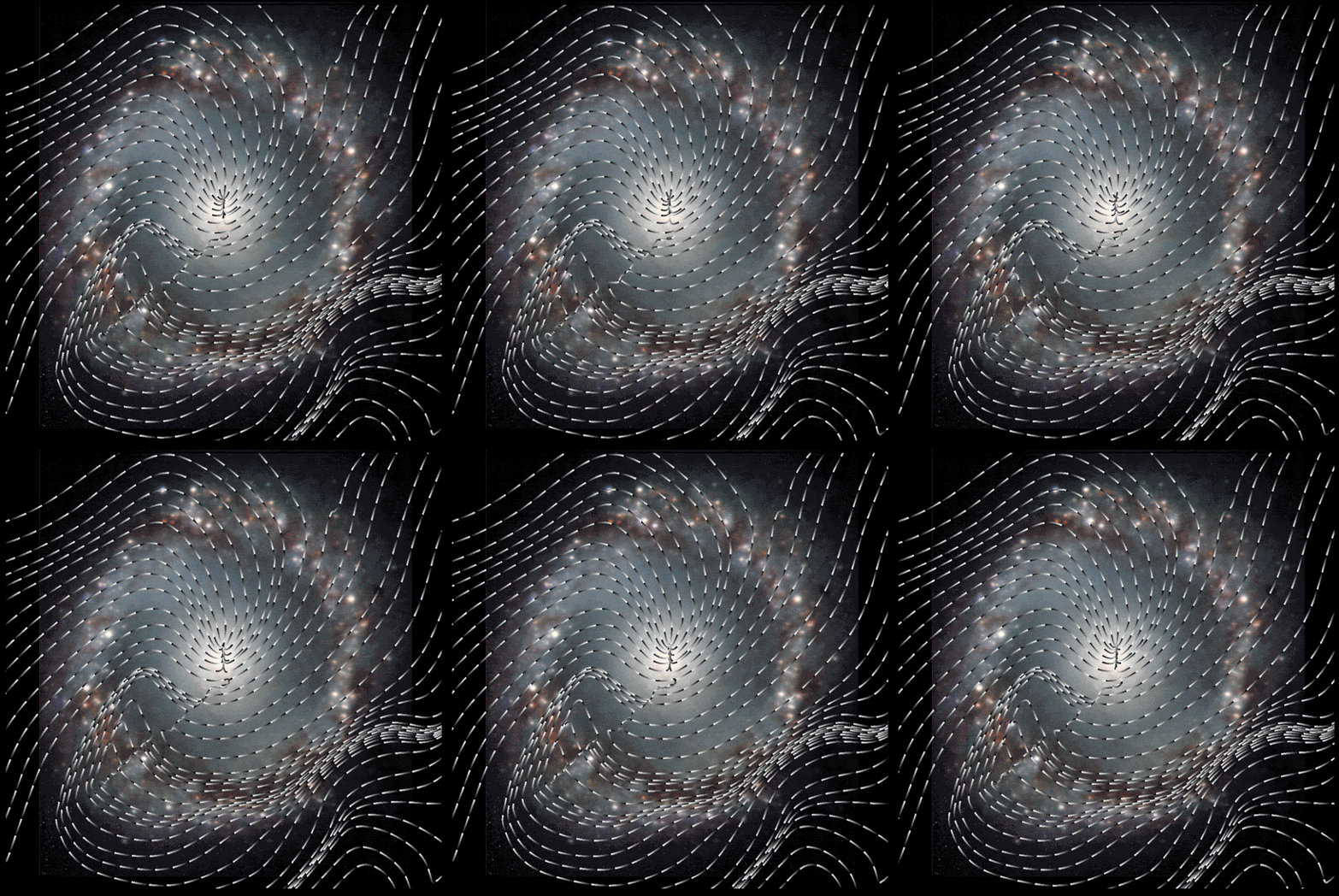
    Magnetic Field Orientation Spiral Galaxy NGC 1097
    This figure shows the magnetic field orientation (streamlines) and direction (animated streamlines) in the central 1 kpc starburst ring of the spiral galaxy NGC 1097 using data from the radio polarimetric observations. Credit: Lopez-Rodriguez et al.

    But despite this striking difference, the two are not fully disconnected: The study proves that the magnetic fields in the galaxy help deliver gas and dust to the black hole at its center. Altogether, the large-scale fields follow the shape of NGC 1097’s spiral arms, channeling matter from the arms to the starburst ring in its innermost regions, and from the starburst ring deeper toward the black hole, where it can eat the material up.

    This confirms that it is not just gravity that helps a black hole feed on the material in its host galaxy, but magnetic fields also play a role.

    “Our observations also provide evidence that the magnetic fields located in the proximity of the black holes at the center of active galaxies may be coming from the large-scale magnetic field in the host galaxy,” Lopez-Rodriguez said.

    This first observation of magnetic fields nourishing black holes helps answer critical questions about how galaxies evolve, and ultimately die.
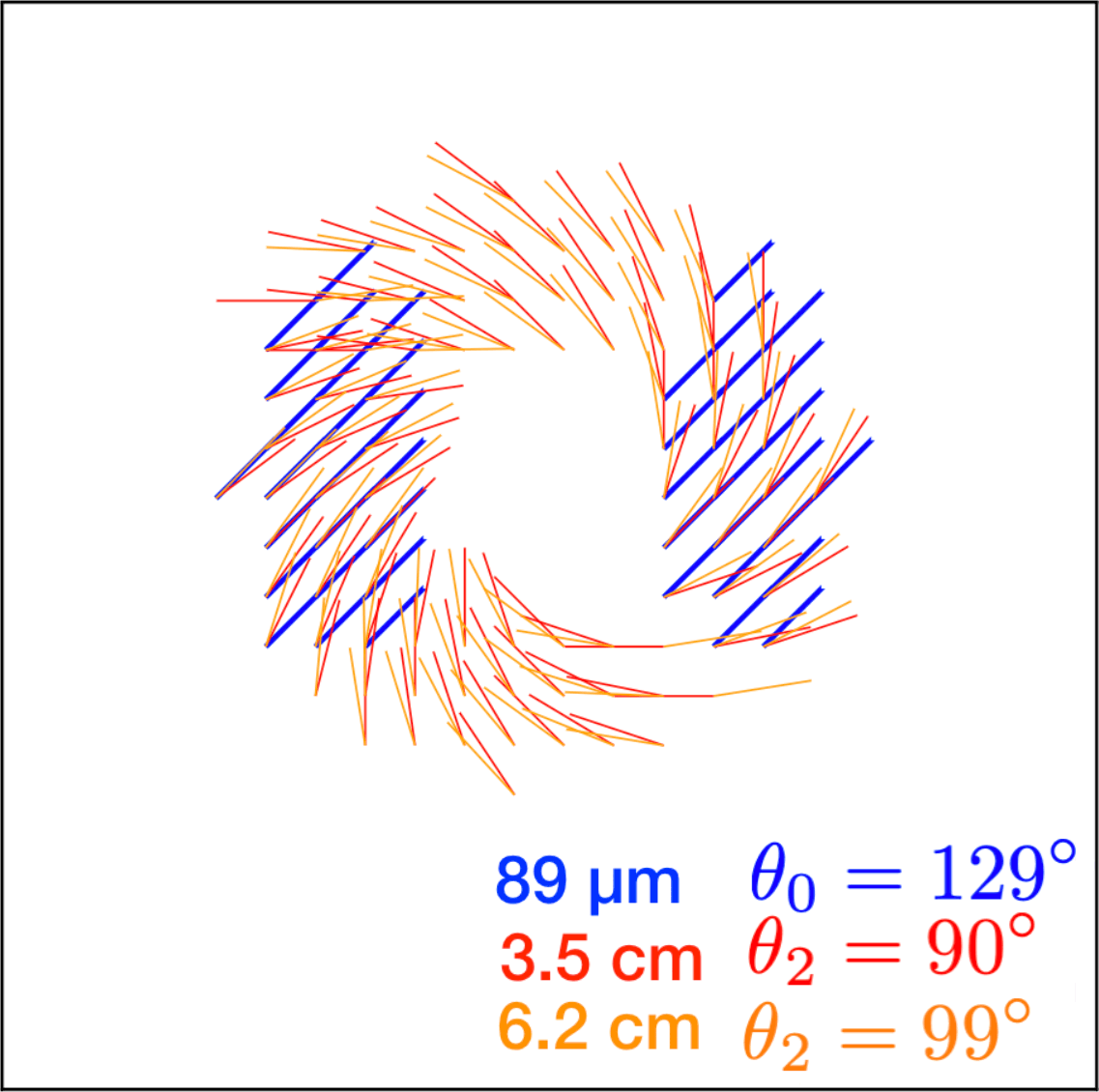
    Magnetic Field Orientation Starburst Ring NGC 1097
    Orientations of the magnetic field within the starburst ring of NGC 1097. The blue lines indicate far-infrared data obtained from SOFIA, while the red and orange lines are radio polarimetric observations. The magnetic field has different configurations at far infrared wavelengths compared to radio wavelengths. Credit: Lopez-Rodriguez et al.

    Reference: “Extragalactic Magnetism with SOFIA (Legacy Program) – II: A Magnetically Driven Flow in the Starburst Ring of NGC 1097” by Enrique Lopez-Rodriguez, Rainer Beck, Susan E. Clark, Annie Hughes, Alejandro S. Borlaff, Evangelia Ntormousi, Lucas Grosset, Konstantinos Tassis, John E. Beckman, Kandaswamy Subramanian, Daniel Dale and Tanio Díaz-Santos, 17 December 2021, The Astrophysical Journal.
    DOI: 10.3847/1538-4357/ac2e01

    SOFIA is a joint project of NASA and the German Space Agency at DLR. DLR provides the telescope, scheduled aircraft maintenance, and other support for the mission. NASA’s Ames Research Center in California’s Silicon Valley manages the SOFIA program, science, and mission operations in cooperation with the Universities Space Research Association, headquartered in Columbia, Maryland, and the German SOFIA Institute at the University of Stuttgart. The aircraft is maintained and operated by NASA’s Armstrong Flight Research Center Building 703, in Palmdale, California.

    Never miss a breakthrough: Join the SciTechDaily newsletter.
    Follow us on Google and Google News.

    Astronomy Astrophysics NASA Popular SOFIA
    Share. Facebook Twitter Pinterest LinkedIn Email Reddit

    Related Articles

    Tarantula Nebula’s Magnetic Maelstrom: Secret Ingredient to Surprising Survival of 30 Doradus

    Black Holes More Powerful Than Thought – Magnetic Fields Reach Deeper Into Galaxies

    SOFIA Spies a “Cataclysmic” New Type of Stellar Outburst

    Revealing Cosmic “Skeletons” – SOFIA Maps the First Magnetic Fields of a Galactic Bone in Their Entirety

    NASA’s Airborne Observatory SOFIA Observes Star Formation Near the Galactic Center

    Magnetic “Highway” Fuels Massive Ejection of Gas and Dust Out of the Cigar Galaxy

    HAWC+ Reveals Magnetic Chaos Hidden Within the Whirlpool Galaxy

    Shedding Light on a Galactic Mystery That Has Long Puzzled Scientists

    The Bolshoi Simulation: Boxing the Universe

    Leave A Reply Cancel Reply

    • Facebook
    • Twitter
    • Pinterest
    • YouTube

    Don't Miss a Discovery

    Subscribe for the Latest in Science & Tech!

    Trending News

    Scientists Warn That This Common Pet Fish Can Wreck Entire Ecosystems

    Scientists Make Breakthrough in Turning Plastic Trash Into Clean Fuel Using Sunlight

    This Popular Supplement May Interfere With Cancer Treatment, Scientists Warn

    Scientists Finally Solved One of Water’s Biggest Mysteries

    Could This New Weight-Loss Pill Disrupt the Entire Market? Here’s What You Should Know About Orforglipron

    Earth’s Crust Is Tearing Open in Africa, and It Could Form a New Ocean

    Breakthrough Bowel Cancer Trial Leaves Patients Cancer-Free for Nearly 3 Years

    Natural Compound Shows Powerful Potential Against Rheumatoid Arthritis

    Follow SciTechDaily
    • Facebook
    • Twitter
    • YouTube
    • Pinterest
    • Newsletter
    • RSS
    SciTech News
    • Biology News
    • Chemistry News
    • Earth News
    • Health News
    • Physics News
    • Science News
    • Space News
    • Technology News
    Recent Posts
    • Kratom Use Explodes in the US, With Life-Changing Consequences
    • Scientists Uncover Fatal Weakness in “Zombie Cells” Linked to Cancer
    • World-First Study Reveals Human Hearts Can Regenerate After a Heart Attack
    • Why Your Dreams Feel So Real Sometimes and So Strange Other Times
    • Scientists Debunk 100-Year-Old Belief About Brain Cells, Rewriting Textbooks
    Copyright © 1998 - 2026 SciTechDaily. All Rights Reserved.
    • Science News
    • About
    • Contact
    • Editorial Board
    • Privacy Policy
    • Terms of Use

    Type above and press Enter to search. Press Esc to cancel.