
Researchers have found that soil microbiomes, consisting of up to 10,000 species in just a cup of soil, play crucial roles in nutrient and carbon cycling through their complex interactions and resource exchanges.
Recent studies focusing on corrinoids—nutrients in the vitamin B12 family—demonstrate how these compounds influence microbial growth and soil health. These insights could lead to new methods for manipulating soil microbiomes to enhance ecosystem functions.
Microbiome Diversity and Interaction
Microbial communities, or microbiomes, especially those in soils, are remarkably diverse, containing up to 10,000 species in just a single cup of soil. Scientists are exploring how these microbiomes and their members adapt to their environments, as these interactions significantly influence the properties and composition of soils.
Recent research has delved into how different microbial species interact and exchange vital resources like vitamins, focusing specifically on corrinoids—a group of nutrients that includes vitamin B12. Since many environmental bacteria cannot produce these nutrients on their own, understanding how they exchange them can provide valuable insights into how microbiomes regulate essential processes like carbon and nutrient cycling.
Soil Health and Microbial Role
Soils play a crucial role in maintaining ecosystem health by storing organic matter, cycling nutrients, filtering and retaining water, and providing physical support and nutrients for plants. Microbes are key contributors to these functions, making the ability to influence microbiome behavior a potentially powerful tool for enhancing soil performance.
The two studies revealed that corrinoids not only affect the growth of individual soil bacteria in laboratory settings but also influence how bacteria survive and coexist in soil environments. These findings pave the way for innovative strategies to manage microbiomes and improve soil health.
Studies on Corrinoids Impact
The complexity of microbial interactions poses a challenge for researchers aiming to understand microbiome function. Two recent studies focused on corrinoids, a key family of shared nutrients in the vitamin B12 family, to investigate how the responses of individual microbes to their environment collectively influence soil microbiome function.
Focusing on a single type of nutrient enables the study of microbiomes in greater detail. The two studies further synergized by focusing on the same California grassland soil, allowing the researchers to generate a framework for understanding nutrient cycling in this system.
Experimental Insights into Microbial Nutrient Exchange
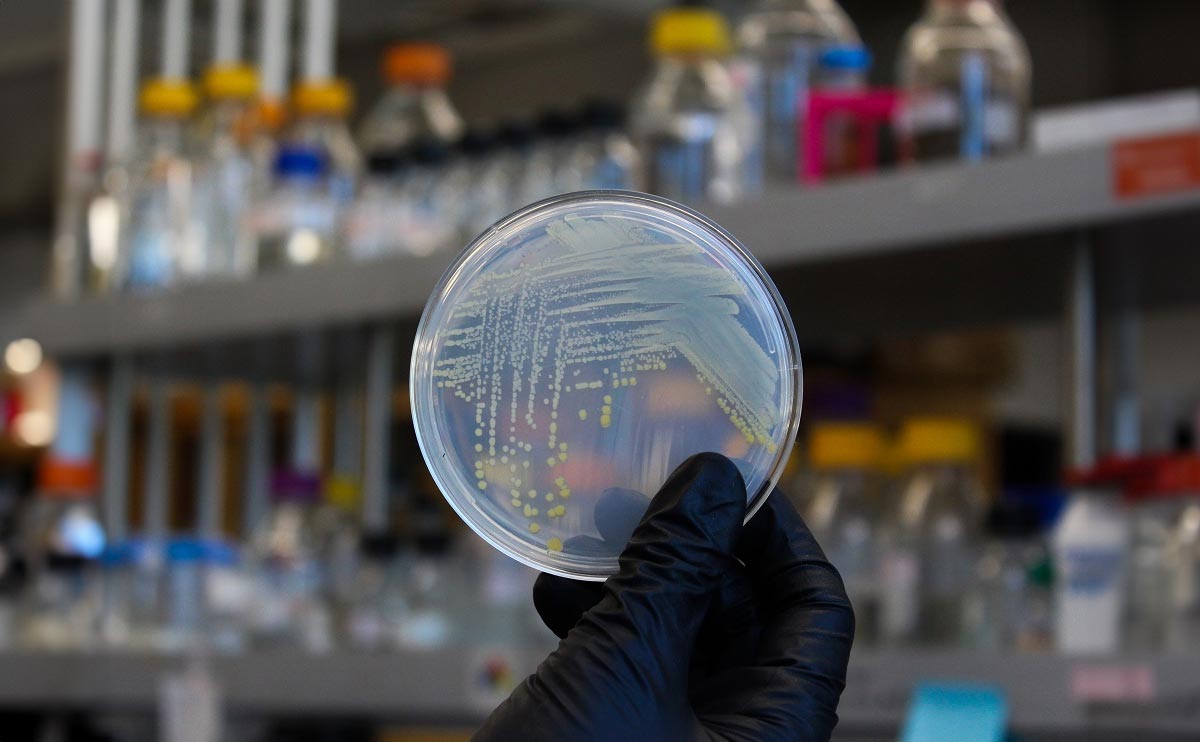
The first study focused on the impact of corrinoids on individual bacteria. The researchers isolated more than 100 soil bacteria, 37 of which were novel species, and tested whether they could produce corrinoids or would need to rely on others to supply corrinoids. Of these bacteria, 60% produced corrinoids, but only a few released them from the cell when cultured in the laboratory. The finding suggests that corrinoid-releasing organisms might supply these critical nutrients to other microbiome community members and have a large impact on shaping microbiome assembly and activity in the environment.
The second study investigated corrinoids in soils. Chemical analysis revealed that soils contain corrinoids at levels that exceed those required for maximal microbial growth, though most are tightly bound to the soil matrix. The study further demonstrated that adding different corrinoids to soil can transiently alter the soil microbiome. This suggests that corrinoids may offer an opportunity to influence the structure and behavior of complex microbiomes in engineered and environmental systems.
References:
“Phylogenetic distribution and experimental characterization of corrinoid production and dependence in soil bacterial isolates” by Zoila I Alvarez-Aponte, Alekhya M Govindaraju, Zachary F Hallberg, Alexa M Nicolas, Myka A Green, Kenny C Mok, Citlali Fonseca-García, Devin Coleman-Derr, Eoin L Brodie, Hans K Carlson and Michiko E Taga, 22 April 2024, The ISME Journal.
DOI: 10.1093/ismejo/wrae068
“Soil microbial community response to corrinoids is shaped by a natural reservoir of vitamin B12” by Zachary F Hallberg, Alexa M Nicolas, Zoila I Alvarez-Aponte, Kenny C Mok, Ella T Sieradzki, Jennifer Pett-Ridge, Jillian F Banfield, Hans K Carlson, Mary K Firestone and Michiko E Taga, 4 June 2024, The ISME Journal.
DOI: 10.1093/ismejo/wrae094
This research was funded by the Department of Energy (DOE) Office of Science, Office of Biological and Environmental Research, Genomic Sciences Program and its “Microbes Persist” Soil Microbiome Scientific Focus Area. The research was also funded by the National Institutes of Health’s National Institute of General Medical Sciences, the National Graduate Degrees for Minorities in Engineering and Science (GEM) Consortium, the Kase-Tsujimoto Foundation, and the Sponsored Projects for Undergraduate Researchers program at the University of California, Berkeley.
Never miss a breakthrough: Join the SciTechDaily newsletter.
Follow us on Google and Google News.